


Olena Tuz was a 6-year-old girl when she saw a neighbor throwing the body of a naked woman into a hole on the edge of a remote forest in 1932. Flesh had been cut off the body.
"People ate people, mothers ate their own children. They didn't realize what they were doing, they just were hungry," said Tuz, standing on the side of a thousand-strong rally in the capital Kiev to commemorate victims of the Soviet-era forced famine that killed up to 10 million Ukrainians.
People from various Ukraine's regions gathered near the St. Michael Cathedral, some with candles, some with wheat ears or red carnation. The crowd was awash with yellow-and-blue national flags with black ribbons. Church bells rang droningly. Many cried.
"My 11-year-old sister came to a forester's lodge to ask some water; she was allowed in, then the forester locked the door and took a knife to kill her, but she warned that she was a teacher's daughter, and he got scared and didn't eat her," Tuz said.
Her family was well-known and highly respected in her village in the western Zhytomir region.
Soviet dictator Josef Stalin provoked what the Ukrainians called the Great Famine in 1932-1933 as part of his campaign to force Ukrainian peasants to give up their land and join collective farms. During the height of the famine that was enforced by methodical confiscation of all food by the Soviet secret police, cases of cannibalism were widespread as people grew desperate to survive.
Those who resisted the confiscation were arrested and sent to Siberia; a person taking a wheat ear from a field was to shot on the spot.
On Saturday, relatives and survivors lit 33,000 candles in Kiev -- representing the number of people who were dying daily at the famine's height.
Earlier in the day, Ukraine's President Viktor Yushchenko and state officials planted some 300 snowball trees in Kiev's park on the Dnipro river hills at the site of the memorial-to-be to the Great Famine victims.
"Everyone should know the truth about this tragedy," Yushchenko told the crowd near the St.Michael Cathedral. "The state system that made possible such crimes should be punished by the court of history."
The Great Famine was kept secret by the Soviet authorities. Only in 2003, Ukraine declassified more than 1,000 files documenting it.
On Friday, Yushchenko called on the international community to recognize the famine as genocide.
"I was too young and don't remember, but my mother told me later that they ate grass, nettle, potato peelings; trees had no leaves where a human hand could reach," said Dmytro Dumenchuk from the village of Banyliv in the western Chernivtsi region, who came to Kiev to commemorate famine victims.
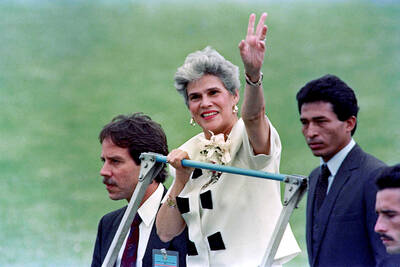
Former Nicaraguan president Violeta Chamorro, who brought peace to Nicaragua after years of war and was the first woman elected president in the Americas, died on Saturday at the age of 95, her family said. Chamorro, who ruled the poor Central American country from 1990 to 1997, “died in peace, surrounded by the affection and love of her children,” said a statement issued by her four children. As president, Chamorro ended a civil war that had raged for much of the 1980s as US-backed rebels known as the “Contras” fought the leftist Sandinista government. That conflict made Nicaragua one of
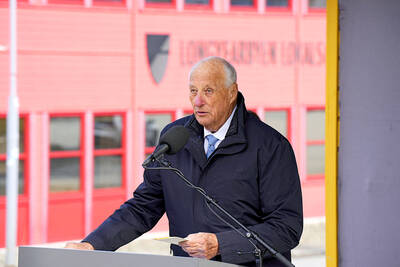
COMPETITION: The US and Russia make up about 90 percent of the world stockpile and are adding new versions, while China’s nuclear force is steadily rising, SIPRI said Most of the world’s nuclear-armed states continued to modernize their arsenals last year, setting the stage for a new nuclear arms race, the Stockholm International Peace Research Institute (SIPRI) said yesterday. Nuclear powers including the US and Russia — which account for about 90 percent of the world’s stockpile — had spent time last year “upgrading existing weapons and adding newer versions,” researchers said. Since the end of the Cold War, old warheads have generally been dismantled quicker than new ones have been deployed, resulting in a decrease in the overall number of warheads. However, SIPRI said that the trend was likely
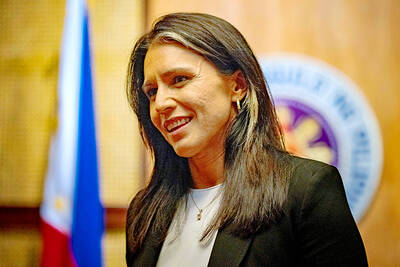
NUCLEAR WARNING: Elites are carelessly fomenting fear and tensions between nuclear powers, perhaps because they have access to shelters, Tulsi Gabbard said After a trip to Hiroshima, US Director of National Intelligence Tulsi Gabbard on Tuesday warned that “warmongers” were pushing the world to the brink of nuclear war. Gabbard did not specify her concerns. Gabbard posted on social media a video of grisly footage from the world’s first nuclear attack and of her staring reflectively at the Hiroshima Peace Memorial. On Aug. 6, 1945, the US obliterated Hiroshima, killing 140,000 people in the explosion and by the end of the year from the uranium bomb’s effects. Three days later, a US plane dropped a plutonium bomb on Nagasaki, leaving abut 74,000 people dead by the
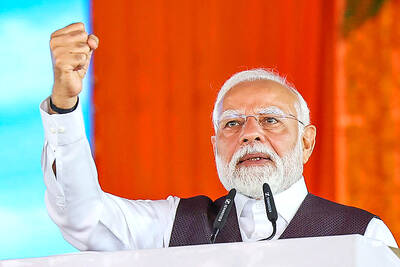
Indian Prime Minister Narendra Modi is to visit Canada next week, his first since relations plummeted after the assassination of a Canadian Sikh separatist in Vancouver, triggering diplomatic expulsions and hitting trade. Analysts hope it is a step toward repairing ties that soured in 2023, after then-Canadian prime minister Justin Trudeau pointed the finger at New Delhi’s involvement in murdering Hardeep Singh Nijjar, claims India furiously denied. An invitation extended by new Canadian Prime Minister Mark Carney to Modi to attend the G7 leaders summit in Canada offers a chance to “reset” relations, former Indian diplomat Harsh Vardhan Shringla said. “This is a


 RSS
RSS