


The number of cars torched overnight in France climbed slightly, to 502 compared with 463 the previous day, in a 16th night of unrest that took its heaviest toll on the French provinces, police said yesterday.
But security was boosted in the capital with some 3,000 police officers fanning out around strategic points to counter feared weekend attacks targeting Paris. Gatherings were banned from yesterday until this morning.
"We returned to an almost normal situation in Ile de France," said national police chief Michel Gaudin, referring to the Paris region. Arson attacks were counted in 163 towns around France, he said. The count of those detained overnight stood at 206, bringing to 2,440 the number of suspects picked up in just over two weeks of unrest.
Two Molotov cocktails were tossed at a mosque on Friday evening in the town of Carpentras, but it was not immediately clear whether the attack was linked to the unrest that has racked the poor suburbs and small towns of France since Oct. 27.
President Jacques Chirac demanded that investigators quickly find out who was behind the attack.
As France marked Armistice Day commemorating the end of World War I, calls for peace in the restive poor neighborhoods of France rang out, from demonstrators in Paris to religious leaders at a Lyon-area mosque in the southeast.
With a state of emergency in force, several hundred people gathered at the glassy Wall of Peace near the Eiffel Tower to call for an end to the unrest that since Oct. 27 spread from the Paris suburbs across the country.
The demonstration drew elderly Parisians and youths from the suburbs along with curious onlookers, all engaging in heated debate over how to stem the violence and tackle the causes.
Authorities have acknowledged that the roots of the problem are deep-seated. The woes include soaring unemployment, poverty and discrimination in the working class suburbs that ring the large cities of France.
"The violence of the last 15 days expresses the frustration of 30 years of denying recognition to the populations living in these neighborhoods," said Hassan Ben M'Barek, a spokesman for Suburbs Respect, a group of associations that organized Friday's demonstration.
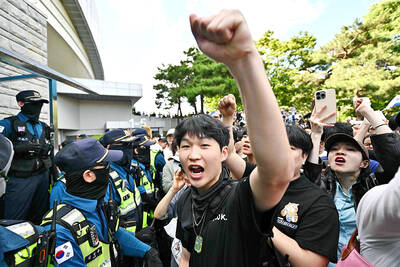
‘ABSURD MISTAKE’: The election commission said that there had been a failure to anticipate turnout after 14 polling stations ran short of ballot papers South Korean riot police yesterday cleared protesters from a Seoul polling station after a 35-hour blockade sparked by a shortage of ballot papers during local elections earlier this week. Wednesday’s election was the first nationwide vote since South Korean President Lee Jae-myung took office following the ouster of Yoon Suk-yeol over his short-lived martial law declaration. Lee’s ruling Democratic Party swept most races, but failed to flip the crucial Seoul mayoral seat. The South Korean National Election Commission apologized, blaming a failure to anticipate turnout after 14 polling stations in Seoul ran short of ballot papers. Some polling stations stayed open until 10pm to

France experienced its hottest spring on record, the French weather service said on Tuesday, after an exceptional early heat wave that also broke highs for the season in England and Wales. Meteo-France said the average nationwide temperature over March to May was 13.8°C — about 1.7°C above the norm, and surpassing records set in 2011 and 2020. “The warmest spring since records began in 1900,” it said in a bulletin. All three months were warmer than average, but the onset of an “unprecedented heatwave” late last month pushed the mercury to highs typically seen at the height of the summer. “Our country had never

A Sherpa guide was found crawling to base camp on Mount Everest a week after he went missing and was reunited with his family, who had given up hope he would return. Dawa Sherpa was last seen on Friday last week descending the mountain, but he did not reach base camp even though his client did. The pair were among the last climbers on the mountain as the climbing season came to an end and the route was dismantled. Dawa was located by a cleaning crew on Thursday morning as he was crawling down the snowy slopes around the Khumbu Icefall, just above
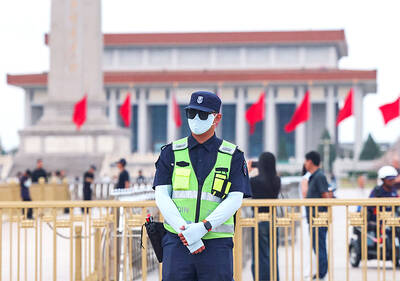
Chinese authorities are snuffing out any remembrance of the deadly 1989 military crackdown on student-led pro-democracy protests in Tiananmen Square, which happened 37 years ago yesterday, in a further tightening of a years-long campaign to erase what happened from public memory. Police told relatives of the victims they would not be allowed to visit a cemetery in Beijing on the anniversary of the crackdown, a person with knowledge of the matter said. Relatives of the victims visited the cemetery on the anniversary for more than 30 years to read memorial statements with police keeping watch, Amnesty International said. Hundreds of people,


 RSS
RSS