


London Underground operators yesterday reopened sections of two subway lines that had been closed since the deadly July 7 bombings, while police maintained a high-profile security operation throughout the network to avert any further attacks.
Officers also continued questioning 20 suspects held in Britain in connection with the botched July 21 bomb attacks on London's transit system, including two men arrested in raids in south London late on Monday. The government, meanwhile, said it was pursuing attempts to extradite one of the suspected attackers from Italy, and pressing forward with its hunt for anyone who assisted the suspected bombers.
The investigation is now focusing on possible links between the terror cell that killed 52 people when it bombed three Underground trains and a red double-decker bus on July 7, and a second cell that targeted the same transportation system two weeks later but caused no deaths when their bombs failed to fully explode.
Police say the four suicide bombers who carried out the July 7 attacks are all dead. And they believe they have arrested all the failed July 21 bombers, whose explosives detonated only partially and took no lives.
On Tuesday, London Underground restored full service on the Hammersmith and City line and the District line, which were partially shut down after the July 7 bombing at Edgware Road station.
Two other lines remain closed or suspended.
British Transport Police continued its highly visible patrolling operation across the capital's subway system and overland rail network yesterday, spokesman Simon Lubin said. Officers in bright yellow jackets were posted outside many stations, although the police presence was not as strong as Thursday, when a massive force patrolled the network exactly three weeks after the first attacks and one week after the second.
Home Office Minister Hazel Blears also planned the first in a series of meetings with representatives of Britain's Muslim community amid increasing complaints that young Muslims were being targeted by police in stop-and-search operations.
"Just picking people up on the basis that they are Muslim is never going to get the results that we want," Blears told the British Broadcasting Corporation's Radio 4 on Tuesday, reversing her earlier support for the controversial police initiative.
"Tackling terrorism is absolutely dependent on the confidence of these communities to feel that they can come forward, give information and be part of the fight against this threat," she said.
Meanwhile, Britain is also "pursuing extradition" of Hamdi Issac, one of the four suspected July 21 attackers who is being held by police in Rome, she said.
Issac was charged on Monday in Italy with association with the aim of international terrorism and possessing false documents, his lawyer Antonietta Sonnessa said. She raised the possibility that investigations in Italy against Issac could hold up his extradition. "One cannot possibly define the timing of the extradition process," Blears said.

PHISHING: The con might appear convincing, as the scam e-mails can coincide with genuine messages from Apple saying you have run out of storage For a while you have been getting messages from Apple saying “your iCloud storage is full.” They say you have exceeded your storage plan, so documents are no longer being backed up, and photos you take are not being uploaded. You have been resisting Apple’s efforts to get you to pay a minimum of £0.99 (US$1.33) a month for more storage, but it seems that you cannot keep putting off the inevitable: You have received an e-mail which says your iCloud account has been blocked, and your photos and videos would be deleted very soon. To keep them you need
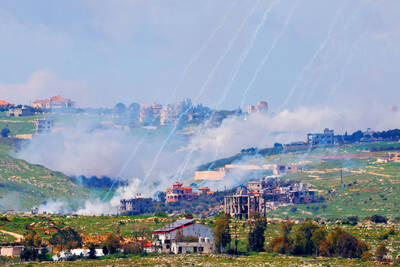
The Israeli military has demolished entire villages as part of its invasion of south Lebanon, rigging homes with explosives and razing them to the ground in massive remote detonations. The Guardian reviewed three videos posted by the Israeli military and on social media, which showed Israel carrying out mass detonations in the villages of Taybeh, Naqoura and Deir Seryan along the Israel-Lebanon border. Lebanese media has reported more mass detonations in other border villages, but satellite imagery was not readily available to verify these claims. The demolitions came after Israeli Minister of Defense Israel Katz called for the destruction of

A US YouTuber who caused outrage for filming himself kissing a statue commemorating Korean wartime sex slaves has been sentenced to six months in prison, a court in Seoul said yesterday. Johnny Somali, 25, gained notoriety several years ago for recording himself doing a series of provocative stunts in South Korea and Japan, and streaming them on platforms such as YouTube and Twitch. South Korean authorities indicted Somali — whose real name is Ramsey Khalid Ismael — in 2024 on public order violations and obstruction of business, and banned him from leaving the country. “The court has sentenced him to six months in
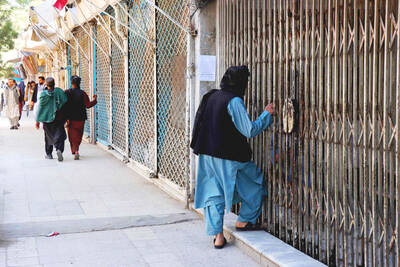
The death toll from a shooting in western Afghanistan rose to 11 on Saturday, after gunmen targeted civilians at a picnic spot in Herat, the provincial authority said. Bullet marks were visible on a wall of the Sayed Mohammad Agha Shia shrine, while bloodstains marked a blanket abandoned at the scene. “Eleven people have been recorded dead and eight others wounded from Friday’s incident, with the condition of two of the wounded reported as critical,” Herat’s information office said in a statement. The update raises a toll of seven killed provided on Friday by the Afghan Ministry of Interior Affairs


 RSS
RSS