


Coded Nazi messages intercepted by Britain could have exposed the scope of the Holocaust years before the liberation of the death camps, but Allied codebreakers failed to fully understand the information they had, according to US government analysis of intelligence from the era.
In what is being likened to the intelligence failures before the September 11 attacks, German military and police communications from as early as 1941 provided lurid but fragmentary accounts of the massacres and deportations, and later even statistics on the numbers killed in concentration camps.
According to the report titled Eavesdropping on Hell, by Robert Hanyok, a historian with the National Security Agency's center for cryptologic history, British and US efforts to sort evidence were hampered by case backlogs and a shortage of translators, as well as the two allies' reluctance to share information about German communications.
According to a summary of the report in the New York Times, one of the most harrowing messages codebreakers overlooked was intercepted on January 11, 1943 and detailed the 1,274,166 Jews killed under Operation Reinhard at four death camps -- Lublin, Belzec, Sobibor and Treblinka -- during 1942. The report notes: "The message itself contained only the identifying letters for the death camps followed by the numerical totals."
The only clue that they were death camps was the reference to Operation Reinhard, a tribute to the SS general Reinhard Heydrich, who had been charged with organizing the Nazis' plan to eliminate Europe's Jews. But that was probably "unknown at the time" to the British codebreakers, the report says.
However, British analysts must have considered the message important, because it was classified "Most Secret" and marked: "To be kept under lock and key. Never to be removed from the office."
The report also suggests that anti-semitism may have created an atmosphere that affected how the intelligence was handled.
"Both President Roosevelt and Prime Minister Churchill were often hampered in their limited efforts to alleviate some of the suffering by the general anti-semitic sentiment in both nations," the report says.
One particularly chilling memorandum, written by a British official on September 11 1941, refers to German massacres in the Soviet Union and concludes: "The fact that the police are killing all Jews that fall into their hands should now be sufficiently well appreciated. It is not therefore proposed to continue reporting these butcheries unless so requested."
Hanyok attributed the official's response to "either his inability to appreciate the implications of the massacres, or his willingness to ignore what the Nazis were doing."
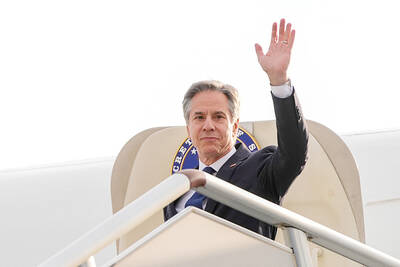
‘IN A DIFFERENT PLACE’: The envoy first visited Shanghai, where he attended a Chinese basketball playoff match, and is to meet top officials in Beijing tomorrow US Secretary of State Antony Blinken yesterday arrived in China on his second visit in a year as the US ramps up pressure on its rival over its support for Russia while also seeking to manage tensions with Beijing. The US diplomat tomorrow is to meet China’s top brass in Beijing, where he is also expected to plead for restraint as Taiwan inaugurates president-elect William Lai (賴清德), and to raise US concerns on Chinese trade practices. However, Blinken is also seeking to stabilize ties, with tensions between the world’s two largest economies easing since his previous visit in June last year. At the
Nearly half of China’s major cities are suffering “moderate to severe” levels of subsidence, putting millions of people at risk of flooding, especially as sea levels rise, according to a study of nationwide satellite data released yesterday. The authors of the paper, published by the journal Science, found that 45 percent of China’s urban land was sinking faster than 3mm per year, with 16 percent at more than 10mm per year, driven not only by declining water tables, but also the sheer weight of the built environment. With China’s urban population already in excess of 900 million people, “even a small portion

UNSETTLING IMAGES: The scene took place in front of TV crews covering the Trump trial, with a CNN anchor calling it an ‘emotional and unbelievably disturbing moment’ A man who doused himself in an accelerant and set himself on fire outside the courthouse where former US president Donald Trump is on trial has died, police said yesterday. The New York City Police Department (NYPD) said the man was declared dead by staff at an area hospital. The man was in Collect Pond Park at about 1:30pm on Friday when he took out pamphlets espousing conspiracy theories, tossed them around, then doused himself in an accelerant and set himself on fire, officials and witnesses said. A large number of police officers were nearby when it happened. Some officers and bystanders rushed
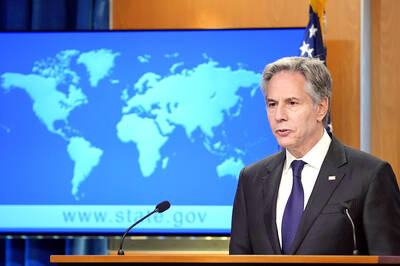
Beijing is continuing to commit genocide and crimes against humanity against Uyghurs and other Muslim minorities in its western Xinjiang province, U.S. Secretary of State Antony Blinken said in a report published on Monday, ahead of his planned visit to China this week. The State Department’s annual human rights report, which documents abuses recorded all over the world during the previous calendar year, repeated language from previous years on the treatment of Muslims in Xinjiang, but the publication raises the issue ahead of delicate talks, including on the war in Ukraine and global trade, between the top U.S. diplomat and Chinese


 RSS
RSS