


Laos sealed off its capital to keep out troublemakers yesterday as delegates began arriving for Asia's biggest annual security conference, aimed at fighting terrorism and likely to delve into a dispute over Myanmar's democratic record.
"Terrorism has continued to pose a threat to every corner of the world," Laotian Foreign Minister Somsavat Lengsavad said.
The conference, opening today, "will give high importance on boosting closer and active cooperation on fighting against international terrorism," he said.
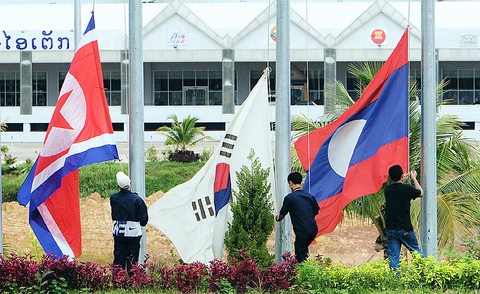
PHOTO: AP
Southeast Asian nations also want Myanmar to meet US and European demands to liberalize and release pro-democracy campaigner Aung San Suu Kyi from house arrest or forgo its scheduled chairmanship late next year of the Association of Southeast Asian Nations (ASEAN).
Myanmar will be on the spot during the coming week to announce whether or not it will step aside, said Kitti Wasinondh, the Thai foreign ministry's top ASEAN official.
The ministers' conference in the Laotian capital groups ASEAN's core Southeast Asian members with other key Asia-Pacific countries. Senior officials start talks today and meetings wrap up this Friday when 24 nations hold the ASEAN Regional Forum -- the region's biggest annual security meeting.
Long-insular Laos is hosting what is only its second such international gathering following a summit last November of ASEAN's leaders, and expects the coming week's conference to be "safe, great and successful," Somsavat said.
"The venue, facilities and security in Vientiane are now perfectly ready. Preparations for the security and convenience of VIP delegates are as good as for the ASEAN summit," he said.
Laotian officials have clamped down on travel between Vientiane and outlying provinces to keep out "troublemakers": local code for the Hmong militants usually blamed for the rare bombings that rock the capital. During the November conference, two blasts struck an unused government satellite receiver outside the capital. Nobody claimed responsibility.
"Trucks and passengers buses are not allowed to enter the capital and all the land borders are closed. Security forces and village volunteers must monitor the movements of troublemakers to ensure they don't get into the capital," Laotian state radio instructed listeners yesterday.
Three-wheeled motorcycle taxis, considered an eyesore for the visiting VIPs, also will banned from the streets starting on Wednesday.
Pakistan, New Zealand and South Korea are expected to sign ASEAN's pact on cooperation in the fight against international terrorism during the conference, Kitti said.
New Zealand and Mongolia are also expected to sign up to a non-aggression pact that has been signed by ASEAN's 10 members plus China, Russia, Japan, India, Pakistan, South Korea and Papua New Guinea.
Australia has in the past shunned the treaty, but in recent weeks Canberra has given signals it may join. Asian neighbors have made it a prerequisite if Canberra wants to join next December's inaugural East Asia Summit in Malaysia.

PHISHING: The con might appear convincing, as the scam e-mails can coincide with genuine messages from Apple saying you have run out of storage For a while you have been getting messages from Apple saying “your iCloud storage is full.” They say you have exceeded your storage plan, so documents are no longer being backed up, and photos you take are not being uploaded. You have been resisting Apple’s efforts to get you to pay a minimum of £0.99 (US$1.33) a month for more storage, but it seems that you cannot keep putting off the inevitable: You have received an e-mail which says your iCloud account has been blocked, and your photos and videos would be deleted very soon. To keep them you need
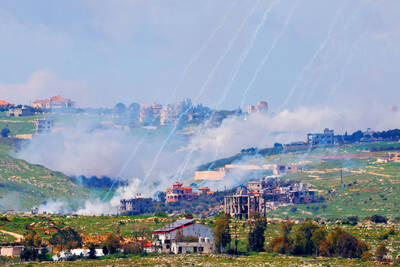
The Israeli military has demolished entire villages as part of its invasion of south Lebanon, rigging homes with explosives and razing them to the ground in massive remote detonations. The Guardian reviewed three videos posted by the Israeli military and on social media, which showed Israel carrying out mass detonations in the villages of Taybeh, Naqoura and Deir Seryan along the Israel-Lebanon border. Lebanese media has reported more mass detonations in other border villages, but satellite imagery was not readily available to verify these claims. The demolitions came after Israeli Minister of Defense Israel Katz called for the destruction of

A US YouTuber who caused outrage for filming himself kissing a statue commemorating Korean wartime sex slaves has been sentenced to six months in prison, a court in Seoul said yesterday. Johnny Somali, 25, gained notoriety several years ago for recording himself doing a series of provocative stunts in South Korea and Japan, and streaming them on platforms such as YouTube and Twitch. South Korean authorities indicted Somali — whose real name is Ramsey Khalid Ismael — in 2024 on public order violations and obstruction of business, and banned him from leaving the country. “The court has sentenced him to six months in
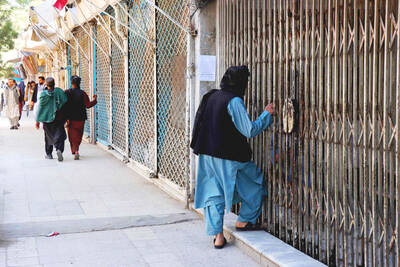
The death toll from a shooting in western Afghanistan rose to 11 on Saturday, after gunmen targeted civilians at a picnic spot in Herat, the provincial authority said. Bullet marks were visible on a wall of the Sayed Mohammad Agha Shia shrine, while bloodstains marked a blanket abandoned at the scene. “Eleven people have been recorded dead and eight others wounded from Friday’s incident, with the condition of two of the wounded reported as critical,” Herat’s information office said in a statement. The update raises a toll of seven killed provided on Friday by the Afghan Ministry of Interior Affairs


 RSS
RSS