


With scarves hiding some of their faces and guns at the ready, dozens of members of a new secretive Afghan anti-drug squad zoomed into a desert village to bust the country's biggest narcotics market, authorities said.
They seized 2 tonnes of opium and 250kg of heroin, but hundreds of smugglers had already sneaked out the back and fled to safety across the nearby Pakistani border. No one was arrested.
Under fire for not being tough enough on drugs, the government Tuesday showed a video of the weekend raid and said it proves it is cracking down on an industry that last year produced nearly 90 percent of the world's opium.
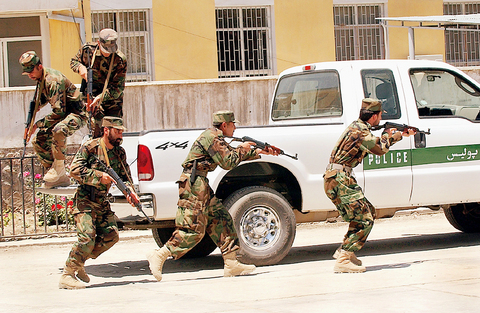
PHOTO: AP
The market in Bahram Shah village in southern Helmand province is used by up to a thousand traffickers of opium and heroin every day and is on smuggling routes to Pakistan and Iran. The Ministry of Interior said it had not been targeted before because it was considered too remote and too well protected.
In a statement, the ministry said the raid had "totally disrupted the activities of drug traffickers."
"We are determined to bring to justice the drug smugglers and you will soon witness that all smugglers will be brought to justice," General Mohammed Daoud, deputy interior minister for counternarcotics, said at a news conference in the capital, Kabul.
When asked why the anti-drug forces didn't manage to arrest any of the traffickers, he said that the Pakistani border was just 80m away and that a framework for cooperation between security forces on both sides of the frontier was still being finalized.
The video shows members of the Afghan Special Narcotics Force riding across the desert on the back of pickup trucks toward the drugs market. It then cuts to a shot of a small fire, which the deputy minister said was the seized drugs being destroyed.
Also seized in the raid were 3 1/2 tonnes of chemicals used to process opium into heroin, Daoud said.
He said anti-drug forces have arrested 26 suspected smugglers across the country recently, but he declined to elaborate on the cases.
The government says figures over the past three years -- since US-led forces ousted the Taliban -- show police are now confiscating larger amounts of opium, from 3 tonnes in 2002 to more than 135 tonnes last year, and 50 tonnes so far this year.
Despite the numbers, many fear Afghanistan is fast becoming a "narco-state," less than four years after the US-led invasion ended its role as a haven for al-Qaeda.
A diplomatic cable sent May 13 from the US Embassy in Kabul addressed to US Secretary of State Condoleezza Rice said a US-sponsored crackdown on the narcotics industry had not been very effective, partly because President Hamid Karzai "has been unwilling to assert strong leadership," according to a New York Times report.
During a visit to Washington last week, Karzai rejected the criticism and said that opium poppy production will be down 20 percent to 30 percent this year and his country would be rid of the drug in five or six years.
The US, Britain and other countries are pouring hundreds of millions of dollars into the anti-drug campaign. The cash is being used to train police units to destroy laboratories, arrest smugglers and destroy opium crops, as well as to fund projects to help farmers grow legal crops.
However, the drug traffickers have hit back at the threat to their business. Earlier this month in two attacks on subsequent days, gunmen killed 11 people associated with a US-sponsored project encouraging farmers not to grow poppies.

‘IN A DIFFERENT PLACE’: The envoy first visited Shanghai, where he attended a Chinese basketball playoff match, and is to meet top officials in Beijing tomorrow US Secretary of State Antony Blinken yesterday arrived in China on his second visit in a year as the US ramps up pressure on its rival over its support for Russia while also seeking to manage tensions with Beijing. The US diplomat tomorrow is to meet China’s top brass in Beijing, where he is also expected to plead for restraint as Taiwan inaugurates president-elect William Lai (賴清德), and to raise US concerns on Chinese trade practices. However, Blinken is also seeking to stabilize ties, with tensions between the world’s two largest economies easing since his previous visit in June last year. At the

UNSETTLING IMAGES: The scene took place in front of TV crews covering the Trump trial, with a CNN anchor calling it an ‘emotional and unbelievably disturbing moment’ A man who doused himself in an accelerant and set himself on fire outside the courthouse where former US president Donald Trump is on trial has died, police said yesterday. The New York City Police Department (NYPD) said the man was declared dead by staff at an area hospital. The man was in Collect Pond Park at about 1:30pm on Friday when he took out pamphlets espousing conspiracy theories, tossed them around, then doused himself in an accelerant and set himself on fire, officials and witnesses said. A large number of police officers were nearby when it happened. Some officers and bystanders rushed
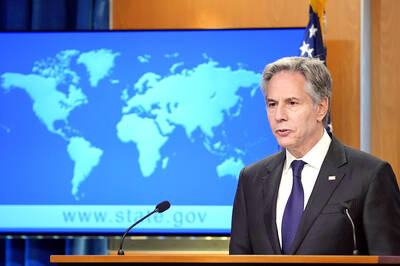
Beijing is continuing to commit genocide and crimes against humanity against Uyghurs and other Muslim minorities in its western Xinjiang province, U.S. Secretary of State Antony Blinken said in a report published on Monday, ahead of his planned visit to China this week. The State Department’s annual human rights report, which documents abuses recorded all over the world during the previous calendar year, repeated language from previous years on the treatment of Muslims in Xinjiang, but the publication raises the issue ahead of delicate talks, including on the war in Ukraine and global trade, between the top U.S. diplomat and Chinese
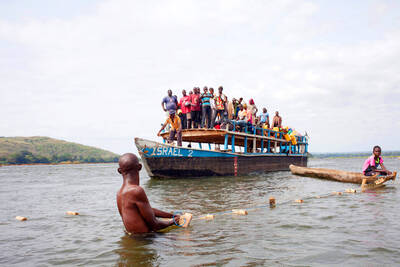
RIVER TRAGEDY: Local fishers and residents helped rescue people after the vessel capsized, while motorbike taxis evacuated some of the injured At least 58 people going to a funeral died after their overloaded river boat capsized in the Central African Republic’s (CAR) capital, Bangui, the head of civil protection said on Saturday. “We were able to extract 58 lifeless bodies,” Thomas Djimasse told Radio Guira. “We don’t know the total number of people who are underwater. According to witnesses and videos on social media, the wooden boat was carrying more than 300 people — some standing and others perched on wooden structures — when it sank on the Mpoko River on Friday. The vessel was heading to the funeral of a village chief in


 RSS
RSS