


The mentally disturbed Australian woman deported to the Philippines four years ago and found this week in an Olongapo hospice is welcome to return, Immigration Minister Amanda Vanstone said Thursday.
Vivian Solon, 42, was taken to Brisbane airport in a wheelchair and put on a plane in 2001 -- three days after a traffic accident from which she had not fully recovered.
Authorities realized their blunder two years ago, but kept it from her family in Australia and the Philippines until two weeks ago.
"If she wants to come back, of course, we will facilitate her coming back," Vanstone said. "We will facilitate assistance for her when she arrives so that she's got support and can settle in and, of course, she'll be entitled to Australian benefits."
Authorities stand accused of doing little to redress an injustice that stemmed from their believing she was an illegal immigrant because of her poor English and Asian appearance. Solon arrived in Australia in 1984.
Cecile Solon said her sister had been treated very badly by Australian authorities. But an apology is not forthcoming. Prime Minister John Howard said only that the "circumstances of this case on the available information appear very sad," adding "it will be a matter of sorrow and regret that this lady, who appears to be an Australian citizen, has been deported."
The chain of events that led to her deportation began six months earlier when she failed to pick up her son from day-care in Brisbane following an accident. She had split from her husband and reverted to her maiden name. Immigration officials failed to check that she was an Australian citizen and, just hours after being released from hospital, she was deported. Solon was taken in by Catholic nuns and has spent the last two years living in a home for the sick and dying in Olongapo, north of Manila. She has a brother in Australia, where her son, now 9, is in foster care.
The case has been referred to a government team set up last month to inquire into a similar case of Australian resident Cornelia Rau who was mistaken for an illegal immigrant and locked up for 10 months, first in a prison and then in an immigration detention center.
Rau, who had been diagnosed a schizophrenic, was believed when she said she was a tourist despite her family notifying authorities that she was a missing person. Solon's family have drawn parallels with the Rau case, saying that racism explains why German-born Rau was held in the country for 11 months while Philippines-born Solon was deported after just three days.
"I am furious," Cecile Solon said. "I just feel there was some kind of racial discrimination. There are questions to be answered."
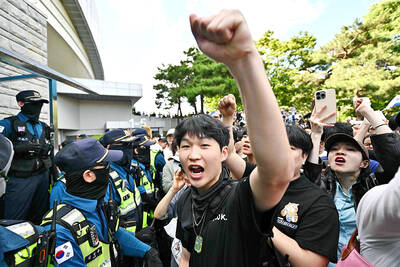
‘ABSURD MISTAKE’: The election commission said that there had been a failure to anticipate turnout after 14 polling stations ran short of ballot papers South Korean riot police yesterday cleared protesters from a Seoul polling station after a 35-hour blockade sparked by a shortage of ballot papers during local elections earlier this week. Wednesday’s election was the first nationwide vote since South Korean President Lee Jae-myung took office following the ouster of Yoon Suk-yeol over his short-lived martial law declaration. Lee’s ruling Democratic Party swept most races, but failed to flip the crucial Seoul mayoral seat. The South Korean National Election Commission apologized, blaming a failure to anticipate turnout after 14 polling stations in Seoul ran short of ballot papers. Some polling stations stayed open until 10pm to

France experienced its hottest spring on record, the French weather service said on Tuesday, after an exceptional early heat wave that also broke highs for the season in England and Wales. Meteo-France said the average nationwide temperature over March to May was 13.8°C — about 1.7°C above the norm, and surpassing records set in 2011 and 2020. “The warmest spring since records began in 1900,” it said in a bulletin. All three months were warmer than average, but the onset of an “unprecedented heatwave” late last month pushed the mercury to highs typically seen at the height of the summer. “Our country had never

A Sherpa guide was found crawling to base camp on Mount Everest a week after he went missing and was reunited with his family, who had given up hope he would return. Dawa Sherpa was last seen on Friday last week descending the mountain, but he did not reach base camp even though his client did. The pair were among the last climbers on the mountain as the climbing season came to an end and the route was dismantled. Dawa was located by a cleaning crew on Thursday morning as he was crawling down the snowy slopes around the Khumbu Icefall, just above
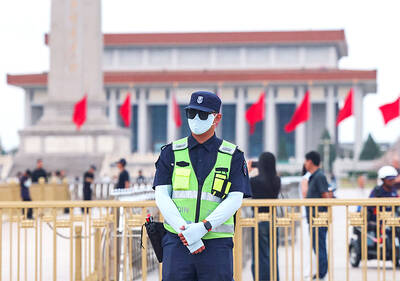
Chinese authorities are snuffing out any remembrance of the deadly 1989 military crackdown on student-led pro-democracy protests in Tiananmen Square, which happened 37 years ago yesterday, in a further tightening of a years-long campaign to erase what happened from public memory. Police told relatives of the victims they would not be allowed to visit a cemetery in Beijing on the anniversary of the crackdown, a person with knowledge of the matter said. Relatives of the victims visited the cemetery on the anniversary for more than 30 years to read memorial statements with police keeping watch, Amnesty International said. Hundreds of people,


 RSS
RSS