


The family of an Australian engineer being held hostage in Iraq offered a "donation" to the Iraqi people yesterday, as Australia's top Muslim cleric left for Baghdad in a last-ditch effort to win his release.
Militants who seized Douglas Wood, 63, an Australian citizen and a resident of Alamo, California, released a videotape that was broadcast last Friday demanding that Australia start pulling its troops out of Iraq within 72 hours, although they didn't say what would happen if the demand was not met.
Reading from a statement at Parliament House, Wood's younger brother, Malcolm, said the family empathized with the struggles of the Iraqi people.
"To this end, out of a sense of moral obligation and solidarity, the family of Douglas Wood will be making a generous charitable donation to help the people of Iraq," he said.
"This is not a ransom; there has been no demand for a ransom," he added. "We would hope to make a significant gesture to help secure Douglas's release."
Malcolm Wood said the donation offer was being sent with Australia's most senior Muslim cleric, Sheik Taj El Din Al Hilaly, who departed yesterday for Baghdad to try to win Wood's release. He gave no details of the donation.
Wood said his brother has a serious heart condition and may not have taken his medication since his abduction more than a week ago.
Hilaly on Saturday urged the militants to release Wood, saying on Arab broadcaster al-Jazeera that most Australians do not support the government's deployment in Iraq.
On Sunday, he offered to mediate in the crisis. It was not immediately clear when the 72-hour deadline expired.
Australian Foreign Minister Alexander Downer said the government would help the cleric's visit if it could.
"He is on his way and we wish him well and obviously would do anything to facilitate his visit," Downer told Sydney radio station 2UE.
He said Australian government staff were working "day and night" to free Wood, but said he was "neither more optimistic nor more pessimistic" than over the weekend that the kidnappers would release him.
On Saturday, Hilaly sat next to the hostage's brothers and videotaped a statement in Arabic saying that he regarded Douglas Wood as his brother, a fellow Australian and an innocent man.
"We value your jihad and your efforts," the cleric told the kidnappers in his plea, broadcast by al-Jazeera. "We call upon you to do something for the sake of our community and all Australian society, which does not support [Prime Minister John] Howard's pro-American policies."
"We implore you to release him in the name of God, for the sake of the Islamic community in Australia ... and for the sake of the family of Douglas Wood," he said.
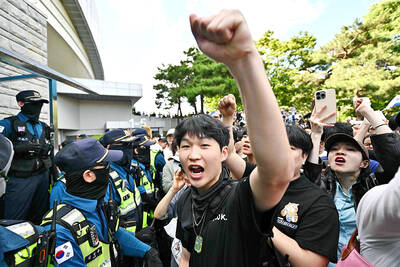
‘ABSURD MISTAKE’: The election commission said that there had been a failure to anticipate turnout after 14 polling stations ran short of ballot papers South Korean riot police yesterday cleared protesters from a Seoul polling station after a 35-hour blockade sparked by a shortage of ballot papers during local elections earlier this week. Wednesday’s election was the first nationwide vote since South Korean President Lee Jae-myung took office following the ouster of Yoon Suk-yeol over his short-lived martial law declaration. Lee’s ruling Democratic Party swept most races, but failed to flip the crucial Seoul mayoral seat. The South Korean National Election Commission apologized, blaming a failure to anticipate turnout after 14 polling stations in Seoul ran short of ballot papers. Some polling stations stayed open until 10pm to

France experienced its hottest spring on record, the French weather service said on Tuesday, after an exceptional early heat wave that also broke highs for the season in England and Wales. Meteo-France said the average nationwide temperature over March to May was 13.8°C — about 1.7°C above the norm, and surpassing records set in 2011 and 2020. “The warmest spring since records began in 1900,” it said in a bulletin. All three months were warmer than average, but the onset of an “unprecedented heatwave” late last month pushed the mercury to highs typically seen at the height of the summer. “Our country had never

A Sherpa guide was found crawling to base camp on Mount Everest a week after he went missing and was reunited with his family, who had given up hope he would return. Dawa Sherpa was last seen on Friday last week descending the mountain, but he did not reach base camp even though his client did. The pair were among the last climbers on the mountain as the climbing season came to an end and the route was dismantled. Dawa was located by a cleaning crew on Thursday morning as he was crawling down the snowy slopes around the Khumbu Icefall, just above
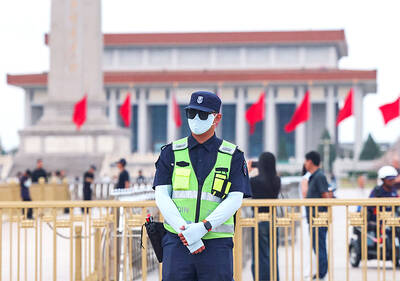
Chinese authorities are snuffing out any remembrance of the deadly 1989 military crackdown on student-led pro-democracy protests in Tiananmen Square, which happened 37 years ago yesterday, in a further tightening of a years-long campaign to erase what happened from public memory. Police told relatives of the victims they would not be allowed to visit a cemetery in Beijing on the anniversary of the crackdown, a person with knowledge of the matter said. Relatives of the victims visited the cemetery on the anniversary for more than 30 years to read memorial statements with police keeping watch, Amnesty International said. Hundreds of people,


 RSS
RSS