

It is an all-too-familiar ritual. Hours after an attack on a US convoy or an Iraqi police patrol, a brief statement begins appearing on Islamist Web sites claiming it was carried out by fighters loyal to Abu Musab al-Zarqawi, Iraq's most wanted man.
But in the past two weeks something has changed. Every day now, new messages appear on the Web offering encouragement to resistance fighters, and last week, Zarqawi's group started an Internet magazine, complete with photographs and 43 pages of text. Other Islamist groups are joining the effort, including one calling itself the Jihadist Information Brigade.
The Iraqi insurgency appears to have mounted a full-scale propaganda war.
And while the methods are not new -- most militant groups now rely on the Web to recruit new adherents -- the recent flurry of propaganda from Iraq has a distinctly defensive sound. The violence here has not let up, but the relatively peaceful elections, and the new movements toward democracy in other Arab countries, appear to have had a dispiriting effect on the insurgents, terrorism analysts say.
"I think they feel they are losing the battle," said Rita Katz, director of the SITE Institute, an American nonprofit group that monitors Islamist Web sites and news operations. "They realize there will be a new government soon, and they seem very nervous about the future."
One recent Web posting, for instance, angrily disputed "the infidels' claim that the mujahedeen are weakened and their attacks are fewer." Another insisted that Zarqawi was "in good health" and still planning operations. Yet another warned against recent entreaties to insurgents to "sit down at the bargaining table" with the US and its allies.
It is hard, of course, to be sure of the authenticity of Internet postings. But US officials say those that appear with the Zarqawi logo seem to be credible, and that has led them to conclude that he does indeed have a news operation.
The group, al-Qaeda in Mesopotamia, is also casting itself as a defender of Muslim lives. After an attack Wednesday on a hotel in central Baghdad, the group released an Internet statement claiming credit, noting, "As for the time, the deadly attack should always be before the start of the working day so that it won't harm Muslims who are passing by."
To some extent, the insurgents are creating their own press coverage, and successfully. After Wednesday's hotel attack in Baghdad, for instance, one group quickly released its own videotape of the bombing, along with statements explaining why and how it chose that target. Within hours, all of it was appearing not only on Arabic Web sites and chat rooms but also on television stations and even in some Western news reports.
But just in case, the group is adding a forum of its own. The new Internet magazine is called Zurwat al Sanam, Arabic for "the top of the camel's hump," a metaphorical phrase meaning the ideal of Islamic belief and practice.
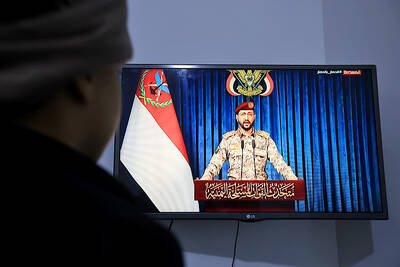
ON THE MOVE: Trump unexpectedly cut short a trip to return to the White House, while the State Department warned Americans to avoid travel to the Middle East The US on Saturday warned that hostilities between Saudi Arabia and Iran-backed Houthis could “escalate rapidly” after a missile attack targeted Riyadh for the first time since the Yemen conflict resumed. US President Donald Trump on Saturday cut short a weekend at Camp David, a secluded presidential complex in rural Maryland, to return unexpectedly to the White House. The White House gave no explanation for the early return, which comes as a new threshold was crossed in the conflict between Saudi Arabia and the Houthis, who control a large part of Yemen and are fighting government forces backed by a coalition led
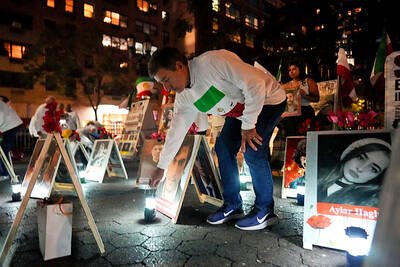
World leaders gather in New York this week for the UN General Assembly, bracing for US President Donald Trump’s return to the rostrum for a second year running, with talks centering on the widening conflicts in the Middle East and Ukraine and the risks of artificial intelligence (AI). Nearly 130 heads of state meet with the post-World War II order under strain and with the UN itself struggling to remain relevant and weathering attacks from Trump, who has slashed the US’ contributions and withdrawn from dozens of UN bodies. Chinese President Xi Jinping (習近平), who last addressed the diplomatic jamboree via video
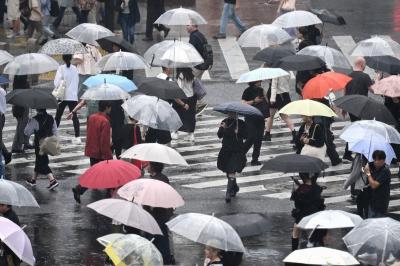
Typhoon Dujuan forced the cancellation of at least 275 flights in Japan today and prompted warnings of potentially record-breaking rainfall as the storm nears Tokyo. The typhoon, which is accompanied by high winds, has also led to the early closure in Tokyo of one the world’s biggest video game trade fairs and knocked out power for thousands. The Japan Meteorological Agency (JMA) warned yesterday that rain and winds were expected to intensify even before the typhoon’s arrival. “The total rainfall through Tuesday could exceed the average monthly rainfall for September, resulting in record-breaking heavy rain,” the agency said. The typhoon’s wind speeds were at
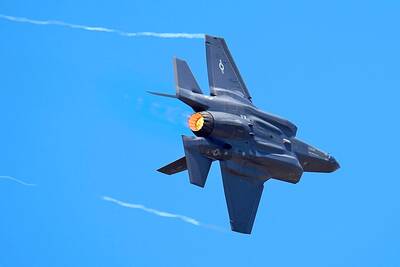
BAD TIMING: The disclosure of the incident, which is under investigation by at least two congressional committees, comes as Xi was to meet with Trump The Pentagon is investigating how parts of the US’ most advanced fighter jet ended up in Hong Kong, with a news outlet on Wednesday reporting that China has obtained the F-35 equipment. The F-35 Joint Program Office said in a statement that it and the US Department of Defense are aware of “a shipment issue” with F-35 components. “We are actively working with US authorities and industry partners to retrieve these components, investigate the incident and place safeguards to avoid a future occurrence,” the office said. UPS was shipping a cockpit canopy and weapons-bay door from an Australian military F-35 that was being


 RSS
RSS