


A woman who drew international attention after being gang-raped in Pakistan in a retaliatory "honor" attack said yesterday she is fearful after several of the alleged perpetrators were ordered released from prison.
Mukhtar Mai's story broke in June 2002 after she was raped by four men on the orders of a village council that wanted to punish her family.
The assault was ordered after Mai's brother allegedly had sex with a woman from a more prominent family.
Mai's story captured global attention and prompted Pakistani President General Pervez Musharraf to order the arrest of the culprits.
death sentence
Within days six men were behind bars, and a judge sentenced them to death after finding them guilty.
On Thursday, however, an appeal court in Multan in Pakistan's eastern Punjab province ordered the release of five of the men because of a lack of evidence. The other had his death sentence reduced to life in prison.
While the five have yet to be released, Mai said she won't be safe in her village of Meerwala -- 565km southwest of the capital, Islamabad -- where the crime took place.
"I fear that those who were awarded death sentences can take any step after their re-lease," a tearful Mai said, urging the government to provide her protection.
appeal
Mai, a 33-year-old schoolteacher, said she would not leave her village and vowed to appeal the court's decision.
"I will fight a legal battle to death. I want all those people who molested me hanged," she said.
Mai is from the Gujar clan, while the attackers were from a clan considered socially higher, called Mastoi.
She denied her 13-year-old brother Abdul Shakoor had relations with the Mastoi woman, saying the clan fabricated the story to cover up another incident, in which her brother was allegedly sexually assaulted by Mastoi men.
unforgettable
Mai said she cannot forget what happened on June 22, 2002, when they came to her house and accused Shakoor. Hours later, a village council summoned her father.
"I was worried about my brother, so I went there to see the proceedings," she said.
"My father was defending Shakoor when a man caught me and started taking me to a house. I cried and asked for help. Some armed men caught my father. Later, four men took turns to rape me, and then threw me out of that house," she said.
She said she would never forgive the people who saw her being dragged away, but did nothing to help.
"I heard laughter, and weeping there helplessly was only one man -- my father," she said.

PHISHING: The con might appear convincing, as the scam e-mails can coincide with genuine messages from Apple saying you have run out of storage For a while you have been getting messages from Apple saying “your iCloud storage is full.” They say you have exceeded your storage plan, so documents are no longer being backed up, and photos you take are not being uploaded. You have been resisting Apple’s efforts to get you to pay a minimum of £0.99 (US$1.33) a month for more storage, but it seems that you cannot keep putting off the inevitable: You have received an e-mail which says your iCloud account has been blocked, and your photos and videos would be deleted very soon. To keep them you need
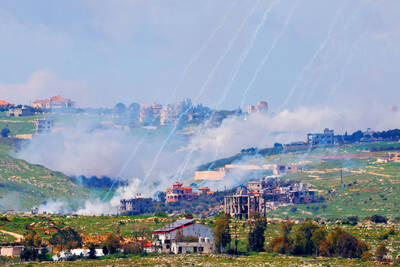
The Israeli military has demolished entire villages as part of its invasion of south Lebanon, rigging homes with explosives and razing them to the ground in massive remote detonations. The Guardian reviewed three videos posted by the Israeli military and on social media, which showed Israel carrying out mass detonations in the villages of Taybeh, Naqoura and Deir Seryan along the Israel-Lebanon border. Lebanese media has reported more mass detonations in other border villages, but satellite imagery was not readily available to verify these claims. The demolitions came after Israeli Minister of Defense Israel Katz called for the destruction of

A US YouTuber who caused outrage for filming himself kissing a statue commemorating Korean wartime sex slaves has been sentenced to six months in prison, a court in Seoul said yesterday. Johnny Somali, 25, gained notoriety several years ago for recording himself doing a series of provocative stunts in South Korea and Japan, and streaming them on platforms such as YouTube and Twitch. South Korean authorities indicted Somali — whose real name is Ramsey Khalid Ismael — in 2024 on public order violations and obstruction of business, and banned him from leaving the country. “The court has sentenced him to six months in
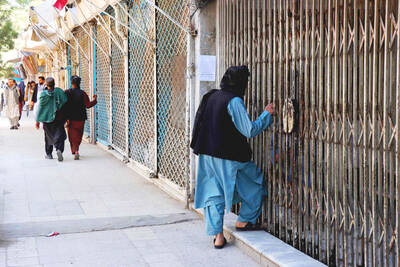
The death toll from a shooting in western Afghanistan rose to 11 on Saturday, after gunmen targeted civilians at a picnic spot in Herat, the provincial authority said. Bullet marks were visible on a wall of the Sayed Mohammad Agha Shia shrine, while bloodstains marked a blanket abandoned at the scene. “Eleven people have been recorded dead and eight others wounded from Friday’s incident, with the condition of two of the wounded reported as critical,” Herat’s information office said in a statement. The update raises a toll of seven killed provided on Friday by the Afghan Ministry of Interior Affairs


 RSS
RSS