


US President George W. Bush expressed misgivings for two of his most famous expressions: "Bring 'em on," in reference to Iraqis attacking US troops, and his vow to get Osama bin Laden "dead or alive."
During a round-table interview Thursday with reporters from 14 US newspapers, Bush acknowledged that his tough language "had an unintended consequence."
On July 2, 2003, two months after he had declared an end to major combat in Iraq, Bush promised US forces would stay until the creation of a free government there. To those who would attack US forces in an attempt to deter that mission, Bush said, "My answer is, Bring 'em on."
"Sometimes, words have consequences you don't intend them to mean," Bush said Thursday. "`Bring 'em on' is the classic example, when I was really trying to rally the troops and make it clear to them that I fully understood, you know, what a great job they were doing. And those words had an unintended consequence. It kind of, some interpreted it to be defiance in the face of danger. That certainly wasn't the case."
In the week after the Sept. 11 attacks, Bush was asked if he wanted bin Laden, the terrorist leader blamed for the attacks, dead.
"I want justice," Bush said. "And there's an old poster out West, that I recall, that said, `Wanted, Dead or Alive.'"
Recalling that remark, Bush said Thursday: "I can remember getting back to the White House, and Laura said, `Why did you do that for?' I said, `Well, it was just an expression that came out. I didn't rehearse it.'"
"I don't know if you'd call it a regret, but it certainly is a lesson that a president must be mindful of, that the words that you sometimes say ... I speak plainly sometimes, but you've got to be mindful of the consequences of the words," Bush said.
"So put that down. I don't know if you'd call that a confession, a regret, something," the president said.
In his second debate last year with presidential challenger Senator John Kerry, Bush was asked to name three instances in which he had made a wrong decision.
At the time he declined to identify any specific mistakes.
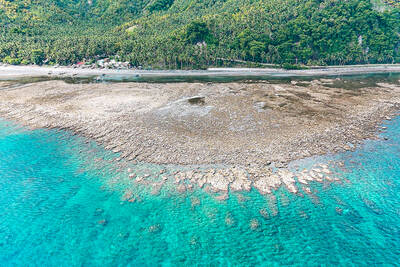
Arsenio Butil Jr fell to his knees and began to pray when last week’s deadly magnitude 7.8 earthquake began shaking his home on the coast of the southern Philippines. When he opened his eyes, he saw a once-familiar shoreline changing in real time, with swathes of previously submerged coral suddenly pushing above the waterline. The June 8 quake, driven by a shifting of the nearby Cotabato Trench, toppled buildings, triggered landslides and killed at least 76 people on the southern island of Mindanao. The tectonic forces at work also thrust chunks of the island’s coastline upward in a phenomenon known as “coastal uplift,”
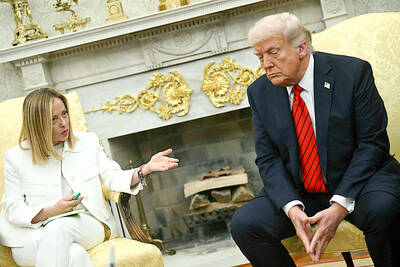
NATO ALLIES: The Italian PM accused Trump of ‘constant, unprovoked ... senseless’ attacks and said ‘my popularity is none of your concern. I suggest you focus on yours’ Italian Prime Minister Giorgia Meloni on Saturday fired back at US President Donald Trump, saying his “constant, unprovoked attacks are senseless” after he escalated a diplomatic row by accusing her of repeatedly seeking a photograph with him. The clash has opened an unusually personal rift between Trump and one of Europe’s most prominent right-wing leaders, who had sought to cast herself as a bridge between Washington and the continent during Trump’s return to power. Trump had initially told Italian broadcaster La7 that Meloni “begged” him for a picture at last week’s G7 summit in France, saying he agreed only because
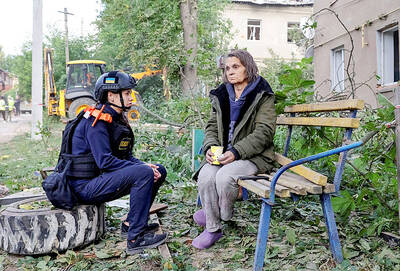
President Volodymyr Zelenskiy on Saturday said that Russian forces were preparing an impending massive attack on Ukraine and warned residents to take special care as Russian strikes in different regions killed at least six people. “Tonight and in the coming hours, it is especially important to pay close attention to air raid warnings,” Zelenskiy said in his nightly video address. “The Russians have prepared for a massive attack. Please take care of yourselves.” Russian forces have staged a series of heavy attacks on Kyiv in the past few weeks and in other major cities. Strikes on Monday last week killed
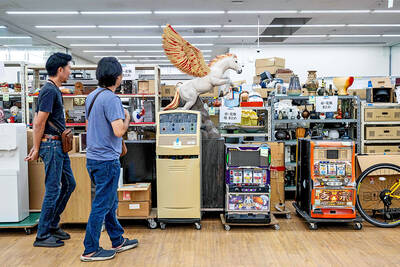
YUCK OR YUM? While it is difficult to sell second-hand goods that are more than seven years old in Japan, they are still popular in foreign markets, an executive said Under a scorching sun in a Bangkok suburb, a whistle blew, and shouts filled the air as dozens of shoppers rushed into a warehouse bearing the sign “Japanese Second-Hand Store.” From bags and bicycles to surfboards and suitcases, the Japanese second-hand market is booming, with quality-conscious buyers in other Asian countries increasingly tapping into the circular economy trend. “What is considered garbage for them can still be useful in Thailand,” said 36-year-old Lookpoo Sathitpanyapon, who runs an online store selling toy keychains. “That bag, that bag,” one shopper shouted while racing through the warehouse, filled with everything from colorful toys


 RSS
RSS