


A suicide car bomber rammed into a Shiite mosque in Baghdad during dawn prayers yesterday, killing 14 people and stoking fears that sectarian divisions over when to hold elections could unleash further bloodshed.
Witnesses said there were two blasts -- an initial explosion during prayers and a second blast as rescuers tried to drag out the dead and wounded at the mosque in Aad-hamiya, a mainly Sunni neighborhood and guerrilla stronghold in northern Baghdad. It was not immediately clear if the casualties were police or civilians. At least 19 people were wounded, an interior ministry source said.
In another dawn attack in the southwest of Baghdad, gunmen fired mortars at a police station in the Seydiya district before bursting into the compound and hunting down policemen inside, survivors of the attack said. Eleven policemen were killed and six were wounded.
The insurgents also freed around 50 prisoners from the jail in the station and set two police pickup trucks ablaze. Clouds of thick, dark smoke poured into the air.
"I saw armed men firing towards the police station while taking cover behind rubbish bins and the police ran away," said local inhabitant Ahmed Hashem..
Another resident, Ali Hussein, said gunfire lasted about an hour and that he had seen gunmen firing on the police station from the rooftops of neighboring buildings.
A heavy police presence had sealed off the area several hours after the attack, preventing journalists from entering the police station, whose walls were riddled with bullet holes. Hundreds of spent bullet cartridges lay scattered on the ground and two police cars were left burnt-out.
In an Internet statement, the group led by Jordanian al- Qaeda ally Abu Musab al-Zarqawi claimed responsibility for the attack: "The lions of al-Qaeda in Iraq attacked the headquarters of the apostates who sold their religion, honor and land ... and attacked the Seydiya police station, killing everyone inside except for two who fled."
An interior ministry spokesman said the mosque attack was "part of a strategy of increasing terrorist attacks in order to prevent general elections being held".
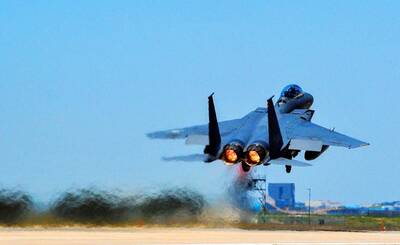
South Korea’s air force yesterday apologized for a 2021 midair collision involving two fighter jets, a day after auditors said the pilots were taking selfies and filming during the flight and held them responsible for the accident. “We sincerely apologize to the public for the concern caused by the accident that occurred in 2021,” an air force spokesman told a news conference, adding that one of the pilots involved had been suspended from flying duties, received severe disciplinary action and has since left the military. The apology followed a report released on Wednesday by the South Korean Board of Audit and Inspection,

Indonesian police have arrested 13 people after shocking images of alleged abuse against small children at a daycare center went viral, sparking outrage across the nation, officials said on Monday. Police on Friday last week raided Little Aresha, a daycare center in Yogyakarta on Java island, following a report from a former employee. CCTV footage circulating on social media showed children, most younger than two, lying on the floor wearing only diapers, their hands and feet bound with rags. The police have confirmed that the footage is authentic. Police said they also found 20 children crammed into a room just 3m by 3m. “So

About 240 Indians claiming descent from a Biblical tribe landed at Tel Aviv airport on Thursday as part of a government operation to relocate them to Israel. The newcomers passed under a balloon arch in blue and white, the colors of the Israeli flag, as dozens of well-wishers welcomed them with a traditional Jewish song. They were the first “bnei Menashe” (“sons of Manasseh”) to arrive in Israel since the government in November last year announced funding for the immigration of about 6,000 members of the community from the states of Manipur and Mizoram in northeast India. The community claims to descend from

‘TROUBLING’: The firing of Phelan, who was an adviser to a nonprofit that supported the defense of Taiwan, was another example of ‘dysfunction’ under Trump, a US senator said US Secretary of the Navy John Phelan has been fired, a US official and a person familiar with the matter said on Wednesday, in another wartime shakeup at the Pentagon coming just weeks after US Secretary of Defense Pete Hegseth ousted the Army’s top general. The Pentagon announced his departure in a brief statement, saying he was leaving the administration “effective immediately,” but it did not provide a reason or say whether it was his decision to go. The sources, who spoke on condition of anonymity, said Phelan was dismissed in part because he was moving too slowly to implement reforms to


 RSS
RSS