


President Hamid Karzai has been officially declared Afghanistan's first-ever popularly elected president after a weeks-long fraud probe found no reason to overturn his landslide victory.
While the US-backed leader made an immediate call for unity, his closest rivals refused to concede, undermining hopes for political stability in a country racked by ethnic mistrust.
The UN-sponsored electoral board, confirming the results of the Oct. 9 vote, said Karzai had won a five-year term with 55.4 percent, 39 percentage points more than his nearest rival. It was the first national ballot since the fall of the Taliban three years ago.
"His excellency Hamid Karzai is the winner," board chairman Zakim Shah said at a ceremony on Wednesday broadcast live on Afghan state television. "We are announcing the first elected president of Afghanistan."
In Washington overnight, US State Department spokesman Richard Boucher said: "We congratulate President Hamid Karzai on his election as Afghanistan's first democratically elected president and we look forward to his inauguration next month."
The UK, Germany and France also wished Karzai well.
High turnout and the lack of major violence on polling day "demonstrates the scale of the transformation that has already taken place in Afghanistan in the three years since the overthrow of the Taliban," British Prime Minister Tony Blair said.
NATO chief Jaap de Hoop Scheffer, who bulked up the alliance's Afghan security force during the poll, said he looked forward to working with Karzai "in helping Afghanistan build a better, safer future."
The election itself was delayed from June because of insecurity and logistical problems. The result was then held up by weeks of mudslinging by Karzai's challengers, who threatened to boycott the outcome.
In its final report released on Wednesday, the panel confirmed problems with ballot stuffing and with ink used to mark people's fingers to prevent multiple voting.
But it said there was "no evidence" that the problems were widespread or that they favored only Karzai.
"There were shortcomings," Staffan Darnolf, a Swedish election expert on the panel, said at a news conference. "But they could not have materially affected the overall result."
Karzai was expected to make a victory speech in the Afghan capital yesterday.
However, his nearest rival, former Education Minister Yunus Qanooni, refused to concede defeat, raising the risk of political instability in a country slowly emerging from a quarter-century of war.
Qanooni's running mate Syed Hussein Alemi Balkhi said the report was "unacceptable" though he stopped short of saying they would reject the result.
Qanooni won 16.3 percent of the vote, ahead of Hazara chieftain Mohammed Mohaqeq with 11.7 percent.
Mohaqeq, who has vowed "never" to recognize Karzai's victory, declined to comment on Wednesday.

South Korea’s air force yesterday apologized for a 2021 midair collision involving two fighter jets, a day after auditors said the pilots were taking selfies and filming during the flight and held them responsible for the accident. “We sincerely apologize to the public for the concern caused by the accident that occurred in 2021,” an air force spokesman told a news conference, adding that one of the pilots involved had been suspended from flying duties, received severe disciplinary action and has since left the military. The apology followed a report released on Wednesday by the South Korean Board of Audit and Inspection,
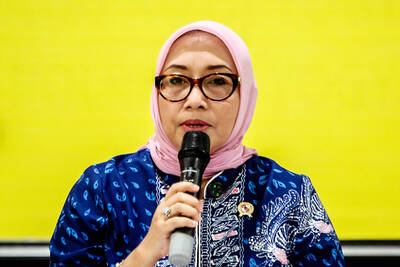
Indonesian police have arrested 13 people after shocking images of alleged abuse against small children at a daycare center went viral, sparking outrage across the nation, officials said on Monday. Police on Friday last week raided Little Aresha, a daycare center in Yogyakarta on Java island, following a report from a former employee. CCTV footage circulating on social media showed children, most younger than two, lying on the floor wearing only diapers, their hands and feet bound with rags. The police have confirmed that the footage is authentic. Police said they also found 20 children crammed into a room just 3m by 3m. “So

About 240 Indians claiming descent from a Biblical tribe landed at Tel Aviv airport on Thursday as part of a government operation to relocate them to Israel. The newcomers passed under a balloon arch in blue and white, the colors of the Israeli flag, as dozens of well-wishers welcomed them with a traditional Jewish song. They were the first “bnei Menashe” (“sons of Manasseh”) to arrive in Israel since the government in November last year announced funding for the immigration of about 6,000 members of the community from the states of Manipur and Mizoram in northeast India. The community claims to descend from

‘TROUBLING’: The firing of Phelan, who was an adviser to a nonprofit that supported the defense of Taiwan, was another example of ‘dysfunction’ under Trump, a US senator said US Secretary of the Navy John Phelan has been fired, a US official and a person familiar with the matter said on Wednesday, in another wartime shakeup at the Pentagon coming just weeks after US Secretary of Defense Pete Hegseth ousted the Army’s top general. The Pentagon announced his departure in a brief statement, saying he was leaving the administration “effective immediately,” but it did not provide a reason or say whether it was his decision to go. The sources, who spoke on condition of anonymity, said Phelan was dismissed in part because he was moving too slowly to implement reforms to


 RSS
RSS