


Suitcases full of cash, secret bank accounts, covert operatives, corrupt politicians on the take. A report detailing alleged illicit UN oil-for-food deals with the former Iraq government paints a portrait of former president Saddam Hussein as an international gangster, but not as a terrorist.
The financial schemes propped up Saddam's regime for more than a decade and involved cloak-and-dagger efforts to hide the alleged graft by dealing in front companies, untraceable accounts, cash sales and smuggling, the report by the top US arms inspector said.
The report, delivered on Wed-nesday by Charles Duelfer, who was charged to investigate Iraq's supposed weapons programs, relies on internal Iraqi documents and extensive interviews with members of the former regime now imprisoned in Iraq.
Although Saddam opposed the program at first, he quickly realized it could be exploited and did so with mendacious verve until the US-led invasion in 2003, former Iraqi officials report.
Saddam was able to "subvert" the US$60 billion UN oil-for-food program to generate an estimated US$1.7 billion in revenue outside UN control from 1997-2003, Duelfer's report says.
In addition to oil-for-food schemes, Iraq brought in over US$8 billion in illicit oil deals with Jordan, Syria, Turkey and Egypt through smuggling or illegal pumping through pipelines during the period that sanctions were in place from 1991-2003, the report says.
While the UN focused on delivering humanitarian goods to an Iraqi population suffering from international sanctions, Saddam's government devised elaborate ways to skim money from deals sending oil out and goods in. The report spells out how kickbacks were solicited and how money got to Baghdad.
Iraq manipulated foreign governments, including members of the UN Security Council, by awarding contracts and bribes to foreign companies and political figures in countries that showed support for ending sanctions, such as Russia, France and China, the report says.
The former head of the oil-for-food program, Benon Sevan, also is accused of receiving bribes in the form of vouchers allowing him or companies tied to him to purchase 7.3 million barrels of oil, which would have netted US$700,000 to US$2 million depending on oil prices.
Sevan is among hundreds of companies, groups and individuals on 13 secret lists kept by the Iraqi Vice President Taha Yasin Ramadan and Oil Minister Amir Rashid Muhammad al-Ubaydi.
"Saddam himself would recommend a specific recipient," the report says, "and the recommended amount of the allocation."
Russian and French companies were singled out by the regime for special treatment, with politicians close to the French President Jacques Chirac appearing on the list, according to the report.
The most lucrative exploitation of the program involved kickbacks from companies executing legal sales of oil. Under the terms of the UN resolution establishing the program, Iraq maintained the right to determine who got contracts for oil being exported and the humanitarian goods being imported -- and to determine market prices.
In what the report calls "an open secret," the Iraqi government demanded illicit surcharges on all barrels of oil bought, which buyers had to secretly pay before the deals were sealed. They complied because the Iraqis were selling slightly below market prices.
Most of the kickbacks were transferred to the Iraqi government through secret bank accounts in Jordan and Lebanon, from which "trusted Oil Ministry employees" withdrew an estimated US$2 billion, the report said. They hand-delivered the cash to Baghdad.
An additional US$750 million was recovered in the accounts after the war and returned to Iraq.
The report alleges Iraqi embassies in Moscow, Hanoi, Ankara and Bern were also used to collect kickbacks from the oil companies, with the money shipped back to Iraq in diplomatic pouches.
The Iraqis exploited deals for importing goods in a similar manner.
Elaborate methods were used to hide the secret accounts in Jordan and Lebanon.
Temporary accounts set up under false names by Iraqi ministries were used for initial transactions before money was spirited into accounts held by the Central Bank of Iraq at the same banks.
Once the money returned to Baghdad, the government had a standard scheme for dividing the spoils.
The government routinely allocated 5 percent to 10 percent of the kickbacks to the ministries, which then distributed the money to bureaucrats to encourage them to continue soliciting bribes.
Another Iraqi scheme involved signing deals with foreign companies for inferior or spoiled goods, while paying premium prices.
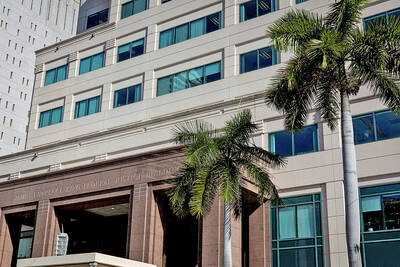
‘GROSS NEGLIGENCE?’ Despite a spleen typically being significantly smaller than a liver, the surgeon said he believed Bryan’s spleen was ‘double the size of what is normal’ A Florida surgeon who is facing criminal charges after allegedly removing a patient’s liver instead of his spleen has said he is “forever traumatized” by that person’s death. In a deposition from November last year that was recently obtained by NBC, 44-year-old Thomas Shaknovsky described the death of 70-year-old William Bryan as an “incredibly unfortunate event that I regret deeply.” Bryan died after the botched surgery; and last month, a grand jury in Tallahassee indicted Shaknovsky on a charge of manslaughter. “I’m forever traumatized by it and hurt by it,” Shaknovsky added, also saying that wrong-site surgeries can happen “during
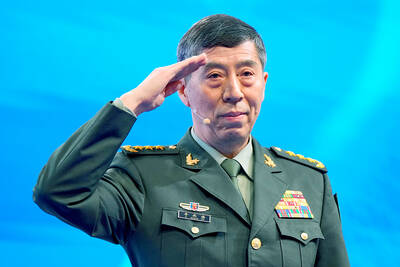
Former Chinese ministers of national defense Wei Fenghe(魏鳳和) and Li Shangfu (李尚福) were both sentenced to death with a two-year reprieve over graft charges, state news agency Xinhua reported on Thursday, underscoring the severity of the purge in the military. The armed forces have been one of the main targets of a broad corruption crackdown ordered by Chinese President Xi Jinping (習近平) after coming to power in 2012. The purges reached the elite Rocket Force, which oversees nuclear weapons as well as conventional missiles, in 2023. Earlier this year they escalated further, resulting in the removal of the top general in

The Philippine Coast Guard yesterday said it deployed aircraft to issue radio warnings to a Chinese research ship in a disputed area of the South China Sea “swarming” with vessels from Beijing’s so-called maritime militia. The research vessel Xiang Yang Hong 33 (向陽紅33), which is capable of supporting submersible craft, was operating near a reef in the contested Spratly Islands (Nansha Islands, 南沙群島), which Taiwan also claims, the Philippine Coast Guard said. The Chinese ship was deploying a service boat toward the Spratly’s Iroquois Reef on Wednesday when it was spotted by a coast guard plane, “confirming ongoing unauthorized [marine scientific research]
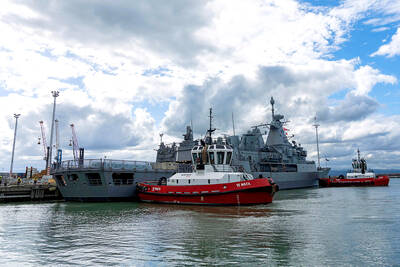
New Zealand is open to expanding its frigate fleet beyond its current two vessels, with New Zealand Minister of Defence Chris Penk saying “no options are off the table” as the government weighs buying new warships from Japan or the UK. The government yesterday said it is looking to replace its two aging Anzac-class frigates, which were both commissioned almost 30 years ago. The UK’s Type 31 and Japan’s Mogami-class warships are the options under consideration. Speaking in an interview, Penk said there is potential to increase the number of frigates the nation purchases. “We need a certain amount of capability as a


 RSS
RSS