


Prime Minister John Howard launched a media blitz yesterday to persuade undecided voters to give him a fourth term in today's election, where he will be the first of the three leaders -- US, British and Australian -- who invaded Iraq last year to face a ballot showdown.
While Howard's allies in Washington and London will be closely monitoring the election for signs of what they face in polls next month and next year, voters here have been more concerned with the economy, health and education.
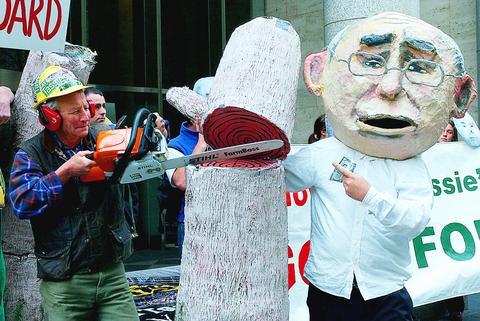
PHOTO: EPA
With some analysts suggesting up to 18 percent of Australia's 13 million voters remained undecided, Howard and opposition Labor Party leader Mark Latham made their final pitches for support in a string of radio and television appearances.
Polls have Howard's center-right government the likely winner, but undecided voters opting to back Labor could end Howard's 30-year political career.
"To those Australians who are listening to this program who haven't made up their mind, this is not a time to experiment with the theory of kick him but he'll still be in office," Howard told 4BC radio in Brisbane as part of a flurry of election-eve interviews. One of the main reasons voters may want to punish Howard is his tough stance on Iraq. The staunch US ally sent 2,000 troops last year to take part in the US-led invasion, triggering the biggest peace protests in Australia since Canberra sent soldiers to fight in the Vietnam War.
Howard still has 900 military personnel in and around Iraq, none involved in offensive operations, and has vowed to leave them there as long as they are needed. Latham says he will withdraw most of the troops by Christmas if he wins today.
"People will know that we have to deal with the here and now -- stay the distance and help Iraq, or cut and run," Howard said at a press conference in Sydney. "If Australia were to cut and run from Iraq it would send a very bad signal to the world."
Howard stood by his decision to invade Iraq despite one of his key motivations being undermined by the chief US weapons inspector saying former Iraqi president Saddam Hussein did not have a weapons of mass destruction program last year.
Latham was just as energetic -- packing in 11 interviews in the morning. Voting in remote locations -- including among Aborigines in the Outback and scientists camped on Antarctica -- already has begun.
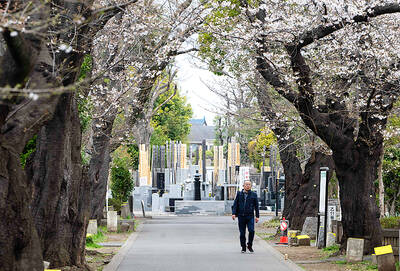
ROCKY RELATIONS: The figures on residents come as Chinese tourist numbers drop following Beijing’s warnings to avoid traveling to Japan The number of Chinese residents in Japan has continued to rise, even as ties between the two countries have become increasingly fractious, data released on Friday showed. As of the end of December last year, the number of Chinese residents had increased by 6.5 percent from the previous year to 930,428. Chinese people accounted for 22.6 percent of all foreign residents in Japan, making them by far the largest group, Japanese Ministry of Justice data showed. Beijing has criticized Tokyo in increasingly strident terms since Japanese Prime Minister Sanae Takaichi last year suggested that a military conflict around Taiwan could
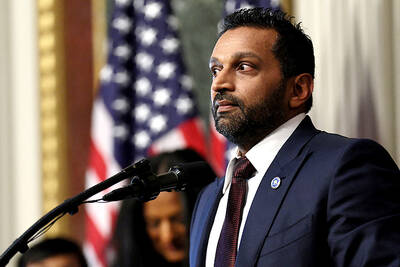
A pro-Iran hacking group claimed to breach FBI Director Kash Patel’s personal e-mail inbox and posted some of the contents online. The e-mails provided by the hacking group include travel details, correspondence with leasing agents in Washington and global entry, and loyalty account numbers. The e-mail address the hackers claim to have compromised has been previously tied to Patel’s personal details, and the leaked e-mails contain photos of Patel and others, in addition to correspondence with family members and colleagues. “The FBI is aware of malicious actors targeting Director Patel’s personal email information,” the agency said in a statement on
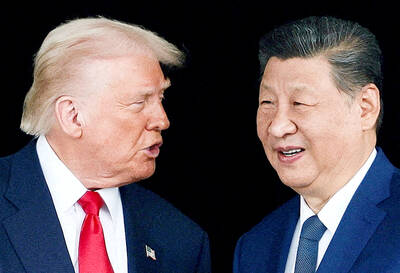
RIVALRY: ‘We know that these are merely symbolic investigations initiated by China, which is in fact the world’s most profligate disrupter of supply chains,’ a US official said China has started a pair of investigations into US trade practices, retaliating against similar probes by US President Donald Trump’s administration as the superpowers stake out positions before an expected presidential summit in May. The move, announced by the Chinese Ministry of Commerce on Friday, is a direct mirror of steps Trump took to revive his tariff agenda after the US Supreme Court last month struck down some of his duties. “China expresses its strong dissatisfaction and firm opposition to these actions,” a ministry spokesperson said in a statement, referring to the so-called Section 301 investigations initiated on March 11.

When a hiker fell from a 55m waterfall in wild New Zealand bush, rescuers were forced to evacuate the badly hurt woman without her dog, which could not be found. After strangers raised thousands of dollars for a search, border collie Molly was flown to safety by a helicopter pilot who was determined to reunite the pet and the owner. A week earlier, an emergency rescue helicopter found the woman with bruises and lacerations after a fall at a rocky spot at the waterfall on the South Island’s West Coast. She was airlifted on March 24, but they were forced to


 RSS
RSS