


It started with a robbery, but the gang that burst into a branch of Al-Habib Bank in this teeming port city had no interest in striking it rich, and the university graduate driving the getaway car was just getting started on a master plan for terror.
The heist, carried out in daylight and with AK-47 assault rifles, is emblematic of a new brand of Islamic militant -- more educated but less established and largely cut off from traditional sources of terror funding, Pakistani police and intelligence officials told reporters.
Atta-ur Rehman and his Jundullah gang walked away from the bank in Karachi on Nov. 18 last year with just under 4 million rupees (US$70,000), enough to finance an eight-month wave of attacks against the US Consulate, a Christian Bible studies group, a peace concert by an Indian singer, a police station, and a senior Pakistani military general. At least 17 people died in the assaults, all carried out in the urban sprawl of Karachi, a city of 15 million that's honeycombed with terror hideouts and al-Qaeda safehouses.
There's no indication al-Qaeda had a hand in Jundullah's spree, but some gang members are believed to have spent time at training camps with top members of Osama bin Laden's network.
"Normally, when robbers loot a bank they split the cash and go their separate ways, but the Jundullah gang only spent about 500,000 rupees ($8,600) from their heist and they stuck together," said Fayyaz Leghari, chief of operations for the Karachi police. "They were not ordinary robbers. They saw the bank job as a way to fund their holy mission."
Leghari said police recovered the rest of the money when they arrested 10 members of the gang following a June 10 assassination attempt on Ahsan Saleem Hayat, the city's military commander and a close aide to President General Pervez Musharraf. Hayat survived but 11 others were killed. The group, whose name means Allah's Brigade, was apparently saving the cash to finance more attacks.
"They have a record of each penny spent, all of it they believe in a noble cause, and they are not denying what they have done," said another police investigator involved in the interrogations of Jundullah suspects, speaking on condition of anonymity.
Police and intelligence officials believe there are about a half dozen other militant bands operating in Karachi, each with about 15 to 20 members.
In addition to Jundullah, officials say they are aware of two cells that call themselves Khuddam Uddin, meaning Servants of The Religion, and al-Furqan -- The Distinguisher. Other group names aren't known. Most of the new groups are offshoots of al-Qaeda-linked Sunni sectarian organizations like Lashkhar-e-Jhangvi and Sipah-e-Sihaba, which have killed hundreds of Shiite Muslims, or Kashmiri militant organizations like Jaish-e-Mohammed and Harakat-ul-Mujahideen. They're motivated by centuries-old Shiite-Sunni feuding, and more recent anger over the US-led wars in Afghanistan and Iraq.
Unlike their parent organizations with well-established networks for raising money -- from Arab sympathizers, al-Qaeda, and jihadi-linked charities -- the smaller groups have improvised.
Robberies, drug trafficking and other crimes have long been used by militant groups across the globe but an increased reliance on them in Pakistan may be a sign that Washington's push to shut terrorists off from their financing is having an effect.
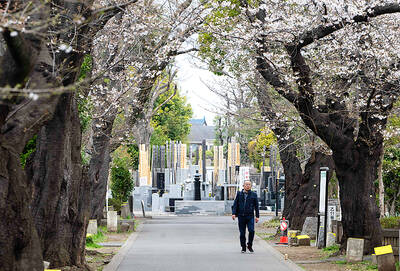
ROCKY RELATIONS: The figures on residents come as Chinese tourist numbers drop following Beijing’s warnings to avoid traveling to Japan The number of Chinese residents in Japan has continued to rise, even as ties between the two countries have become increasingly fractious, data released on Friday showed. As of the end of December last year, the number of Chinese residents had increased by 6.5 percent from the previous year to 930,428. Chinese people accounted for 22.6 percent of all foreign residents in Japan, making them by far the largest group, Japanese Ministry of Justice data showed. Beijing has criticized Tokyo in increasingly strident terms since Japanese Prime Minister Sanae Takaichi last year suggested that a military conflict around Taiwan could
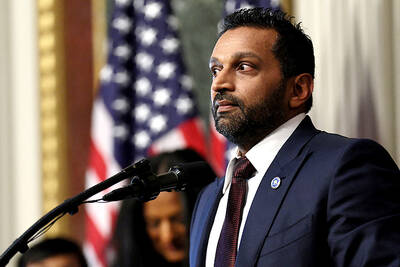
A pro-Iran hacking group claimed to breach FBI Director Kash Patel’s personal e-mail inbox and posted some of the contents online. The e-mails provided by the hacking group include travel details, correspondence with leasing agents in Washington and global entry, and loyalty account numbers. The e-mail address the hackers claim to have compromised has been previously tied to Patel’s personal details, and the leaked e-mails contain photos of Patel and others, in addition to correspondence with family members and colleagues. “The FBI is aware of malicious actors targeting Director Patel’s personal email information,” the agency said in a statement on
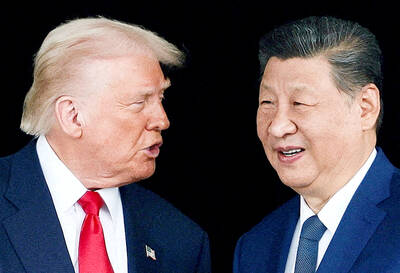
RIVALRY: ‘We know that these are merely symbolic investigations initiated by China, which is in fact the world’s most profligate disrupter of supply chains,’ a US official said China has started a pair of investigations into US trade practices, retaliating against similar probes by US President Donald Trump’s administration as the superpowers stake out positions before an expected presidential summit in May. The move, announced by the Chinese Ministry of Commerce on Friday, is a direct mirror of steps Trump took to revive his tariff agenda after the US Supreme Court last month struck down some of his duties. “China expresses its strong dissatisfaction and firm opposition to these actions,” a ministry spokesperson said in a statement, referring to the so-called Section 301 investigations initiated on March 11.

When a hiker fell from a 55m waterfall in wild New Zealand bush, rescuers were forced to evacuate the badly hurt woman without her dog, which could not be found. After strangers raised thousands of dollars for a search, border collie Molly was flown to safety by a helicopter pilot who was determined to reunite the pet and the owner. A week earlier, an emergency rescue helicopter found the woman with bruises and lacerations after a fall at a rocky spot at the waterfall on the South Island’s West Coast. She was airlifted on March 24, but they were forced to


 RSS
RSS