


Evidence of prisoner abuse and possible war crimes at Guantanamo Bay reached the highest levels of the George Bush's administration as early as autumn 2002, but Secretary of Defense Donald Rumsfeld chose to do nothing about it, according to a new investigation published in the Guardian yesterday.
The investigation, by the veteran journalist Seymour Hersh, quotes one former marine at the camp recalling sessions in which guards would "fuck with [detainees] as much as we could" by inflicting pain on them.
The Bush administration repeatedly assured critics that inmates were granted recreation periods, but one Pentagon adviser told Hersh how, for some prisoners, they consisted of being left in straitjackets in intense sunlight with hoods over their heads.
Hersh provides details of how the US president approved the establishment of a secret unit that was given advance approval to kill or capture and interrogate "high-value" suspects -- considered by many to be in defiance of international law -- an officially "unacknowledged" program that was eventually transferred wholesale from Guantanamo to Abu Ghraib prison in Iraq.
Hersh, who broke the story of the My Lai massacre in the Vietnam war, makes his revelations in a new book, Chain of Command which leaves senior figures in the Bush administration far more seriously implicated in the torture scandal than had been previously apparent.
A CIA analyst visited Guantanamo in summer 2002 and returned "convinced that we were committing war crimes" and that "more than half the people there didn't belong there. He found people lying in their own feces," a CIA source told Hersh.
The analyst submitted a report to General John Gordon, an aide to National Security Adviser Condoleezza Rice.
Gordon was troubled, and, one former administration official told Hersh "that if the actions at Guantanamo ever became public, it'd be damaging to the president."
Rice saw the document by autumn of the same year, and called a high-level meeting at which she asked Rumsfeld, to deal with the problem.
But after he vowed to act, "the Pentagon went into a full-court stall," a former White House official is quoted as saying. "Why didn't Condi do more? She made the same mistake I made. She got the secretary of defense to say he's going to take care of it."
The investigation further suggests that CIA and FBI staff had already witnessed incidents at Guantanamo just as extreme as those that would subsequently be alleged by freed inmates.
A senior intelligence official told Hersh: "I was told [by FBI agents] that the military guards were slapping prisoners, stripping them, pouring cold water over them and making them stand until they got hypothermia."
The secret "special access program" facilitating much of the mistreatment of prisoners, widely held to have contravened the Geneva convention (on the rights of prisoners of war), was established following a direct order from the president.
Hersh reports that a secret document signed by Bush in February 2002 stated: "I determine that none of the provisions of Geneva apply to our conflict with al-Qaeda in Afghanistan or elsewhere throughout the world."
In a statement, the Pentagon said Hersh's investigation "apparently contains many of the numerous unsubstantiated allegations and inaccuracies which he has made in the past based upon unnamed sources ... investigations have determined that no responsible official of the Department of Defense approved any program that could conceivably have authorized or condoned the abuses seen at Abu Ghraib. If any of Hersh's anonymous sources wish to come forward ... the department welcomes them to do so."
Rumsfeld told reporters on Friday he had approved the use of harsh interrogation measures, but that they had only been meant for Guantanamo. He said the measures ought to be contrasted with those of terrorists. "Does it rank up there with chopping someone's head off on television?" he asked. "It doesn't."
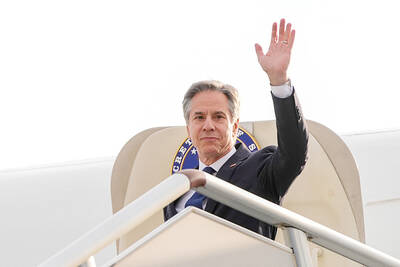
‘IN A DIFFERENT PLACE’: The envoy first visited Shanghai, where he attended a Chinese basketball playoff match, and is to meet top officials in Beijing tomorrow US Secretary of State Antony Blinken yesterday arrived in China on his second visit in a year as the US ramps up pressure on its rival over its support for Russia while also seeking to manage tensions with Beijing. The US diplomat tomorrow is to meet China’s top brass in Beijing, where he is also expected to plead for restraint as Taiwan inaugurates president-elect William Lai (賴清德), and to raise US concerns on Chinese trade practices. However, Blinken is also seeking to stabilize ties, with tensions between the world’s two largest economies easing since his previous visit in June last year. At the
Nearly half of China’s major cities are suffering “moderate to severe” levels of subsidence, putting millions of people at risk of flooding, especially as sea levels rise, according to a study of nationwide satellite data released yesterday. The authors of the paper, published by the journal Science, found that 45 percent of China’s urban land was sinking faster than 3mm per year, with 16 percent at more than 10mm per year, driven not only by declining water tables, but also the sheer weight of the built environment. With China’s urban population already in excess of 900 million people, “even a small portion

UNSETTLING IMAGES: The scene took place in front of TV crews covering the Trump trial, with a CNN anchor calling it an ‘emotional and unbelievably disturbing moment’ A man who doused himself in an accelerant and set himself on fire outside the courthouse where former US president Donald Trump is on trial has died, police said yesterday. The New York City Police Department (NYPD) said the man was declared dead by staff at an area hospital. The man was in Collect Pond Park at about 1:30pm on Friday when he took out pamphlets espousing conspiracy theories, tossed them around, then doused himself in an accelerant and set himself on fire, officials and witnesses said. A large number of police officers were nearby when it happened. Some officers and bystanders rushed
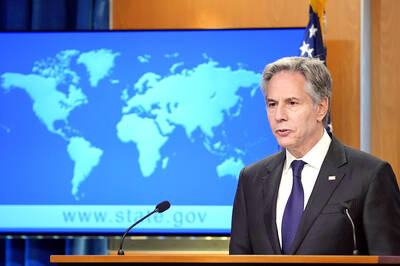
Beijing is continuing to commit genocide and crimes against humanity against Uyghurs and other Muslim minorities in its western Xinjiang province, U.S. Secretary of State Antony Blinken said in a report published on Monday, ahead of his planned visit to China this week. The State Department’s annual human rights report, which documents abuses recorded all over the world during the previous calendar year, repeated language from previous years on the treatment of Muslims in Xinjiang, but the publication raises the issue ahead of delicate talks, including on the war in Ukraine and global trade, between the top U.S. diplomat and Chinese


 RSS
RSS