


After a 69-year migration from tropical Queensland in eastern Australia, an infestation of poisonous cane toads is only a short hop away from crossing the eastern borders of Western Australia state.
Dire predictions of an environmental holocaust for native wildlife have been uttered as barriers have been thrown up on outback desert roads and remote beaches and waterways in northeast Australia.
The dinner plate sized leathery toads (bufo marinus), which can weigh up to 3kg, were imported from Hawaii and released in Queensland in 1935 in a bid to tackle sugar cane beetles that were destroying about 12 percent of the crops. Unfortunately, the beetles could fly and the toads couldn't, so the former still munch away at the cane plantations, and the latter set forth, at first slowly but in recent years at an alarming and accelerating rate, to multiply in almost every conceivable habitat they could find.
Australia got an idea of the ecological impact the toads could wreck three years ago, when they swept through the World Heritage listed Kakadu Wilderness area on the eastern side of the top of the Northern Territory, almost wiping out quolls (native marsupial predators), as well as snakes, birds and even some salt water crocodiles.
The fiercely territorial quolls attacked and ate the toads, which are poisonous. The venom, in glands behind each ear, is sufficiently potent to have killed large crocodiles the same way. As to snakes and birds, the toads either stalk them or sit still looking like a lump of dung before jumping on and eating them.
They have also been seen to squirt the venom over their victims from up to a meter away. Although thought to pose little risk to humans, fatalities have been recorded in remote communities where food became contaminated with their eggs.
The fear is that the more expansive water courses in the north of Western Australia state will prove to be the most favorable habitats yet reached by the toads, where they could wipe out the native goannas, a large meaty lizard that is a staple part of the traditional diet of Aboriginal groups that subsist to this day as hunters and gatherers.

‘IN A DIFFERENT PLACE’: The envoy first visited Shanghai, where he attended a Chinese basketball playoff match, and is to meet top officials in Beijing tomorrow US Secretary of State Antony Blinken yesterday arrived in China on his second visit in a year as the US ramps up pressure on its rival over its support for Russia while also seeking to manage tensions with Beijing. The US diplomat tomorrow is to meet China’s top brass in Beijing, where he is also expected to plead for restraint as Taiwan inaugurates president-elect William Lai (賴清德), and to raise US concerns on Chinese trade practices. However, Blinken is also seeking to stabilize ties, with tensions between the world’s two largest economies easing since his previous visit in June last year. At the

UNSETTLING IMAGES: The scene took place in front of TV crews covering the Trump trial, with a CNN anchor calling it an ‘emotional and unbelievably disturbing moment’ A man who doused himself in an accelerant and set himself on fire outside the courthouse where former US president Donald Trump is on trial has died, police said yesterday. The New York City Police Department (NYPD) said the man was declared dead by staff at an area hospital. The man was in Collect Pond Park at about 1:30pm on Friday when he took out pamphlets espousing conspiracy theories, tossed them around, then doused himself in an accelerant and set himself on fire, officials and witnesses said. A large number of police officers were nearby when it happened. Some officers and bystanders rushed
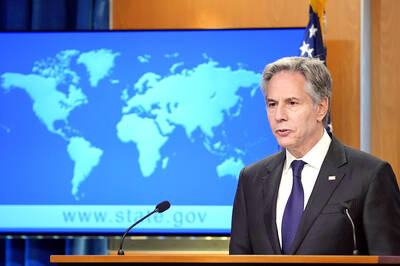
Beijing is continuing to commit genocide and crimes against humanity against Uyghurs and other Muslim minorities in its western Xinjiang province, U.S. Secretary of State Antony Blinken said in a report published on Monday, ahead of his planned visit to China this week. The State Department’s annual human rights report, which documents abuses recorded all over the world during the previous calendar year, repeated language from previous years on the treatment of Muslims in Xinjiang, but the publication raises the issue ahead of delicate talks, including on the war in Ukraine and global trade, between the top U.S. diplomat and Chinese
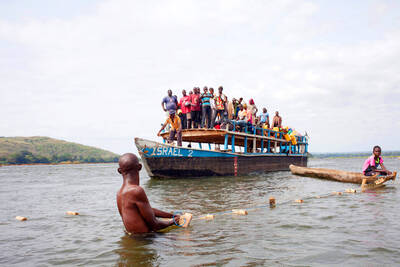
RIVER TRAGEDY: Local fishers and residents helped rescue people after the vessel capsized, while motorbike taxis evacuated some of the injured At least 58 people going to a funeral died after their overloaded river boat capsized in the Central African Republic’s (CAR) capital, Bangui, the head of civil protection said on Saturday. “We were able to extract 58 lifeless bodies,” Thomas Djimasse told Radio Guira. “We don’t know the total number of people who are underwater. According to witnesses and videos on social media, the wooden boat was carrying more than 300 people — some standing and others perched on wooden structures — when it sank on the Mpoko River on Friday. The vessel was heading to the funeral of a village chief in


 RSS
RSS