

Australia will ignore threats of attack by a group saying it is the European wing of al-Qaeda and blamed Spain and the Philippines for fueling the threats by giving in to terrorists and withdrawing troops from Iraq.
The Islamic Tawhid Group said in a statement posted on a Web site that it would attack Italy and Australia with "columns of rigged cars" if they did not withdraw their troops from Iraq.
"We are still investigating the authenticity and relevance of that body, but we will not take any notice of threats of that kind," Australian Prime Minister John Howard told reporters in Sydney yesterday.
"We will not parlay and negotiate with terrorists and I believe the overwhelming majority of the Australian public will agree with us," said Howard, who sent 2,000 troops to the US-led war on Iraq.
Last Wednesday, the previously unheard-of Islamic Tawhid Group also threatened Bulgaria and Poland if they did not leave Iraq.
Australian Foreign Minister Alexander Downer again said that the decision by Spain and the Philippines to withdraw troops from Iraq had encouraged terror groups.
"What they have done in these two cases is accede to the de-mands of the terrorists. And in those circumstances, if you accede to the demands of terrorists, all you do is embolden them to continue the strategy," he told Australian radio yesterday.
Downer said there were no plans to raise Australia's security-alert level from its current medium level.
"We only would increase our alert if we had information that there was credible information that there was to be some sort of attack," Downer said.
Spain's Socialist party had vowed to withdraw the country's troops from Iraq and made good on its promise after unexpectedly winning a March 11 poll, three days after 191 people were killed in coordinated train bombings blamed on Islamic militants.
The Philippines brought its troops home early to save the life of a Filipino hostage.
Howard last week defended his decision to join the war in Iraq after a report criticized Australia's intelligence agencies and their assessments of pre-war information.
He has said Australia's 850 troops in and around Iraq will stay as long as necessary. A poll has shown two-thirds of Australians support his stand.
But the opposition Labor party, polling neck-and-neck with the eight-year-old conservative government, has pledged to bring troops home by Christmas if it wins office in a cliffhanger election tipped for October.
Labor's foreign affairs spokesman Kevin Rudd said Australia should concentrate more on helping countries like the Philippines fight terror rather than criticizing them.
"I don't know if this latest diplomatic fusillade from our foreign minister helps," Rudd told Australian radio yesterday.
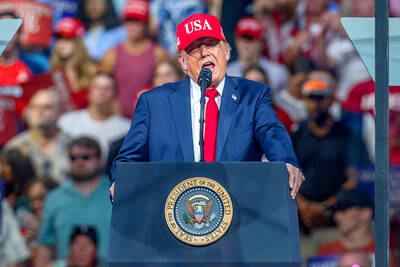
US President Donald Trump on Wednesday threatened to take action against the EU if it moves forward with European Commission President Ursula von der Leyen’s proposal to make Canada the bloc’s first associate member. “If they do that, if I think it’s at all a hostile act; I will put very serious tariffs or stop trading with Europe on many things,” Trump told reporters en route to an event in North Carolina, calling the proposal “laughable.” “If it’s a good intention, that’s fine. If it’s a bad intention, we’ll put very heavy tariffs on Europe,” he said. Von der Leyen made the proposal
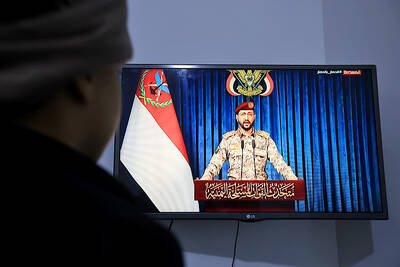
ON THE MOVE: Trump unexpectedly cut short a trip to return to the White House, while the State Department warned Americans to avoid travel to the Middle East The US on Saturday warned that hostilities between Saudi Arabia and Iran-backed Houthis could “escalate rapidly” after a missile attack targeted Riyadh for the first time since the Yemen conflict resumed. US President Donald Trump on Saturday cut short a weekend at Camp David, a secluded presidential complex in rural Maryland, to return unexpectedly to the White House. The White House gave no explanation for the early return, which comes as a new threshold was crossed in the conflict between Saudi Arabia and the Houthis, who control a large part of Yemen and are fighting government forces backed by a coalition led
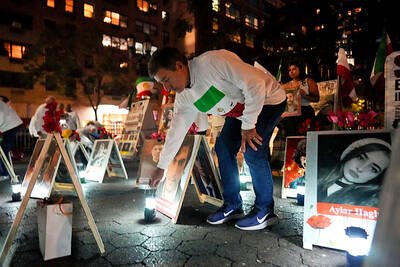
World leaders gather in New York this week for the UN General Assembly, bracing for US President Donald Trump’s return to the rostrum for a second year running, with talks centering on the widening conflicts in the Middle East and Ukraine and the risks of artificial intelligence (AI). Nearly 130 heads of state meet with the post-World War II order under strain and with the UN itself struggling to remain relevant and weathering attacks from Trump, who has slashed the US’ contributions and withdrawn from dozens of UN bodies. Chinese President Xi Jinping (習近平), who last addressed the diplomatic jamboree via video
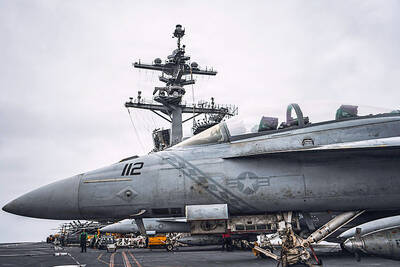
The US military came close to boarding a Chinese vessel in the Middle East earlier this year based on a flawed intelligence report prepared with the help of artificial intelligence (AI), CNN said on Friday. US intelligence indicated the ship was carrying nuclear weapons-related components, leading US forces to prepare to intercept it, the broadcaster reported, citing four anonymous sources familiar with the incident. However, the operation was called off after officials determined that an AI chatbot used by an analyst had misidentified the material the ship was carrying. The report was “entirely false,” but “almost started a war,” CNN quoted one source


 RSS
RSS