


Disney may have colonized the imagination of the world's children for the best part of 80 years, but -- remarkably, in one of the world's most ostentatiously Christian countries -- the entertainment company has done so without the aid of God, a new book points out.
The Gospel According to Disney: Faith, Trust and Pixie Dust, by Mark Pinsky, an American journalist and best-selling author of a similar book about The Simpsons, shows that the film industry's most family-orientated entertainer has rarely mentioned God, and that such religious figures as there are in its animated films are almost entirely bad.
Pinsky, the religion reporter at the Orlando Sentinel, argues: "In the more than 35 animated [features Disney has produced] since 1937, there is scarcely a mention of God as conceived in the Christian and Jewish faiths shared by most people in the western world and many beyond."
villainous priest
The first ordained character to have a big part in a Disney cartoon was Frollo, the villainous priest in The Hunchback of Notre Dame, and he did not make his appearance until 1996, nearly 60 years after the studio began making feature films.
American Christians appear to have scarcely noticed that none of the Disneyland theme parks -- replete with every other aspect of US main street culture -- has a church. The company's cruise liners do not have a single chapel on board.
The reason, the book says, was Disney's determination not to offend anyone in a way which would hamper the making of money.
Instead, it has quietly subverted the Christian gospel by substituting some decidedly unchristian themes: belief in the power of magic, that good people are handsome and that what you wish for really can come true.
`all about me'
"The Gospel of Disney is all about me," Pinsky writes. "My dreams. My will. `When you wish upon a star, your dreams come true.' The Disney bible has but one verse and that's it.
"Walt's religion was built on the unfailing American belief that virtue and hard work will make all your dreams come true," Pinsky writes.
Pinsky notes that, even in the earliest films, the company shied away from religious symbolism. When Geppetto, the woodcarver in Pinocchio, falls to his knees to ask for his puppet to be given life, he does not pray to God, even though his eyes are raised heavenwards, but to a blue fairy.
In Fantasia, the finale may be Schubert's Ave Maria but instead of showing a stained glass window, as once planned, the film ends with trees forming a gothic arch through which the sunset can be seen.
The book quotes Walt Disney's daughter Sharon as saying that her father, who died in 1966, was a very religious man.
"But he did not believe you had to go to church to be religious ... He respected every religion. There wasn't any that he ever criticized. He wouldn't even tell religious jokes."
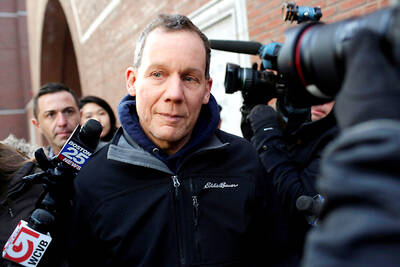
An American scientist convicted of lying to US authorities about payments from China while he was at Harvard University has rebuilt his research lab in Shenzhen, China, to pursue technology the Chinese government has identified as a national priority: embedding electronics into the human brain. Charles Lieber, 67, is among the world’s leading researchers in brain-computer interfaces. The technology has shown promise in treating conditions such as amyotrophic lateral sclerosis and restoring movement in paralyzed people. It also has potential military applications: Scientists at the Chinese People’s Liberation Army have investigated brain interfaces as a way to engineer super soldiers by boosting

Indonesian police have arrested 13 people after shocking images of alleged abuse against small children at a daycare center went viral, sparking outrage across the nation, officials said on Monday. Police on Friday last week raided Little Aresha, a daycare center in Yogyakarta on Java island, following a report from a former employee. CCTV footage circulating on social media showed children, most younger than two, lying on the floor wearing only diapers, their hands and feet bound with rags. The police have confirmed that the footage is authentic. Police said they also found 20 children crammed into a room just 3m by 3m. “So

A grieving mother has ended her life at a clinic in Switzerland four years after the death of her only child. Wendy Duffy, 56, a physically healthy woman, died at the Pegasos clinic in Basel after struggling to cope with the death of her 23-year-old son, Marcus. The former care worker, from the West Midlands, England, had previously attempted to take her own life. The case comes as assisted dying would not become law in England and Wales after proposed legislation, branded “hopelessly flawed” by opponents, ran out of time. Ruedi Habegger, the founder of Pegasos, described Duffy’s death as

From post offices and parks to stations and even the summit of Mount Fuji, Japan’s vending machines are ubiquitous, but with the rapid pace of inflation cooling demand for their drinks, operators are being forced to rethink the business. Last month beverage giant DyDo Group Holdings announced it would remove about 20,000 vending machines — about 7 percent of their stock nationwide — by January next year, to “reconstruct a profitable network.” Pokka Sapporo Food & Beverage, based in Nagoya, also said last month it would sell its 40,000-machine operation to Osaka-based Lifedrink Co. “The strength of the vending machine


 RSS
RSS