


The commander of Filipino peacekeepers in Iraq returned home yesterday ahead of his troops after the Philippines decided to withdraw them -- despite the US-led coalition's fierce opposition -- to meet a demand by Iraqi insurgents threatening to behead a Filipino hostage.
The kidnappers holding truck driver Angelo de la Cruz, 46, have said they would release him if all Philippine peacekeepers are withdrawn before the end of the month.
Arriving at Manila's airport early yesterday, army Brigadier General Jovito Palparan Jr. told reporters he was happy to be back.
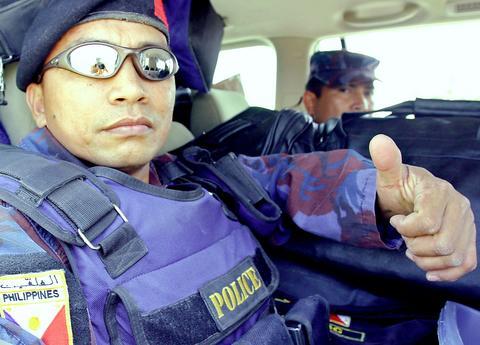
PHOTO: REUTERS
"The men I left there are OK, they are preparing to return home," he said.
Palparan later met Foreign Secretary Delia Albert and military chief Narciso Abaya to report details of the withdrawal that was to be completed later yesterday, Albert said in a nationally televised statement.
Some of the 51 Filipino peacekeepers left for Kuwait last week. The rest were to depart on a commercial flight to Manila after an "exit call" yesterday on the new Polish commander at Camp Charlie in Iraq's Babil province, Albert said.
A prominent pressure group for overseas workers, Migrante, welcomed the withdrawal, but also urged Philippine President Gloria Arroyo to withdraw all support for the US-led force, fearing that 4,000 Filipino contract workers in Iraq and more than 1.4 million others in the Middle East could be in danger.
Relatives of de la Cruz in the northern province of Pampanga were overjoyed and prayed after hearing of plans to complete the withdrawal. They urged the kidnappers to free him.
"I'm happy that the troops are on their way back," said Feliciano de la Cruz Jr., the hostage's younger brother. "I hope my brother follows them home."
In the first sign of possible fallout from Arroyo's decision to withdraw troops from Iraq, a US official said on Sunday that Washington was re-evaluating ties.
The official did not specifically say Washington could scale down military or economic assistance to Manila. Last week, US officials said they remain committed to training and advising Filipino troops at Manila's request.
Troubled by communist insurgents and Muslim extremist terror threats, the Philippines has relied on Washington to provide training and weapons to its poorly armed military to battle al-Qaeda-linked groups in the restive south.
Still reeling from a narrow victory in the May 10 presidential elections, Arroyo has gambled cozy links with Washington to defuse a potentially explosive political situation had she refused to recall the troops from Iraq and were de la Cruz -- who has developed into a national icon -- beheaded, analysts said.
COMPLAINTS
Meanwhile, activists vowed yesterday to pursue murder complaints against Palparan in connection with killings of human-rights workers on an island in the Philippines where he served as army brigade commander.
Militant groups also said they will push the Justice Department to hasten prosecution of murder cases they filed against him for killings during his alleged "reign of terror" on Mindoro island. They claim he may have ordered the killings and other abuses.
Representative Teddy Casino, secretary-general of leftist group Bayan Muna, said the three pending cases against Palparan include the 2002 killing of Choi Napoles, a coordinator of Bayan in Mindoro, and the killings last year of human-rights leader Eden Marcellana and peasant leader Eddie Gumanoy.
"All in all, 18 Bayan Muna supporters and members were killed in Mindoro, but we were able to gather enough evidence and testimonies only on three cases," Casino said.
In most cases, he said, witnesses refused to testify out of fear, or evidence was insufficient to stand up in court.
Marie Hilao-Enriquez, head of the human-rights group Karapatan, said her group has documented hundreds of human-rights cases in Mindoro, ranging from harassment and disappearances to illegal arrests and murder during Palparan's two years there.
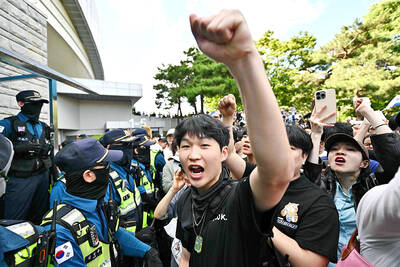
‘ABSURD MISTAKE’: The election commission said that there had been a failure to anticipate turnout after 14 polling stations ran short of ballot papers South Korean riot police yesterday cleared protesters from a Seoul polling station after a 35-hour blockade sparked by a shortage of ballot papers during local elections earlier this week. Wednesday’s election was the first nationwide vote since South Korean President Lee Jae-myung took office following the ouster of Yoon Suk-yeol over his short-lived martial law declaration. Lee’s ruling Democratic Party swept most races, but failed to flip the crucial Seoul mayoral seat. The South Korean National Election Commission apologized, blaming a failure to anticipate turnout after 14 polling stations in Seoul ran short of ballot papers. Some polling stations stayed open until 10pm to

France experienced its hottest spring on record, the French weather service said on Tuesday, after an exceptional early heat wave that also broke highs for the season in England and Wales. Meteo-France said the average nationwide temperature over March to May was 13.8°C — about 1.7°C above the norm, and surpassing records set in 2011 and 2020. “The warmest spring since records began in 1900,” it said in a bulletin. All three months were warmer than average, but the onset of an “unprecedented heatwave” late last month pushed the mercury to highs typically seen at the height of the summer. “Our country had never

A Sherpa guide was found crawling to base camp on Mount Everest a week after he went missing and was reunited with his family, who had given up hope he would return. Dawa Sherpa was last seen on Friday last week descending the mountain, but he did not reach base camp even though his client did. The pair were among the last climbers on the mountain as the climbing season came to an end and the route was dismantled. Dawa was located by a cleaning crew on Thursday morning as he was crawling down the snowy slopes around the Khumbu Icefall, just above
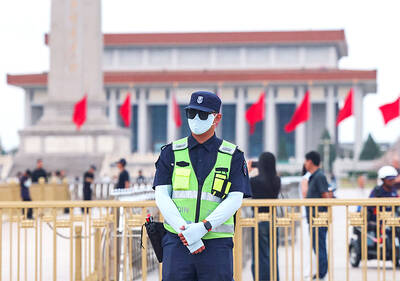
Chinese authorities are snuffing out any remembrance of the deadly 1989 military crackdown on student-led pro-democracy protests in Tiananmen Square, which happened 37 years ago yesterday, in a further tightening of a years-long campaign to erase what happened from public memory. Police told relatives of the victims they would not be allowed to visit a cemetery in Beijing on the anniversary of the crackdown, a person with knowledge of the matter said. Relatives of the victims visited the cemetery on the anniversary for more than 30 years to read memorial statements with police keeping watch, Amnesty International said. Hundreds of people,


 RSS
RSS