


Senator John Kerry wound up his tour of the heartland on Sunday with an attack on the Bush administration's definition of values and a defense of his own, including his position on abortion.
Kerry's final day of his three-state bus tour was filled with the trappings of small-town America on the Fourth of July, including a parade through the streets of the small town of Cascade and a baseball game played in the corn field featured in the movie Field of Dreams.
But Kerry, the presumptive Democratic presidential nominee, also confronted, implicitly and explicitly, charges by Republicans that his values are out of step with those of rural and small-town voters. At a barbecue here, he argued that there was "nothing conservative" about values that produced growing deficits, stagnating wages and a middle class squeezed by rising costs for health care, education and child care, all of which he tied to President George W. Bush.
Moreover, Kerry, a Roman Catholic, added: "I'm a person of faith, and I know I'm surrounded by people of faith. But there's nothing conservative about allowing your administration to cross that beautiful line drawn by the founding fathers that separates affairs of church and state in the United States of America."
Kerry also dealt with the issue so often cited by Republicans as evidence that he is outside the mainstream on abortion. Kerry has a 100 percent voting record with Naral Pro-Choice America, an advocacy group, and has often spoken about his commitment to abortion rights and the appointment of judges who will uphold them.
But in an interview with the Telegraph Herald in Dubuque, published Sunday, Kerry emphasized his personal opposition to abortion. He also tried to counter the criticism from within his church hierarchy that an elected official could not advocate the right to abortion and be a good Catholic. Kerry said he was abiding by both his conscience and the line between church and state.

School bullies in Singapore are to face caning under new guidelines, but the education minister on Tuesday said it would be meted out only as a last resort with strict safeguards. Human rights groups regularly criticize Singapore for the use of corporal punishment, which remains part of the school and criminal justice systems, but authorities have defended it as a deterrent to crime and serious misconduct. Caning was discussed in the parliament after legislators asked how it would be used in relation to bullying in schools. The debate followed stricter guidelines on serious student misconduct, including bullying, unveiled by the Singaporean Ministry of

As evening falls in Fiji’s capital, a steady stream of people approaches a makeshift clinic that is a first line of defense against one of the world’s fastest-growing HIV epidemics. In the South Pacific nation — a popular tourist destination of just under a million people — more than 2,000 new HIV cases were recorded last year, a 26 percent increase from 2024. The government has declared an HIV outbreak and described it as a national crisis. “It’s spreading like wildfire,” said Siteri Dinawai, 46, who came to be tested. The Moonlight Clinic, a converted minibus parked in a suburban cul-de-sac in Suva, is

A MESSAGE: Japan’s participation in the Balikatan drills is a clear deterrence signal to China not to attack Taiwan while the US is busy in the Middle East, an analyst said The Japan Self-Defense Forces yesterday fired a Type 88 anti-ship missile during a joint maritime exercise with US, Australian and Philippine forces, hitting a decommissioned Philippine Navy ship in waters facing the disputed South China Sea, in drills that underscore Tokyo’s rising willingness to project military power on China’s doorstep. The drill took place as Manila and Tokyo began talks on a potential defense equipment transfer, made possible by Japan’s decision to scrap restrictions on military exports. The discussions include the possible early transfer of Abukuma-class destroyers and TC-90 aircraft to the Philippines, Japanese Minister of Defense Shinjiro Koizumi said. Philippine Secretary of
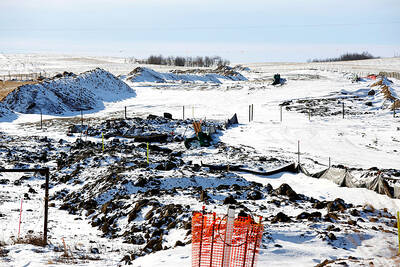
Separatists in Alberta are preparing to submit a petition tomorrow that they said has enough signatures to force a referendum on independence for the oil-rich Canadian province. Polls indicate the pro-independence camp remains a minority among Alberta’s 5 million people, but has hit a historic high of roughly 30 percent. Alberta separatists are also closer than ever to forcing a referendum, riding momentum fueled by intensifying grievances over Ottawa’s control of the provincial oil industry. They have also undeniably gotten a boost from the return to power of US President Donald Trump. After launching a petition in January, Stay Free Alberta, the group


 RSS
RSS