


A former Saudi police officer has taken over as leader of al-Qaeda on the Arabian peninsula after the last three incumbents died in the brutal jihad raging in Saudi Arabia, media reported yesterday.
Saleh Mohammad al-Oufi, 38, who is No. 4 on the kingdom's list of most wanted militants, "has been designated al-Qaeda chief in Saudi Arabia, succeeding Abdul Aziz al-Muqrin," the London-based Asharq al-Awsat daily said.
The Saudi-owned daily sourced the news to al-Qaeda itself without further detail after Al-Muqrin was gunned down in the capital Riyadh on Friday night along with three of his lieutenants.
The Saudi Institute, which bills itself as an independent news outfit based in Washington, quoted "intelligence" to confirm al-Oufi's appointment.
It said the one-time police officer, born in Medina, joined "terrorist networks in Afghanistan and Bosnia where he was injured and returned to Saudi Arabia in 1995.
"Al-Oufi was in the shadows while al-Muqrin was in charge, because he was busy running the secret al-Qaeda camps in Saudi Arabia. He was essentially res-ponsible for training, recruitment and logistics," the institute said in an e-mail received on Sunday.
"Al-Oufi might be more dangerous than Al-Muqrin because he comes from the security ranks and the fact he is a Hijazi from the holy city of Medina where he can recruit from the most economically depressed areas of Saudi Arabia.
"Al-Oufi might also be a more effective al-Qaeda leader because he is older, spent more time in the country than Muqrin, and is more familiar with [the] al-Qaeda network in Saudi Arabia as he was one of those who built it."
"Saleh al-Oufi is the most dangerous" of al-Qaeda's lieutenants left alive in Saudi Arabia, said Al-Hayat, another Saudi-owned publication in London.
Islamist Web sites used as information channels by al-Qaeda have either not posted the succession news or remained inaccessible since Sunday, when a statement in the name of the network announced that the succession to Muqrin was assured.
Muqrin had died "after having prepared sincere men from among the combatants to succeed him and carry on the jihad, equipped by God with everything needed to bring harm to America and its agents among the tyrants," the statement said.
Oufi left school as a teenager and enrolled in the police but left in 1988 to spend four years in the prison service before being sacked, according to biographical details quoted by several Arab media outlets.
Al-Hayat said Oufi met al-Qaeda founder Osama bin Laden and Taliban leader Mullah Omar in Afghanistan shortly before the Sept. 11, 2001 attacks in the US.
Muqrin became the al-Qaeda leader in the kingdom after Yemeni Khaled Ali Haj was killed in March this year as Saudi Arabia hunted down extremists.
Asharq al-Awsat said the previous chief of the network on the Arabian peninsula, Yussef al-Ayri, was also shot dead in June last year, a month after a series of suicide bombings started in the kingdom.
The Saudi Institute also revealed it had an exclusive recording of Oufi "singing to his mother about his decision to join the holy war."
He urged her to "stay patient if he dies and put her trust in God." He also called on his uncle's family to join the "path of their forefathers, the supporters of the Prophet Mohammed."
"Death in the path of faith is the greatest honor," he reportedly said.

ACTIONABLE ADVICE: The majority of chatbots tested provided guidance on weapons, tactics and target selections, with Perplexity and Meta AI deemed to be the least safe From school shootings to synagogue bombings, leading artificial intelligence (AI) chatbots helped researchers plot violent attacks, according to a study published on Wednesday that highlighted the technology’s potential for real-world harm. Researchers from the nonprofit watchdog Center for Countering Digital Hate and CNN posed as 13-year-old boys in the US and Ireland to test 10 chatbots, including ChatGPT, Google Gemini, Perplexity, Deepseek and Meta AI. Eight of the chatbots assisted the make-believe attackers in more than half the responses, providing advice on “locations to target” and “weapons to use” in an attack, the study said. The chatbots had become a “powerful accelerant for
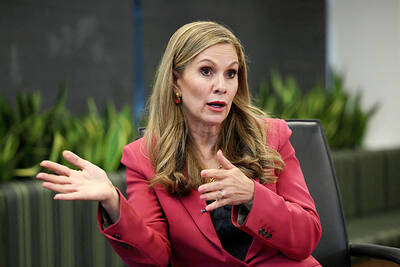
Australians were downloading virtual private networks (VPNs) in droves, while one of the world’s largest porn distributors said it was blocking users from its platforms as the country yesterday rolled out sweeping online age restriction. Australia in December became the first country to impose a nationwide ban on teenagers using social media. A separate law now requires artificial intelligence (AI)-powered chatbot services to keep certain content — including pornography, extreme violence and self-harm and eating disorder material — from minors or face fines of up to A$49.5 million (US$34.6 million). The country also joined Britain, France and dozens of US states requiring
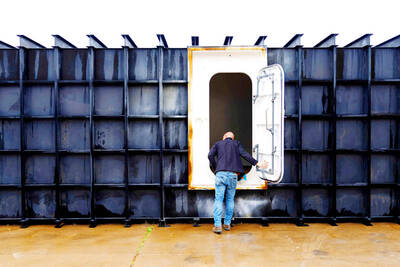
Since the war in the Middle East began nearly two weeks ago, the telephone at Ron Hubbard’s bomb shelter company in Texas has not stopped ringing. Foreign and US clients are rushing to buy his bunkers, seeking refuge in case of air raids, nuclear fallout or apocalypse. With the US and Israel pounding Iran, and Tehran retaliating with strikes across the region, Hubbard has seen demand for his product soar, mostly from Gulf nation customers in Bahrain, Qatar, Kuwait and the United Arab Emirates. “You can imagine how many people are thinking: ‘I wish I had a bomb shelter,’” Hubbard, 63, said in
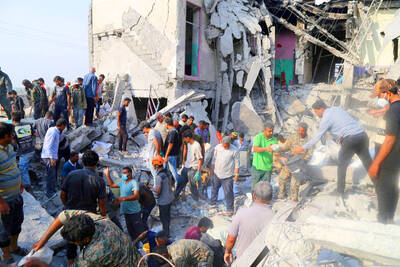
STILL IN POWER: US intelligence reports showed that the Iranian regime is not in danger of collapse and retains control of the public, casting doubt on Trump’s exit Nearly every US Senate Democrat on Wednesday signed a letter sent to US Secretary of Defense Pete Hegseth requesting a “swift investigation” of airstrikes on a girls’ school in Iran that killed scores of children and any other potential US military actions causing civilian harm. Reuters reported on Thursday last week that US military investigators believe it is likely that US forces were responsible for the Feb. 28 strike on the school, as US and Israeli forces launched attacks on Iran. “The results of this school attack are horrific. The majority of those killed in the strikes were girls between the ages


 RSS
RSS