


Congo's President Joseph Kabila said on Wednesday Rwandan troops had helped renegade soldiers seize an eastern border town and vowed to fight back, raising fears of a resumption of war between the two countries.
Rwanda denied any involvement in the fighting.
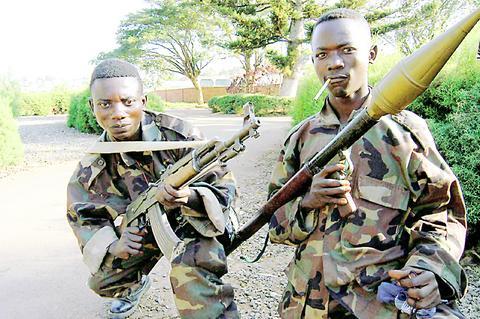
PHOTO: AFP
Kabila said on state television that Congo's army had been mobilized to retake control of Bukavu, which was captured earlier on Wednesday by dissident fighters after a week of clashes with government troops.
"Since this morning there are Rwandan troops with ... the insurgents," Kabila said. "It's an aggression against our country by Rwandans who control the town of Bukavu."
"We have decided to mobilize our resources and men and finances to defend ourselves," he said.
The renegade troops who seized Bukavu are former rebel fighters from the Rwandan-backed RCD-Goma, the biggest rebel faction during the Democratic Republic of Congo's five-year war which was officially declared over last year.
Rwandan Foreign Minister Charles Muligande said there were no Rwandan troops anywhere on Congolese territory.
"These accusations are without foundation. Each time they have a situation they cannot handle they blame us instead of taking responsibility for themselves," he said.
Sebastien Lapierre, a spokesman with the United Nations mission (MONUC) in Bukavu, said he could not confirm the presence of Rwandan troops in the town.
The UN Security Council called for an immediate end to the violence in Bukavu and condemned the "local incitement of hatred" against Banyamulenge tribesmen.
The two neighbors have a history of bad blood.
Rwanda first invaded Congo in 1996, saying it was defending itself from attacks by Hutu rebels who had fled to what was Zaire after being involved in Rwanda's 1994 genocide of 800,000 Tutsis and moderate Hutus.
It attacked again in 1998, sparking a messy regional war which sucked in the armies of half a dozen African countries. Three million people died, mainly from disease and starvation.
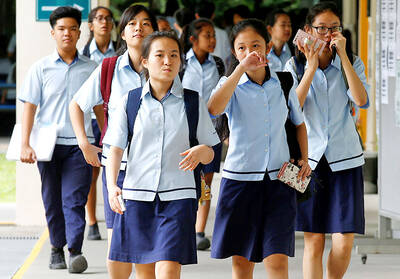
School bullies in Singapore are to face caning under new guidelines, but the education minister on Tuesday said it would be meted out only as a last resort with strict safeguards. Human rights groups regularly criticize Singapore for the use of corporal punishment, which remains part of the school and criminal justice systems, but authorities have defended it as a deterrent to crime and serious misconduct. Caning was discussed in the parliament after legislators asked how it would be used in relation to bullying in schools. The debate followed stricter guidelines on serious student misconduct, including bullying, unveiled by the Singaporean Ministry of
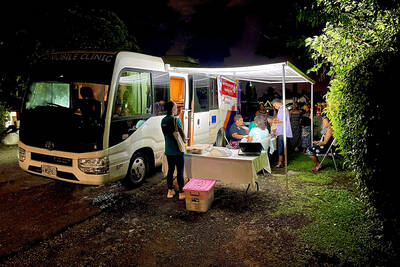
As evening falls in Fiji’s capital, a steady stream of people approaches a makeshift clinic that is a first line of defense against one of the world’s fastest-growing HIV epidemics. In the South Pacific nation — a popular tourist destination of just under a million people — more than 2,000 new HIV cases were recorded last year, a 26 percent increase from 2024. The government has declared an HIV outbreak and described it as a national crisis. “It’s spreading like wildfire,” said Siteri Dinawai, 46, who came to be tested. The Moonlight Clinic, a converted minibus parked in a suburban cul-de-sac in Suva, is
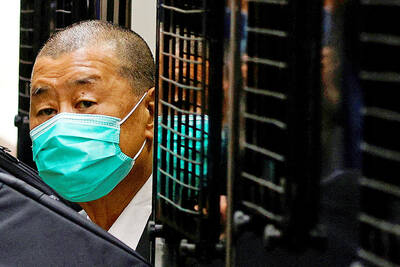
Jailed media entrepreneur Jimmy Lai (黎智英) has been awarded Deutsche Welle’s (DW) freedom of speech award for his contribution to Hong Kong’s pro-democracy movement. The German public broadcaster on Thursday said Lai would be presented in absentia with the 12th iteration of the award on June 23 at the DW Global Media Forum in Bonn. Deutsche Welle director-general Barbara Massing praised the 78-year-old founder of the now-shuttered news outlet Apple Daily for standing “unwaveringly for press freedom in Hong Kong at great personal risk.” “With Apple Daily, he gave journalists a platform for free reporting and a voice to the democracy movement in
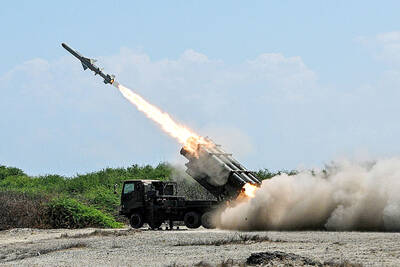
A MESSAGE: Japan’s participation in the Balikatan drills is a clear deterrence signal to China not to attack Taiwan while the US is busy in the Middle East, an analyst said The Japan Self-Defense Forces yesterday fired a Type 88 anti-ship missile during a joint maritime exercise with US, Australian and Philippine forces, hitting a decommissioned Philippine Navy ship in waters facing the disputed South China Sea, in drills that underscore Tokyo’s rising willingness to project military power on China’s doorstep. The drill took place as Manila and Tokyo began talks on a potential defense equipment transfer, made possible by Japan’s decision to scrap restrictions on military exports. The discussions include the possible early transfer of Abukuma-class destroyers and TC-90 aircraft to the Philippines, Japanese Minister of Defense Shinjiro Koizumi said. Philippine Secretary of


 RSS
RSS