


Three Japanese hostages were freed yesterday, but the murders of an Iranian diplomat and an Italian captive sent chilling proof of the risks foreigners face in Iraq, where rebels are battling the US-led occupation.
Al Jazeera television showed the three Japanese, apparently in good health, after they had been handed over to the Muslim Clerics Association, a Sunni Muslim body, in Baghdad.
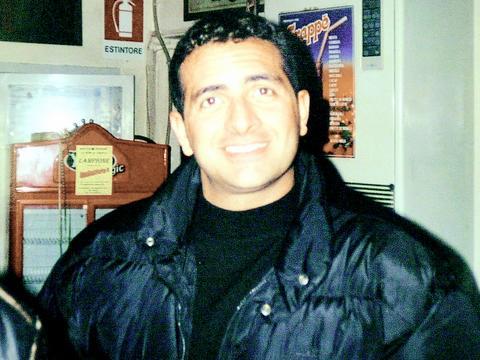
PHOTO:EPA
"I'm very happy they have been released," said a senior member of the association, Abdul Salam al-Kubaysi. "I call on them to visit Fallujah again to see for themselves the havoc wreaked on the city by US warplanes and cluster bombs."
Fallujah has seen fierce fighting this month between US Marines and Sunni insurgents. Hospital officials said more than 600 people have been killed in the city west of Baghdad.
Japan has endured a week of anguish since the kidnappers threatened to kill the three hostages unless Tokyo withdrew its troops from Iraq. Japan rejected the demand.
Italy has also vowed to keep its troops in Iraq despite the murder of one of four Italian hostages held there.
"They have destroyed a life. They have not cracked our values and our efforts for peace," Italian Prime Minister Silvio Berlusconi said after the killing of Fabrizio Quattrocchi.
The freed hostages are Noriaki Imai, 18, who wanted to research the effects of depleted uranium weapons, journalist Soichiro Koriyama, 32, and aid worker Nahoko Takato, 34.
Japanese authorities were trying to confirm reports that two more Japanese civilians had been kidnapped near Baghdad.
Underscoring the lawlessness sweeping Iraq, an Iranian diplomat was killed near the Iranian mission in Baghdad. Iran state television named him as first secretary Khalil Naimi.
A Reuters correspondent saw a car with at least two bullet holes in it. A body was slumped in the vehicle, which had smashed into a lamp-post.
"We have been told that he was driving his car to go to the embassy and three men drove up and shot him," an Iranian official said in Baghdad.
An Iranian delegation has been in Iraq to help mediate between US-led authorities and Shiite cleric Moqtada al-Sadr.
US troops are poised around the Shiite holy city of Najaf, where Sadr is holed up. The US has vowed to kill or capture the rebel cleric and destroy his militia.
In Fallujah, residents said US planes struck targets in several districts amid overnight clashes between rebels and US Marines. There was no word on casualties.
Fighting calmed after daybreak, though Marine tanks opened fire after a rebel attack outside the town, witnesses said, and four insurgents were killed 16km to the north.
Al Jazeera television received a videotape of the Italian private security guard's murder, which it said was too bloody to screen.
The killing of the Italian by a previously unheard-of Iraqi group followed a kidnap spree that has snared foreigners from a dozen countries this month, the bloodiest since former Iraqi president Saddam Hussein was ousted a year ago.
It was the first such publicized killing.
Kidnappers freed French journalist Alexandre Jourdanov on Wednesday, but more than a dozen foreigners remain captive.
Al Jazeera said their captors had threatened to kill three other Italian hostages, colleagues of Quattrocchi in a US security firm, if Italian troops were not withdrawn immediately.
Berlusconi, a loyal ally of US President George W. Bush, sent almost 3,000 troops to Iraq, where bloodshed and kidnapping have rattled other countries with troops or workers there.
Philippine President Gloria Macapagal Arroyo told officials to prepare contingency plans to evacuate some 3,000 Filipinos, but said peacekeepers and aid workers would stay for now.
About 20 buses carrying Russian workers headed for the airport in an evacuation organized after the kidnapping and swift release of three Russians and five Ukrainians in Baghdad.
The US military, fighting on two fronts against Sunni rebels and Sadr's Mehdi Army militia, has lost at least 93 troops in combat since March 31 -- four more than the total killed in the three-week war that toppled Saddam.
There have been intense efforts by Shiite clerics to broker a deal between Sadr and the Americans that would spare Najaf a bloodbath.
A negotiator for Sadr said on Wednesday the cleric had offered unconditional talks, but a senior official with the US-led authorities declined comment on any negotiations.
In Baquba, north of Baghdad, two rockets hit houses at dawn, killing a mother and two teenage sons and badly wounding two daughters. It was not clear who had fired the rockets.
The bloody chaos in Iraq has shown how hard Washington is finding the task of stabilizing the country it invaded to destroy Saddam's still unfound weapons of mass destruction.
Bush, seeking re-election in November with opponents accusing him of leading the US into a Vietnam-style quagmire, vowed on Tuesday to stay the course in Iraq and stick to a June 30 handover of power to Iraqis.
The stretched US military has decided to keep more than 20,000 troops in Iraq beyond their year-long tours of duty.
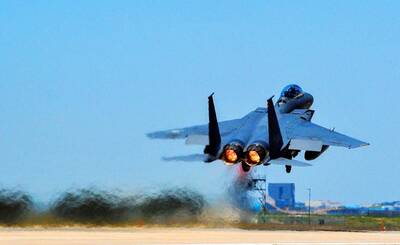
South Korea’s air force yesterday apologized for a 2021 midair collision involving two fighter jets, a day after auditors said the pilots were taking selfies and filming during the flight and held them responsible for the accident. “We sincerely apologize to the public for the concern caused by the accident that occurred in 2021,” an air force spokesman told a news conference, adding that one of the pilots involved had been suspended from flying duties, received severe disciplinary action and has since left the military. The apology followed a report released on Wednesday by the South Korean Board of Audit and Inspection,
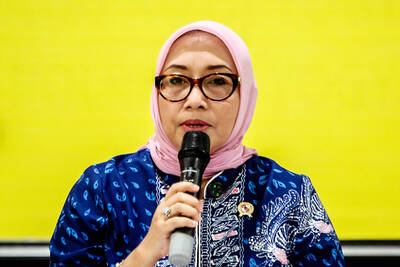
Indonesian police have arrested 13 people after shocking images of alleged abuse against small children at a daycare center went viral, sparking outrage across the nation, officials said on Monday. Police on Friday last week raided Little Aresha, a daycare center in Yogyakarta on Java island, following a report from a former employee. CCTV footage circulating on social media showed children, most younger than two, lying on the floor wearing only diapers, their hands and feet bound with rags. The police have confirmed that the footage is authentic. Police said they also found 20 children crammed into a room just 3m by 3m. “So
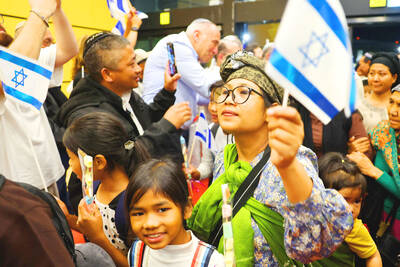
About 240 Indians claiming descent from a Biblical tribe landed at Tel Aviv airport on Thursday as part of a government operation to relocate them to Israel. The newcomers passed under a balloon arch in blue and white, the colors of the Israeli flag, as dozens of well-wishers welcomed them with a traditional Jewish song. They were the first “bnei Menashe” (“sons of Manasseh”) to arrive in Israel since the government in November last year announced funding for the immigration of about 6,000 members of the community from the states of Manipur and Mizoram in northeast India. The community claims to descend from
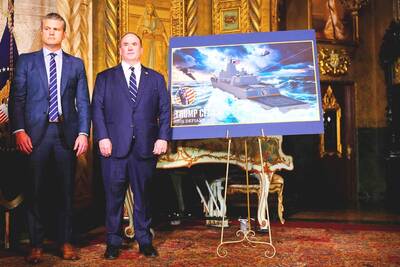
‘TROUBLING’: The firing of Phelan, who was an adviser to a nonprofit that supported the defense of Taiwan, was another example of ‘dysfunction’ under Trump, a US senator said US Secretary of the Navy John Phelan has been fired, a US official and a person familiar with the matter said on Wednesday, in another wartime shakeup at the Pentagon coming just weeks after US Secretary of Defense Pete Hegseth ousted the Army’s top general. The Pentagon announced his departure in a brief statement, saying he was leaving the administration “effective immediately,” but it did not provide a reason or say whether it was his decision to go. The sources, who spoke on condition of anonymity, said Phelan was dismissed in part because he was moving too slowly to implement reforms to


 RSS
RSS