


Sri Lanka's main parties contesting next week's elections have vowed to open talks with militant Tamil separatists, but fears of a factional war among the rebels and a persisting feud between the country's leaders have dimmed hopes of early negotiations.
Prime Minister Ranil Wick-remesinghe said the parliamentary election called nearly four years ahead of schedule placed a "big question mark" over the Norwegian-backed process to end the war that has claimed more than 60,000 lives since 1972.
He expressed hopes of reviving talks before the end of April if his United National party was returned to power in Friday's polls, which he has turned into a referendum on his peace initiative with the Tigers.
However, diplomats and officials close to the peace process say that even if Wickremesinghe wins, a split in the Liberation Tigers of Tamil Eelam (LTTE) must be resolved before any negotiations can start.
Earlier this month a member of the Tigers' four-member peace negotiating team, V. Muralitharan, better known as Karuna, broke away from the organization, taking with him about a third of its fighting force.
On Friday, the Tigers vowed to get rid of their renegade regional commander, signalling an imminent showdown. Tiger supremo Velupillai Prabhakaran, 49, is known for his ruthless intolerance of dissent.
The Tigers' statement came a day after Wickremesinghe said in an interview that international donors who had pledged US$4.5 billion dollars in aid to rebuild Sri Lanka were keen that negotiations, stalled since April last year, should resume before May.
"The talks started with the LTTE on the basis that they have a rigid chain of command and Prabhakaran was in control of all his cadres," a western diplomat here said. "Now that assumption is no longer valid."
Until the break-up of the Tiger movement, it was a split in the Colombo government itself that peace-broker Norway had to contend with.
The election was called by President Chandrika Kumaratunga after her tense relationship with Wickremesinghe came to a head in November. After taking away the prime minister's control over troops in November, Kumaratunga sacked the legislature he controlled. Since then, Norway has to put its efforts on hold.
Norway's special peace envoy Erik Solheim, who held talks with Sri Lankan leaders as well as the main Tiger leadership this month, said Oslo was keeping out of the internal conflict in the LTTE.
Political analysts said that even if the Tigers resolved their differences and established Prabhakaran's supremacy, there was no guarantee of political stability after the elections.
The head of the political science department at Colombo University, Jayadeva Uyangoda, said the country was headed for a prolonged period of uncertainty as no party was expected to get a clear majority.
A victory for Kumaratunga's party would mean completely renegotiating terms of peace talks as her main coalition partner, the Marxist JVP or People Liberation Front, wants discussions based on "reasonable condition."
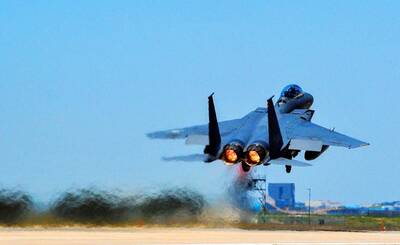
South Korea’s air force yesterday apologized for a 2021 midair collision involving two fighter jets, a day after auditors said the pilots were taking selfies and filming during the flight and held them responsible for the accident. “We sincerely apologize to the public for the concern caused by the accident that occurred in 2021,” an air force spokesman told a news conference, adding that one of the pilots involved had been suspended from flying duties, received severe disciplinary action and has since left the military. The apology followed a report released on Wednesday by the South Korean Board of Audit and Inspection,
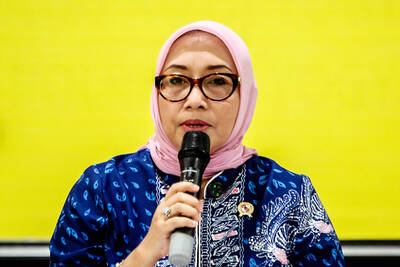
Indonesian police have arrested 13 people after shocking images of alleged abuse against small children at a daycare center went viral, sparking outrage across the nation, officials said on Monday. Police on Friday last week raided Little Aresha, a daycare center in Yogyakarta on Java island, following a report from a former employee. CCTV footage circulating on social media showed children, most younger than two, lying on the floor wearing only diapers, their hands and feet bound with rags. The police have confirmed that the footage is authentic. Police said they also found 20 children crammed into a room just 3m by 3m. “So
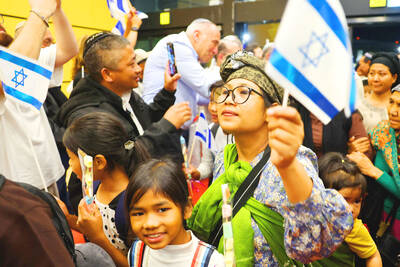
About 240 Indians claiming descent from a Biblical tribe landed at Tel Aviv airport on Thursday as part of a government operation to relocate them to Israel. The newcomers passed under a balloon arch in blue and white, the colors of the Israeli flag, as dozens of well-wishers welcomed them with a traditional Jewish song. They were the first “bnei Menashe” (“sons of Manasseh”) to arrive in Israel since the government in November last year announced funding for the immigration of about 6,000 members of the community from the states of Manipur and Mizoram in northeast India. The community claims to descend from

‘TROUBLING’: The firing of Phelan, who was an adviser to a nonprofit that supported the defense of Taiwan, was another example of ‘dysfunction’ under Trump, a US senator said US Secretary of the Navy John Phelan has been fired, a US official and a person familiar with the matter said on Wednesday, in another wartime shakeup at the Pentagon coming just weeks after US Secretary of Defense Pete Hegseth ousted the Army’s top general. The Pentagon announced his departure in a brief statement, saying he was leaving the administration “effective immediately,” but it did not provide a reason or say whether it was his decision to go. The sources, who spoke on condition of anonymity, said Phelan was dismissed in part because he was moving too slowly to implement reforms to


 RSS
RSS