


Liberia's former president, Charles Taylor, traded his seaside palace for a squat lodge in Nigeria's jungle. Former Ugandan leader Milton Obote's home is now a dilapidated bungalow in the Zambian copper belt.
When Haiti's Jean-Bertrand Aristide flew into the Central African Republic on March 1, he joined a list of ousted leaders who went into exile in Africa.
"That's one continent where he'll be in good company," said Ade Omoniyi, a banker in Nigeria's sprawling port city of Lagos.
The US, France and Gabon arranged Aristide's flight to this former French colony, a poor, geographically remote nation that has produced its own share of exiles.
The tyrannical Jean-Bedel Bokassa, who ruled here from 1966 to 1979, was widely accused of killing -- and eating -- opponents. Bokassa spent seven years in exile in Ivory Coast and France and returned home in 1987 expecting a warm welcome.
Instead, Bokassa was tried and imprisoned until 1993. He died three years later.
Another Central African Republic president, Ange-Felix Patasse, was toppled last year after a disgruntled army general seized power. Patasse eventually found sanctuary in Togo.
Finding a place for fleeing leaders is not an easy task.
"It's always a diplomatic issue and an embarrassment to be seen as the home for a failed autocrat," said Ross Herbert of the South African Institute of International Affairs in Johannesburg.
Aristide's stay here was likely to be short-lived because he was expected to depart Monday for Jamaica. A Jamaican official said on condition of anonymity that Aristide likely would eventually seek asylum in South Africa.
His temporary home has been an apartment inside Bangui's presidential palace. Barbed wire separates the compound from a market street where shoeless boys push carts loaded with rice and women sell plantains.
Former leaders living quiet lives as outcasts in Africa sometimes attract deep resentment in their new homes. That is true for Aristide, who has his share of detractors.
Leopold Zokande, a Central African Republic schoolteacher who is owed three years of pay, said his desperately poor country was bullied into taking Aristide.
"They dumped Aristide on us, and that's going to create other problems," Zokande said.
Host governments often order notorious guests to keep a low profile so they do not cause trouble. Liberia's Taylor was banned from speaking publicly in Nigeria, where he has lived since resigning in August as rebels closed in on Liberia's capital.
Former Ethiopian military ruler Colonel Mengistu Haile Mariam, in exile in Zimbabwe since being overthrown in 1991, has been seen publicly only occasionally. Tens of thousands of political opponents were killed during Mengistu's 17-year reign.
Africa is a natural destination for exiles because many former heads of state forged close friendships with African presidents who are still in office. Mengistu, for example, helped train current Zimbabwe President Robert Mugabe's guerrillas in the run-up to that country's independence in 1980.
Some ex-presidents are being sought for justice.
A truth commission set up by Chad has accused ex-dictator Hissene Habre, now living in Senegal, of orchestrating thousands of political killings.
Taylor is wanted by a UN-backed tribunal that indicted him for his role in supporting Sierra Leone's vicious rebels, who killed tens of thousands of civilians and hacked the limbs off thousands more.
Aristide has been accused of human rights violations, allowing corruption fueled by drug-trafficking and masterminding attacks on opponents by armed gangs -- charges he denies.
Some African leaders, still in office, risk following in the footsteps of their exiled colleagues.
Oil-rich Equatorial Guinea -- whose president, Teodoro Obiang, overthrew his predecessor in 1979 -- announced this week it arrested an advance group of 15 alleged mercenaries believed to be plotting a coup.
"Not only are there ex-dictators living out their last lonely days (in Africa), there are quite a number likely to join the club soon," said Omoniyi, the Lagos banker.
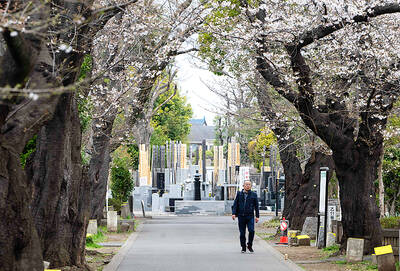
ROCKY RELATIONS: The figures on residents come as Chinese tourist numbers drop following Beijing’s warnings to avoid traveling to Japan The number of Chinese residents in Japan has continued to rise, even as ties between the two countries have become increasingly fractious, data released on Friday showed. As of the end of December last year, the number of Chinese residents had increased by 6.5 percent from the previous year to 930,428. Chinese people accounted for 22.6 percent of all foreign residents in Japan, making them by far the largest group, Japanese Ministry of Justice data showed. Beijing has criticized Tokyo in increasingly strident terms since Japanese Prime Minister Sanae Takaichi last year suggested that a military conflict around Taiwan could

A pro-Iran hacking group claimed to breach FBI Director Kash Patel’s personal e-mail inbox and posted some of the contents online. The e-mails provided by the hacking group include travel details, correspondence with leasing agents in Washington and global entry, and loyalty account numbers. The e-mail address the hackers claim to have compromised has been previously tied to Patel’s personal details, and the leaked e-mails contain photos of Patel and others, in addition to correspondence with family members and colleagues. “The FBI is aware of malicious actors targeting Director Patel’s personal email information,” the agency said in a statement on
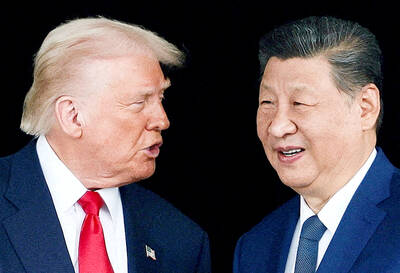
RIVALRY: ‘We know that these are merely symbolic investigations initiated by China, which is in fact the world’s most profligate disrupter of supply chains,’ a US official said China has started a pair of investigations into US trade practices, retaliating against similar probes by US President Donald Trump’s administration as the superpowers stake out positions before an expected presidential summit in May. The move, announced by the Chinese Ministry of Commerce on Friday, is a direct mirror of steps Trump took to revive his tariff agenda after the US Supreme Court last month struck down some of his duties. “China expresses its strong dissatisfaction and firm opposition to these actions,” a ministry spokesperson said in a statement, referring to the so-called Section 301 investigations initiated on March 11.

When a hiker fell from a 55m waterfall in wild New Zealand bush, rescuers were forced to evacuate the badly hurt woman without her dog, which could not be found. After strangers raised thousands of dollars for a search, border collie Molly was flown to safety by a helicopter pilot who was determined to reunite the pet and the owner. A week earlier, an emergency rescue helicopter found the woman with bruises and lacerations after a fall at a rocky spot at the waterfall on the South Island’s West Coast. She was airlifted on March 24, but they were forced to


 RSS
RSS