


They call him the "Motion King," and it's not for the way he moves.
During the past seven years as a delegate to the National People's Congress (NPC), the southern China businessman and Communist Party member has put forward hundreds of motions, or proposals, to China's nominal legislature.
Zhao Linzhong has suggested barring young people from Internet cafes. He has pushed to mandate lower prices for commercial housing. This year, he is proposing a law to safeguard medical benefits for entrepreneurs.
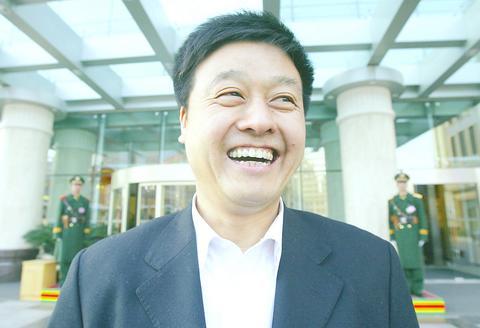
PHOTO: AP
"I do put forth more motions than other delegates, but it's not good to call me a king," said Zhao, a sharply dressed man with an easy smile who exudes an energy younger than his 50 years.
"It doesn't sound right," he said.
Zhao sees himself as an "earnest public servant" with a strong sense of social responsibility. He is among the thousands of government-appointed delegates who come to Beijing each year to participate in China's version of representative democracy.
While delegates can put forward any number of ideas, new laws are crafted by a small group of top leaders and rubber-stamped by the congress during its annual two-week session, which this year runs through Sunday. Dissenting votes are rare. But this doesn't seem to bother Zhao.
"It's not like I propose something and the government will immediately take it up," explained Zhao, who has put forward about 500 motions since he became a delegate in 1998. "But if they think it has merit, then they could consider it."
Though none of his motions have gone directly into the law books and most -- on subjects from mental health to public security to unemployment -- end up merely as talking points for delegate meetings, Zhao still feels he serves a valuable purpose.
"The government stands above and the ordinary people stand below, while we delegates serve as a bridge between the two," he said..
Zhao's ideas come mainly from issues raised by his constituents in Zhuji County, Zhejiang Province.
The province, famous for its Shaoxing rice wine and Dragon Well tea, is one of China's wealthiest. Zhao himself heads a publicly listed textile manufacturing company, the Furun Group, worth 480 million yuan (US$58 million).
"When I first took on this position, I wracked my brains for a method I could use to canvas public opinion," Zhao said. "Finally, I came up with a system similar to what I use as a business manager."
Zhao gets the provincial media -- both newspapers and TV stations -- to solicit suggestions from the public. The notices cost him nothing. Responses, in the form of faxes, e-mails and letters, then pour in.
"I can't meet with anyone in person," he said with a shrug. "I still have my day job."
At this year's congress, he is submitting around 80 motions -- well above the average handful submitted by most delegates. Last year, the NPC received a total of 1,050 motions from 2,984 participating delegates. If a similar number of motions is submitted this year, Zhao will be responsible for nearly 10 percent of them.
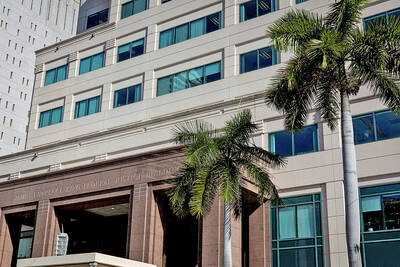
‘GROSS NEGLIGENCE?’ Despite a spleen typically being significantly smaller than a liver, the surgeon said he believed Bryan’s spleen was ‘double the size of what is normal’ A Florida surgeon who is facing criminal charges after allegedly removing a patient’s liver instead of his spleen has said he is “forever traumatized” by that person’s death. In a deposition from November last year that was recently obtained by NBC, 44-year-old Thomas Shaknovsky described the death of 70-year-old William Bryan as an “incredibly unfortunate event that I regret deeply.” Bryan died after the botched surgery; and last month, a grand jury in Tallahassee indicted Shaknovsky on a charge of manslaughter. “I’m forever traumatized by it and hurt by it,” Shaknovsky added, also saying that wrong-site surgeries can happen “during

Former Chinese ministers of national defense Wei Fenghe(魏鳳和) and Li Shangfu (李尚福) were both sentenced to death with a two-year reprieve over graft charges, state news agency Xinhua reported on Thursday, underscoring the severity of the purge in the military. The armed forces have been one of the main targets of a broad corruption crackdown ordered by Chinese President Xi Jinping (習近平) after coming to power in 2012. The purges reached the elite Rocket Force, which oversees nuclear weapons as well as conventional missiles, in 2023. Earlier this year they escalated further, resulting in the removal of the top general in

New Zealand is open to expanding its frigate fleet beyond its current two vessels, with New Zealand Minister of Defence Chris Penk saying “no options are off the table” as the government weighs buying new warships from Japan or the UK. The government yesterday said it is looking to replace its two aging Anzac-class frigates, which were both commissioned almost 30 years ago. The UK’s Type 31 and Japan’s Mogami-class warships are the options under consideration. Speaking in an interview, Penk said there is potential to increase the number of frigates the nation purchases. “We need a certain amount of capability as a

The Philippine Coast Guard yesterday said it deployed aircraft to issue radio warnings to a Chinese research ship in a disputed area of the South China Sea “swarming” with vessels from Beijing’s so-called maritime militia. The research vessel Xiang Yang Hong 33 (向陽紅33), which is capable of supporting submersible craft, was operating near a reef in the contested Spratly Islands (Nansha Islands, 南沙群島), which Taiwan also claims, the Philippine Coast Guard said. The Chinese ship was deploying a service boat toward the Spratly’s Iroquois Reef on Wednesday when it was spotted by a coast guard plane, “confirming ongoing unauthorized [marine scientific research]


 RSS
RSS