


Islam has emerged as the main battleground in Malaysia's election, with Prime Minister Abdul-lah Ahmad Badawi vowing to confront the fundamentalist opposition for suggesting pro-government voters will be sent to hell.
"This is a topic we have to face," Abdullah told a rally of supporters in Malacca state, quoted in the New Straits Times newspaper yesterday. "We cannot shrug if off just like that. We will reply."
The fundamentalist Pan-Malaysia Islamic party's spiritual leader, widely respected cleric Nik Abdul Nik Aziz, said earlier that Muslims "naturally, will go to heaven for choosing an Islamic party, while those who support un-Islamic parties will logically go to hell."
Other opposition officials have accused Abdullah of preaching Islamic virtue only when it suits him, and criticized him for not leading funeral rites for his mother last month.
Abdullah's United Malays National Organization (UMNO) has for years been locked in a battle with the Islamic Party for support among Malays, who comprise about 60 percent of the 25 million population. Abdullah's 14-party secular coalition has a huge parliamentary majority and is certain to be returned to power. But any further inroads by the Islamic party would undermine his control of UMNO when it holds internal elections later this year.
The Islamic party wants to make Malaysia an Islamic state and advocates a Taliban-style criminal code, including execution by stoning. It accuses UMNO of immoral greed and corruption.
Abdullah has Islamic credentials that many perceive as making him better suited to checking the fundamentalists' influence than his predecessor, Mahathir Mohamad.
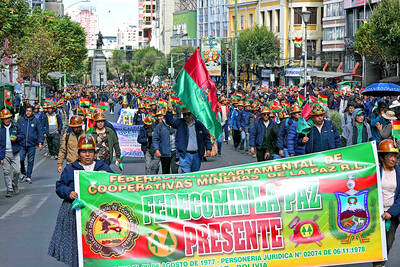
The Bolivian government on Friday struck a deal with protesting miners, but was still grappling with blockades and demonstrations by other workers across La Paz. Other groups are still blocking access roads into the city, which is also the seat of the government. Police on Thursday prevented the miners from entering the main square by using tear gas, while the demonstrators hurled stones and explosives with slingshots. Protests against the policies of Bolivian President Rodrigo Paz have convulsed the Andean nation since early this month, and roadblocks were choking routes into La Paz throughout Friday, the national road authority said. Miners demanded that Paz
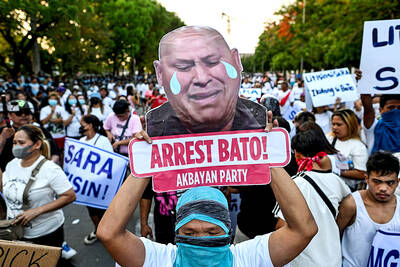
The Philippines said it has asked the country’s Supreme Court to allow it to arrest former Philippine president Rodrigo Duterte’s chief drug war enforcer to stand trial in an international tribunal. The International Criminal Court (ICC) last week unsealed an arrest warrant against Philippine Senator Ronald dela Rosa, accusing him along with Duterte and other “coperpetrators” of the “crime against humanity of murder.” Dela Rosa briefly sought refuge in the Philippine Senate last week while asking the Philippine Supreme Court to stop an ongoing attempt by government agents to arrest him. “By his own conduct, he has placed himself outside the protection of

A ship anchored off the United Arab Emirates (UAE) was seized and taken toward Iran and another — a cargo ship near Oman — sank after being attacked, authorities said on Thursday, as tensions escalated near the Strait of Hormuz. It was not immediately clear who was behind these incidents, but they happened as a senior Iranian official reiterated his country’s claim of control over the waterway and another said it had a right to seize oil tankers connected to the US. The turmoil in the strait has been a sticking point for weeks in talks between the US and Iran to

Crowds in Bangladesh are flocking to snap photographs with an unlikely social media star — an albino buffalo with flowing blond hair nicknamed “Donald Trump” that is due to be sacrificed within days. Owner Zia Uddin Mridha, 38, said his brother named the 700kg bull over its flowing helmet of hair resembling the signature look of the US president. “My younger brother picked this name because of the buffalo’s extraordinary hair,” he said at his farm in Narayanganj, just outside the capital, Dhaka. Mridha said that a constant stream of curious visitors — social media fans, onlookers and children — have come throughout


 RSS
RSS