


President Hugo Chavez threatened to use tanks against the capital's opposition-controlled police force, which he said did nothing to stop marchers from clashing with the National Guard during a two-day summit of developing nations.
Chavez on Saturday accused his political opponents of "seeking blood" by marching on the summit, where leaders of poorer countries demanded that industrialized nations dismantle protectionist trade barriers.
"If I have to turn tanks on the city police, I will do it," Chavez said as the summit of the Group of 15 concluded on Saturday. "I am not going to allow the police to turn into a subversive force."

PHOTO: AFP
One person died and at least 41 were hurt when opposition marchers clashed on Friday with National Guardsmen providing security for the summit. The Caracas police are controlled by Mayor Alfredo Pena, who is sided with the opposition.
After a brief calm, hundreds of government foes returned to the streets late Saturday.
Protesters blocked a central Caracas highway and several main avenues with burning tires and debris to demand a recall referendum on Chavez's rule. Opposition sympathizers waved Venezuelan flags and anti-Chavez banners.
The opposition has collected 3.4 million signatures in a petition to force the referendum on Chavez, who was elected in 1998 and re-elected in 2000 to a six-year term. Chavez claims the opposition used fraud to collect the signatures.
Chavez, Iranian President Mohammad Khatami, Zimbabwe's Robert Mugabe and other leaders issued a summit declaration calling on the US and Europe to drop agricultural subsidies to level the free trade playing field.
The group, which actually includes 19 countries, represents 2.2 billion people in Asia, Africa and Latin America. It called for an international fund similar to the International Monetary Fund that would be devoted exclusively to reducing poverty.
And they demanded foreign debt relief.
"We've paid it twice, and this debt is still there," Chavez said. "The debt will never be paid ... and in Venezuela we've made our debt payments religiously."
He said billions of dollars Latin America spends servicing foreign debt could be better spent assisting the region's millions of poor.
To strengthen the G-15, Vene-zuela, Iran and other energy-producing nations pledged to share technologies and use oil to help fellow states' development.
Venezuela and India agreed to provide US$120 million to launch a Bank of the South, which will help Third World nations finance growth, said Tarek William Saab, who heads Venezuela's congressional foreign affairs committee. India is providing US$100 million, the bulk of the startup aid, the state news agency Venpres said.
Leaders also pledged to create regional universities; share information and Internet technologies; and create alternatives to international news media "that negatively affect developing countries."
Most G-15 leaders didn't attend the two-day summit, and Khatami called on heads of state from all 19 member nations to attend next year's summit in Algeria to fortify the organization.
Formed in 1989, the group includes Algeria, Argentina, Brazil, Chile, Colombia, Egypt, India, Indonesia, Iran, Jamaica, Kenya, Malaysia, Mexico, Nigeria, Peru, Senegal, Sri Lanka, Venezuela and Zimbabwe.
The group's influence and work have waned in recent years, and a summit was canceled last year because of unrest in Caracas.
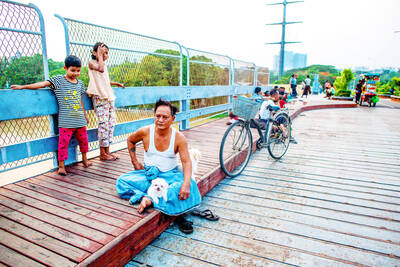
As the sun sets on another scorching Yangon day, the hot and bothered descend on the Myanmar city’s parks, the coolest place to spend an evening during yet another power blackout. A wave of exceptionally hot weather has blasted Southeast Asia this week, sending the mercury to 45°C and prompting thousands of schools to suspend in-person classes. Even before the chaos and conflict unleashed by the military’s 2021 coup, Myanmar’s creaky and outdated electricity grid struggled to keep fans whirling and air conditioners humming during the hot season. Now, infrastructure attacks and dwindling offshore gas reserves mean those who cannot afford expensive diesel
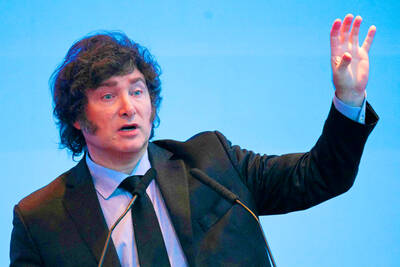
Does Argentine President Javier Milei communicate with a ghost dog whose death he refuses to accept? Forced to respond to questions about his mental health, the president’s office has lashed out at “disrespectful” speculation. Twice this week, presidential spokesman Manuel Adorni was asked about Milei’s English Mastiff, Conan, said to have died seven years ago. Milei, 53, had Conan cloned, and today is believed to own four copies he refers to as “four-legged children.” Or is it five? In an interview with CNN this month, Milei referred to his five dogs, whose faces and names he had engraved on the presidential baton. Conan,

French singer Kendji Girac, who was seriously injured by a gunshot this week, wanted to “fake” his suicide to scare his partner who was threatening to leave him, prosecutors said on Thursday. The 27-year-old former winner of France’s version of The Voice was found wounded after police were called to a traveler camp in Biscarrosse on France’s southwestern coast. Girac told first responders he had accidentally shot himself while tinkering with a Colt .45 automatic pistol he had bought at a junk shop, a source said. On Thursday, regional prosecutor Olivier Janson said, citing the singer, that he wanted to “fake” his suicide
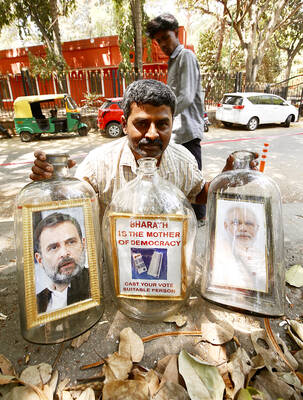
Indian Prime Minister Narendra Modi reaffirmed his pledge to replace India’s religion-based marriage and inheritance laws with a uniform civil code if he returns to office for a third term, a move that some minority groups have opposed. In an interview with the Times of India listing his agenda, Modi said his government would push for making the code a reality. “It is clear that separate laws for communities are detrimental to the health of society,” he said in the interview published yesterday. “We cannot be a nation where one community is progressing with the support of the Constitution while the other


 RSS
RSS