


EU foreign ministers will launch discussions today on lifting the arms embargo on China imposed after the 1989 Tiananmen Square massacre, despite US opposition to such a move, diplomats say.
No immediate decision is expected, but the bloc could agree to end the ban as early as March, said one source ahead of the talks. The discussions were initiated by France, which is hosting Chinese President Hu Jintao (
European officials say they are aware that the US is against lifting the ban. Ministers will bear this in mind, but insist the bloc will take a decision based on a substantive argument among themselves.
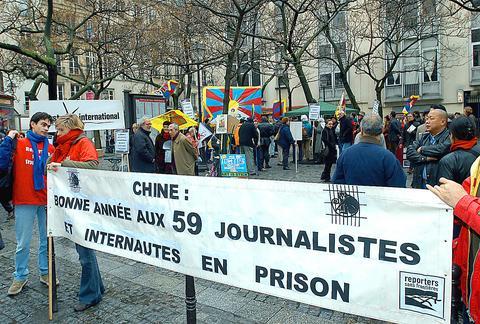
PHOTO: AFP
"We are conscious of the US position, and we want to avoid serious high profile differences with the US. But it's not the primary factor," said a senior diplomat with the Irish EU presidency.
France and Germany -- infamously dubbed "Old Europe" during the Iraq crisis -- are backed by "many" other EU states in believing that "it is high time for this anachronistic, obsolete embargo to be lifted," said one envoy from a country pushing for the ban to be ended.
"Some member states see it as anachronistic," confirmed the Irish diplomat, referring to the ban imposed in 1989 after China sent in tanks to break weeks-long pro-democracy protests, killing hundreds.
"Others put the accent on human rights," she added. Diplomats say the EU states most strongly opposed to lifting the embargo are Denmark and Sweden, with the Netherlands also reluctant.
Ministers are likely to have only initial talks today, before asking diplomats to discuss the issue further and then returning to the matter themselves at their regular monthly meetings.
Britain, Washington's staunchest ally during the Iraq war, appears at least open to lifting the ban.
"Our position is that we do accept the need for a review of the arms embargo. We think there probably is an issue about modernizing it," said a British source.
British Foreign Office minister Bill Rammell said in Beijing last month that the EU has other controls in place to ensure that China could not use newly bought European weapons to attack Taiwan or for domestic crackdowns.
This was a reference to an EU "code of conduct" on arms sales, which backers of lifting the ban say would act as a safety net.
China has been pressing hard for the EU to lift the ban, which Beijing said last month "does not conform with the good momentum in the development of relations between China and Europe."
One EU source underlined the fact that Paris, which is pulling out all the stops to welcome the Chinese president for a state visit from Monday, is the key force behind the push to lift the ban.
"The French in particular are pushing, and it's not unconnected with the fact that the Chinese president is visiting Paris. That seems to be very much the driving factor," he said, requesting anonymity.
A spokesman for the European Commission, the EU's executive arm, echoed the signs of diplomatic movement on the issue.
"There does seem to be some shift of mood going on in the council" of EU ministers, she said.
The Irish presidency declined to forecast when a decision could be finalized.
"I would say in the next few months, hopefully in March or April. How long depends on the complexity of the discussions," said a diplomat.
Separately, today's talks will also see the resumption of discussions on a first-ever constitution for the expanding EU, the first such contacts since efforts collapsed last month.
Their regular talks will also broach the usual range of hotspots including the Middle East, Iran and Afghanistan.
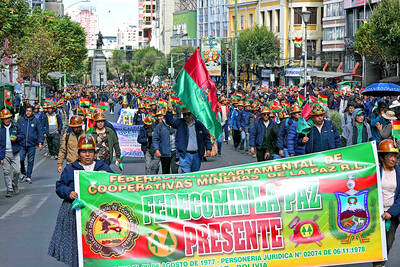
The Bolivian government on Friday struck a deal with protesting miners, but was still grappling with blockades and demonstrations by other workers across La Paz. Other groups are still blocking access roads into the city, which is also the seat of the government. Police on Thursday prevented the miners from entering the main square by using tear gas, while the demonstrators hurled stones and explosives with slingshots. Protests against the policies of Bolivian President Rodrigo Paz have convulsed the Andean nation since early this month, and roadblocks were choking routes into La Paz throughout Friday, the national road authority said. Miners demanded that Paz
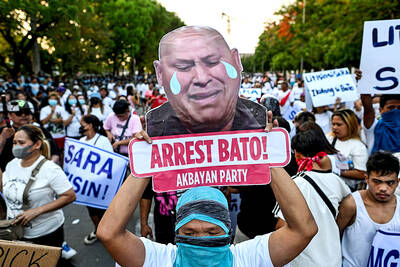
The Philippines said it has asked the country’s Supreme Court to allow it to arrest former Philippine president Rodrigo Duterte’s chief drug war enforcer to stand trial in an international tribunal. The International Criminal Court (ICC) last week unsealed an arrest warrant against Philippine Senator Ronald dela Rosa, accusing him along with Duterte and other “coperpetrators” of the “crime against humanity of murder.” Dela Rosa briefly sought refuge in the Philippine Senate last week while asking the Philippine Supreme Court to stop an ongoing attempt by government agents to arrest him. “By his own conduct, he has placed himself outside the protection of
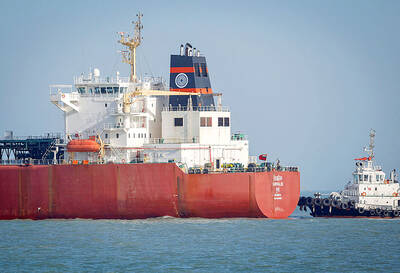
A ship anchored off the United Arab Emirates (UAE) was seized and taken toward Iran and another — a cargo ship near Oman — sank after being attacked, authorities said on Thursday, as tensions escalated near the Strait of Hormuz. It was not immediately clear who was behind these incidents, but they happened as a senior Iranian official reiterated his country’s claim of control over the waterway and another said it had a right to seize oil tankers connected to the US. The turmoil in the strait has been a sticking point for weeks in talks between the US and Iran to

Crowds in Bangladesh are flocking to snap photographs with an unlikely social media star — an albino buffalo with flowing blond hair nicknamed “Donald Trump” that is due to be sacrificed within days. Owner Zia Uddin Mridha, 38, said his brother named the 700kg bull over its flowing helmet of hair resembling the signature look of the US president. “My younger brother picked this name because of the buffalo’s extraordinary hair,” he said at his farm in Narayanganj, just outside the capital, Dhaka. Mridha said that a constant stream of curious visitors — social media fans, onlookers and children — have come throughout


 RSS
RSS