


Gasoline fuels fires. The lack of it can do the same.
Ask Hadi Ali, a 58-year-old civil engineer and irate car owner. He had been waiting an hour on a recent morning to fill his gas tank by the time his car finally crept up to the pumps. The line behind him was 110 cars long, stretching for almost a kilometer down one of central Baghdad's wide boulevards.
"We were expecting the American forces to come here and provide us with things, to make everything better," he said as he stared out the windshield of his maroon Peugeot sedan. "We are a rich country. We have oil. But nothing is happening."
For the past two weeks, motorists in this traffic-choked city have waited up to half a day just to fill their tanks, after several months of more modest lines. The problem, officials say, is mainly from guerrilla attacks on northern oil pipelines.
Some taxi drivers have spent alternate days getting gas rather than working. What is more, the high-grade gas prized by owners of imports like BMW's and Mercedes-Benzes suddenly disappeared from stations more than a week ago.
Over the summer, American soldiers were posted at gas stations to discourage a black market in gasoline. But now jobless men stand by the lines of cars and offer to sell gas from plastic jerrycans at huge markups -- sometimes five times the stations' rate. As Ali inched up to a big government-run gas station called Al Hurea, which means "freedom," a boy raced up to a nearby Range Rover with a jerrycan and a funnel cut from a plastic water bottle.
The gas lines are a visible sign of an infrastructure that has yet to be restored. As with so many things here, frustration over waits often turns to venomous feelings aimed at Iraq's foreign administration. In early August, riots broke out in the southern city of Basra over shortages of gasoline and electricity.
Asim Jihad, a spokesman for the Oil Ministry, said repeated bombings of the northern pipelines were the main cause of the current shortages. On Nov. 17, insurgents blew up a section of the pipeline between a refinery in the town of Baiji and the main refinery in Baghdad, called Dora.
Jihad added that the surge in car imports since tariffs were lifted after the American-led invasion -- 250,000 have flooded the country -- has also raised demand for gas.
The gas pumps need electricity, and large sections of Baghdad lost electricity for almost three days two weeks ago, contributing to the problem. Multihour blackouts have remained frequent ever since.
The power failures have also led many people to use gasoline-powered generators, so they siphon gas from their cars, worsening the shortage.
Zubeid al-Zubeidy, the manager of Al Hurea, said the government usually sent four full tankers a day to his station, but that number fell to two or three several days in the past week.
"I'm nervous because of the people," he said, a handgun on his desk. "If I get 100 percent deliveries, then it's easy to provide gas. If not, then the people will come and take their anger out on me."
Dan Senor, a spokesman for the Coalition Provisional Authority, the American-led administration, said the run on gas was seasonal and perhaps worsened by consumers who buy fuel when they don't need it. "We've heard from some Iraqis that when they suspect there is going to be a shortage, there is a sort of hoarding that goes on," he said.
Some Iraqis are profiting from the tough times. One driver said he had gone to a gas station that opened only at night and sold gas at twice the government price. On the road in front of Zubeidy's station, Ali al-Jubory, 33, a soldier left jobless when American administrators disbanded the Iraqi army in May, stood around with four male relatives and offered motorists gas from a jerrycan.
They were asking 100 dinars, or about US$0.05 cents, per liter. They had been doing this for three days, selling 200 liters a day.
"We can't save money from this, but we can live from day to day," Jubory said.

‘IN A DIFFERENT PLACE’: The envoy first visited Shanghai, where he attended a Chinese basketball playoff match, and is to meet top officials in Beijing tomorrow US Secretary of State Antony Blinken yesterday arrived in China on his second visit in a year as the US ramps up pressure on its rival over its support for Russia while also seeking to manage tensions with Beijing. The US diplomat tomorrow is to meet China’s top brass in Beijing, where he is also expected to plead for restraint as Taiwan inaugurates president-elect William Lai (賴清德), and to raise US concerns on Chinese trade practices. However, Blinken is also seeking to stabilize ties, with tensions between the world’s two largest economies easing since his previous visit in June last year. At the

UNSETTLING IMAGES: The scene took place in front of TV crews covering the Trump trial, with a CNN anchor calling it an ‘emotional and unbelievably disturbing moment’ A man who doused himself in an accelerant and set himself on fire outside the courthouse where former US president Donald Trump is on trial has died, police said yesterday. The New York City Police Department (NYPD) said the man was declared dead by staff at an area hospital. The man was in Collect Pond Park at about 1:30pm on Friday when he took out pamphlets espousing conspiracy theories, tossed them around, then doused himself in an accelerant and set himself on fire, officials and witnesses said. A large number of police officers were nearby when it happened. Some officers and bystanders rushed

Beijing is continuing to commit genocide and crimes against humanity against Uyghurs and other Muslim minorities in its western Xinjiang province, U.S. Secretary of State Antony Blinken said in a report published on Monday, ahead of his planned visit to China this week. The State Department’s annual human rights report, which documents abuses recorded all over the world during the previous calendar year, repeated language from previous years on the treatment of Muslims in Xinjiang, but the publication raises the issue ahead of delicate talks, including on the war in Ukraine and global trade, between the top U.S. diplomat and Chinese
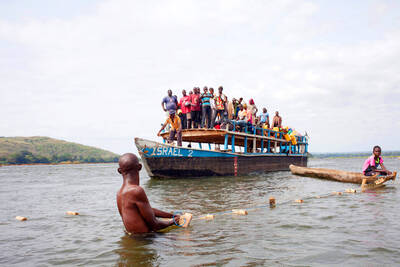
RIVER TRAGEDY: Local fishers and residents helped rescue people after the vessel capsized, while motorbike taxis evacuated some of the injured At least 58 people going to a funeral died after their overloaded river boat capsized in the Central African Republic’s (CAR) capital, Bangui, the head of civil protection said on Saturday. “We were able to extract 58 lifeless bodies,” Thomas Djimasse told Radio Guira. “We don’t know the total number of people who are underwater. According to witnesses and videos on social media, the wooden boat was carrying more than 300 people — some standing and others perched on wooden structures — when it sank on the Mpoko River on Friday. The vessel was heading to the funeral of a village chief in


 RSS
RSS