


Brazilian President Luiz Inacio Lula da Silva will walk a diplomatic tightrope when he sees his old friend Fidel Castro this week.
He will be trying not to antagonize Washington while pushing for Cuba to be more integrated into the region. Arriving in Havana for a two-day visit tomorrow, Silva is to meet both days with the 77-year-old communist leader he has known for decades.
A major focus during the trip will be Silva's concern that Cuba, under increasing international criticism because of alleged human rights worries, does not "remain isolated from the concert of nations," Tilden Santiago, Brazil's ambassador to Havana, told reporters this week.
In the nine months since he has taken office, Silva has sought to become a regional leader, making regional integration the centerpiece of his foreign policy, visiting nearly all South American nations or meeting with their presidents in Brasilia.
"If integration is to be achieved, Cuba cannot be left out," said Mario Marconini, executive director of the Brazilian Center for International Studies in Rio de Janeiro.
But Silva will also be testing his country's delicate relationship with the US, which has had no diplomatic relations with Cuba for more than four decades. The US is a major trading partner with Brazil, both the largest exporter to Brazil and the largest recipient of Brazilian products.
"If the visit turns out to be nothing more than a gesture to please leftist forces in Brazil and in the rest of world, it will be an empty and meaningless gesture," Marconini said in a telephone interview.
"But if it becomes part of a broader approach to the Hemisphere it could turn into a constructive exercise that should please even the United States," Marconini said.
Cuban dissidents and their supporters have asked Silva to intervene on behalf of 75 activists sentenced to long prison terms after a crackdown this year.
"Brazil should defend an opening in Cuba and a dialogue between the government and the opposition," Cuban democracy activist Oswaldo Paya said in an interview published on Sunday in the Folha de Sao Paulo newspaper.
Silva "should demand the release of the country's political prisoners," Paya was quoted as saying.
The Paris-based advocacy group Reporters Without Borders has asked the Brazilian president to press for the release of the 26 independent journalists among the 75 dissidents sentenced to long prison terms in March.
While recognizing Silva's political affinities with Castro, the press group wrote this week that "no democrat of the left or right would understand if these affinities were to take precedence over respect for human rights."
Brazilian diplomats have said those requests are being studied, but the president has no plans to meet with dissidents.
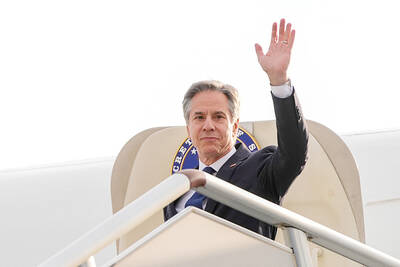
‘IN A DIFFERENT PLACE’: The envoy first visited Shanghai, where he attended a Chinese basketball playoff match, and is to meet top officials in Beijing tomorrow US Secretary of State Antony Blinken yesterday arrived in China on his second visit in a year as the US ramps up pressure on its rival over its support for Russia while also seeking to manage tensions with Beijing. The US diplomat tomorrow is to meet China’s top brass in Beijing, where he is also expected to plead for restraint as Taiwan inaugurates president-elect William Lai (賴清德), and to raise US concerns on Chinese trade practices. However, Blinken is also seeking to stabilize ties, with tensions between the world’s two largest economies easing since his previous visit in June last year. At the
Nearly half of China’s major cities are suffering “moderate to severe” levels of subsidence, putting millions of people at risk of flooding, especially as sea levels rise, according to a study of nationwide satellite data released yesterday. The authors of the paper, published by the journal Science, found that 45 percent of China’s urban land was sinking faster than 3mm per year, with 16 percent at more than 10mm per year, driven not only by declining water tables, but also the sheer weight of the built environment. With China’s urban population already in excess of 900 million people, “even a small portion

UNSETTLING IMAGES: The scene took place in front of TV crews covering the Trump trial, with a CNN anchor calling it an ‘emotional and unbelievably disturbing moment’ A man who doused himself in an accelerant and set himself on fire outside the courthouse where former US president Donald Trump is on trial has died, police said yesterday. The New York City Police Department (NYPD) said the man was declared dead by staff at an area hospital. The man was in Collect Pond Park at about 1:30pm on Friday when he took out pamphlets espousing conspiracy theories, tossed them around, then doused himself in an accelerant and set himself on fire, officials and witnesses said. A large number of police officers were nearby when it happened. Some officers and bystanders rushed
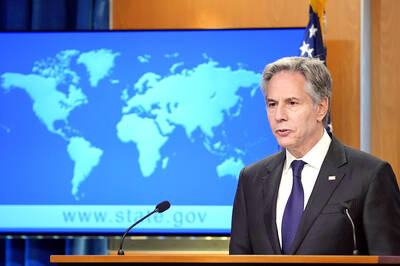
Beijing is continuing to commit genocide and crimes against humanity against Uyghurs and other Muslim minorities in its western Xinjiang province, U.S. Secretary of State Antony Blinken said in a report published on Monday, ahead of his planned visit to China this week. The State Department’s annual human rights report, which documents abuses recorded all over the world during the previous calendar year, repeated language from previous years on the treatment of Muslims in Xinjiang, but the publication raises the issue ahead of delicate talks, including on the war in Ukraine and global trade, between the top U.S. diplomat and Chinese


 RSS
RSS