


In a building smashed by shelling, hundreds of former refugees have found a squalid home. They sleep in bare rooms with glassless windows and missing walls. The rubble-strewn roof is the toilet.
Children play in rail-less stairwells that zigzag up four, filthy stories of what once was a shoe factory. Downstairs, their fathers whittle wooden branches into shovel handles they sell for the equivalent of 2 Afghanis (US$0.04 ) apiece, while their mothers spin wool by hand. Each couple is lucky to earn US$1 a day.

PHOTO: AP
Sayed Olor, 35, arrived about a year ago from a camp in Pakistan with his wife and three young children.
"We came to the west of the city because we were told it was possible to find a house, and the police showed us here," said Olor, gesturing around the stack of slums that he ironically calls "our palace."
Despite signs of recovery in Afghanistan after years of civil war, many returnees face grinding poverty in the ruins of a capital that offers few job prospects and can provide little help. Kabul's deputy mayor warns of the danger of a humanitarian disaster this winter.
Millions of Afghans fled to neighboring Pakistan and Iran, some during the war against Soviet occupiers in the 1980s, many others during factional fighting in the mid-1990s. But refugees have poured back since US bombing helped oust the Taliban regime nearly two years ago and a new government began the huge task of reconstruction.
The United Nations High Commissioner for Refugees (UNHCR) estimates 2.3 million people have returned since March last year, with 30 percent to 40 percent of them gravitating to Kabul and its environs. Many Afghans are afraid to go back to home villages still under the sway of warlords with private armies.
That has put a huge strain on Kabul, where whole districts remain little more than expanses of crumbling mud and brick, mostly blown apart during the street-to-street battles that killed tens of thousands in 1992 to 1996.
The government wants returnees to head for rural areas, not Kabul -- where the population has swollen to about 3 million, more than double what it was before the Taliban's fall. Most homes lack electricity and running water.
A UNHCR survey has identified about 1,400 families squatting in 43 locations in the city. But Deputy Mayor Habibullah Aghari estimates about 500,000 refugees are in Kabul, mostly living in schools, ruined buildings, relatives' homes and tents.
The 78 families who stay in the derelict Saudi-owned shoe factory are from all corners of the country. Some say they fled the Taliban, some fighting between warlords, others drought.
"There were 98 families at first, but 20 have gone back to Iran or Pakistan," said Olor, one of the residents. "They said we have no food, no power, no water, no job, that these are not conditions fit for human beings."
"I have no money to go back," he added.
Olor said he was wary of going to his home in the central province of Bamiyan, so he settled instead in Kabul, with about US$70 in cash and 70kg of flour from the UNHCR.
Residents of the building said at least two children had died recently in falls from upper-story balconies and two others died from illness. They said schools won't accept youngsters of families living in the ruins, arguing they are refugees and will soon be moving on.
Olor earns about US$0.80 cents a day doing simple carpentry. His family sleeps in a bleak, third-story room with a tarp over one of the two frameless windows. They eat beans and bread for dinner, leftover bread for breakfast. They don't have lunch.
He dreams of renting a proper house, but even the most basic two-room shelter now costs 1,500 Afghanis (US$30) a month.
Since the Taliban were ousted, property and food prices have shot up -- partly due to the arrival of international aid workers and peacekeepers. A kilogram of beef costs US$2.50, five times more than before the fall of the Taliban regime.
To make matters worse for Olor, the building's owner is talking of evicting the families, even though winter is coming, so he can rebuild his factory.
The flow of returning refugees -- drawn by optimism that the US-backed government of President Hamid Karzai could bring peace and prosperity -- slowed dramatically this year.
Many of the returnees now view Karzai's government as serving the rich and doing little for the poor.
Aghari, the deputy mayor, said the municipal construction department has prepared plans for cheap housing and is ready to allocate land for 10,000 people, mainly widows, orphans and amputees. UNHCR has focused on building homes for refugees settling in the provinces, but has said it will also repair 30 abandoned public buildings to house returnees and help build 1,500 houses in Kabul.
But Aghari warns that unless more foreign support arrives, crisis looms in the subzero temperatures of winter.
"Last winter we supplied returnees and refugees and poor with tents and charcoal, but that's not good enough," he said.
"If the international community fails to provide aid, we will have a humanitarian disaster during this winter."
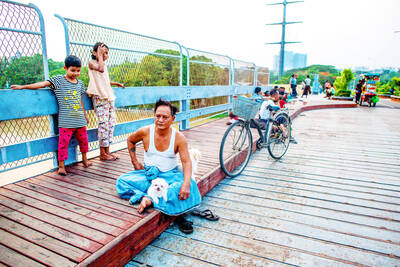
As the sun sets on another scorching Yangon day, the hot and bothered descend on the Myanmar city’s parks, the coolest place to spend an evening during yet another power blackout. A wave of exceptionally hot weather has blasted Southeast Asia this week, sending the mercury to 45°C and prompting thousands of schools to suspend in-person classes. Even before the chaos and conflict unleashed by the military’s 2021 coup, Myanmar’s creaky and outdated electricity grid struggled to keep fans whirling and air conditioners humming during the hot season. Now, infrastructure attacks and dwindling offshore gas reserves mean those who cannot afford expensive diesel

Does Argentine President Javier Milei communicate with a ghost dog whose death he refuses to accept? Forced to respond to questions about his mental health, the president’s office has lashed out at “disrespectful” speculation. Twice this week, presidential spokesman Manuel Adorni was asked about Milei’s English Mastiff, Conan, said to have died seven years ago. Milei, 53, had Conan cloned, and today is believed to own four copies he refers to as “four-legged children.” Or is it five? In an interview with CNN this month, Milei referred to his five dogs, whose faces and names he had engraved on the presidential baton. Conan,

French singer Kendji Girac, who was seriously injured by a gunshot this week, wanted to “fake” his suicide to scare his partner who was threatening to leave him, prosecutors said on Thursday. The 27-year-old former winner of France’s version of The Voice was found wounded after police were called to a traveler camp in Biscarrosse on France’s southwestern coast. Girac told first responders he had accidentally shot himself while tinkering with a Colt .45 automatic pistol he had bought at a junk shop, a source said. On Thursday, regional prosecutor Olivier Janson said, citing the singer, that he wanted to “fake” his suicide
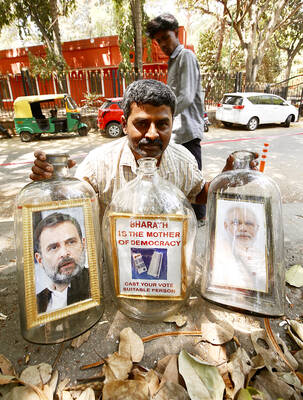
Indian Prime Minister Narendra Modi reaffirmed his pledge to replace India’s religion-based marriage and inheritance laws with a uniform civil code if he returns to office for a third term, a move that some minority groups have opposed. In an interview with the Times of India listing his agenda, Modi said his government would push for making the code a reality. “It is clear that separate laws for communities are detrimental to the health of society,” he said in the interview published yesterday. “We cannot be a nation where one community is progressing with the support of the Constitution while the other


 RSS
RSS