


Ten North Koreans seeking asylum at the Japanese Embassy in Thailand were helped by a clandestine human-rights network that also plans to target German and US missions in the region, an activist said.
Norbert Vollertsen, a German doctor in South Korea who is a member of the informal network, said Friday his group wants to publicize the plight of the North Koreans and focus on human rights issues by arranging similar intrusions elsewhere.
"We would like to create a diplomatic mess for the US, Japanese and German players," said Vollertsen in a telephone interview from Seoul.
"Our next target is a German institution nearby," he said, refusing to elaborate. "We will also focus on the US to guarantee asylum," said Vollertsen, who spent 18 months in North Korea as a doctor with a German nonprofit organization until the end of 2000.
The US and Japan have focused on the nuclear threat posed by Pyongyang's government but have given little attention to the refugee problem.
Vollertsen said he hoped that a refugee crisis would trigger the peaceful collapse of the communist government, similar to the way in which growing numbers of East German refugees led to the peaceful reunification of Germany after the Berlin Wall was razed in 1989.
Vollertsen said a South Korean activist, whom he would not name, had returned Thursday from Bangkok after helping the North Koreans rush into the Japanese Embassy the same day. He described the man as a veteran activist who had previously been kicked out of China for his refugee work.
Vollertsen became the public face of the network after he helped arrange a series of high-profile intrusions by asylum-seekers last year at diplomatic missions in China.
He described the people he works with as "a loose movement of several nationalities," mostly South Korean but also Americans and Europeans, including former diplomats, former journalists and missionaries. The network has no name, budget or formal organization.
Vollertsen said the network helped the 10 asylum-seekers make their way from the Tumen River -- marking the border between North Korea and China -- down to Thailand, Laos, and Vietnam.
He estimated that "several hundred" North Korean refugees had made their way to South Korea via Bangkok in the past few years.
In the past, the North Koreans had targeted diplomatic missions in China for asylum bids. But Beijing -- Pyongyang's chief ally -- is not sympathetic to their cause, branding them economic migrants rather than political refugees.
"There was no more possibility to do something in Beijing" after Chinese police began closely guarding diplomatic missions there following last year's high-profile incidents, Vollertsen said.
Vollertsen said the network's plans include sending messages by balloon into North Korea, smuggling in radios, and even a boat-people project to encourage people to flee by sea to South Korea.

‘IN A DIFFERENT PLACE’: The envoy first visited Shanghai, where he attended a Chinese basketball playoff match, and is to meet top officials in Beijing tomorrow US Secretary of State Antony Blinken yesterday arrived in China on his second visit in a year as the US ramps up pressure on its rival over its support for Russia while also seeking to manage tensions with Beijing. The US diplomat tomorrow is to meet China’s top brass in Beijing, where he is also expected to plead for restraint as Taiwan inaugurates president-elect William Lai (賴清德), and to raise US concerns on Chinese trade practices. However, Blinken is also seeking to stabilize ties, with tensions between the world’s two largest economies easing since his previous visit in June last year. At the

UNSETTLING IMAGES: The scene took place in front of TV crews covering the Trump trial, with a CNN anchor calling it an ‘emotional and unbelievably disturbing moment’ A man who doused himself in an accelerant and set himself on fire outside the courthouse where former US president Donald Trump is on trial has died, police said yesterday. The New York City Police Department (NYPD) said the man was declared dead by staff at an area hospital. The man was in Collect Pond Park at about 1:30pm on Friday when he took out pamphlets espousing conspiracy theories, tossed them around, then doused himself in an accelerant and set himself on fire, officials and witnesses said. A large number of police officers were nearby when it happened. Some officers and bystanders rushed

Beijing is continuing to commit genocide and crimes against humanity against Uyghurs and other Muslim minorities in its western Xinjiang province, U.S. Secretary of State Antony Blinken said in a report published on Monday, ahead of his planned visit to China this week. The State Department’s annual human rights report, which documents abuses recorded all over the world during the previous calendar year, repeated language from previous years on the treatment of Muslims in Xinjiang, but the publication raises the issue ahead of delicate talks, including on the war in Ukraine and global trade, between the top U.S. diplomat and Chinese
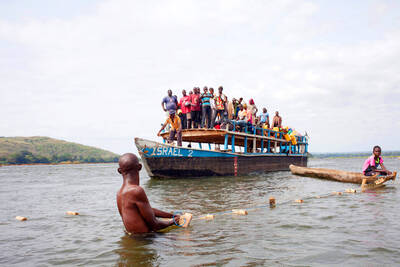
RIVER TRAGEDY: Local fishers and residents helped rescue people after the vessel capsized, while motorbike taxis evacuated some of the injured At least 58 people going to a funeral died after their overloaded river boat capsized in the Central African Republic’s (CAR) capital, Bangui, the head of civil protection said on Saturday. “We were able to extract 58 lifeless bodies,” Thomas Djimasse told Radio Guira. “We don’t know the total number of people who are underwater. According to witnesses and videos on social media, the wooden boat was carrying more than 300 people — some standing and others perched on wooden structures — when it sank on the Mpoko River on Friday. The vessel was heading to the funeral of a village chief in


 RSS
RSS