


A small metal tray contains the fears and hopes of a nation ravaged by AIDS -- the results of another HIV test at one of the testing centers around the country run with the help of US funding.
The US effort to help Botswana battle the pandemic is part of a broader effort to bolster the southern African nation and prove that not all African nations fall the way of dictators, civil war and economic devastation.
Politically stable and diamond-rich, Botswana is among a hopscotch of stops in US President George W. Bush's tour of sub-Saharan Africa this week.

PHOTO: AP
But unlike his other destinations -- Nigeria, Senegal, South Africa and Uganda -- Botswana, a nation of 1.5 million people, is not a regional power nor does it have any strategic natural resources.
Its inclusion in Bush's trip is seen as a reward for the country's record of good governance and an opportunity to showcase a model for other African nations, including neighboring Zimbabwe.
The US government has been strongly critical of Zimbabwean President Robert Mugabe, whom it blames for plunging that once prospering nation into a political and economic freefall.
In nearby Angola and Congo, diamonds have helped fuel civil wars that cost millions of lives and devastated the two countries' economies.
Peaceful Botswana, however, was recently ranked the least corrupt country on the continent in a survey by the World Economic Forum.
"Among the blind, the one-eyed man is king," President Festus Mogae joked in an interview.
A series of checks and balances including an anti-corruption agency and a public accounting committee in Parliament help ensure government coffers are not raided.
"We are modest people and may be less tempted to do the wrong thing, [but] we have also tried to fight corruption," said Mogae, who went from tending his family's cattle to studying economics on a scholarship at Oxford.
However, Botswana is facing a potential AIDS disaster. More than 38 percent of adults are infected with HIV -- the highest rate in the world. The government has adopted Africa's most aggressive effort to battle the disease, including a promise to bring AIDS medicine to everyone who needs it.
The US has responded by jointly sponsoring 16 HIV testing centers around the country, donating money to improve health care and helping fund AIDS awareness campaigns, including a serialized radio drama that deals with AIDS-related issues.
In another sign of confidence in Botswana, the US government has based an international law enforcement academy here, training authorities across sub-Saharan Africa on everything from counterterrorism and forensics to fighting organized crime.
Seretse Khama, Botswana's first president, is credited with laying out a roadmap for the country -- one of strong government institutions and fiscal responsibility.
But history and geography also helped.
Tswana chiefs in the second half of the 19th century maintained their relative independence by asking for British help against white settlers moving north from South Africa.
Under British protection but with little British physical presence, Botswana, with no obvious re-sources, was spared the colonial exploitation that plagued many mineral-rich African nations.
The British quietly left the impoverished land of deserts and deltas in 1966.
The next year, diamonds were discovered here.
Today roughly every third diamond on the US$6 billion world market comes from Botswana.
With the bulk of its population belonging to one tribe, the Tswana, the country has been spared the ethnic divisions of some of its neighbors.
Its small army spends much of its time tracking game poachers, and its leaders have been able to concentrate on transforming the country from a destitute backwater with only a few dozen kilometers of paved road to one of the fastest growing economies in the world.
Shimmering office buildings and malls dominate Gaborone, a sleepy village turned capital in the scrubby plains on the fringes of the Kalahari Desert.
Average incomes have risen from US$80 a year to more than US$3,700 a year. The education and health care systems have become the envy of the developing world.
The government jointly owns Debswana, the company that controls and mines the diamonds here, with the international diamond giant De Beers, and analysts say Botswana receives more than 75 percent of the profits.
Despite its good governance and democratic tradition, the government has been harshly criticized for trying to hinder press freedom with new legislation seeking tighter government control over the media, including the power to decide which newspapers can legally operate.
On the business side, Mogae has been trying to attract investors, stressing Botswana's company-friendly low taxes and minimal regulations, and US officials have been trying to encourage international businesses to use it as a regional base.
Unity Dow, Botswana's first female high court judge, credits the country's success to its culture of openness and transparency.
In the traditional court system anyone can make his case, even against the chief, she said.
"We have a history of confronting our leaders ... its part of our culture," she said.
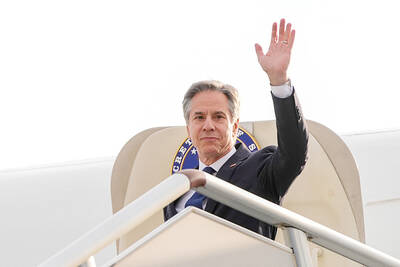
‘IN A DIFFERENT PLACE’: The envoy first visited Shanghai, where he attended a Chinese basketball playoff match, and is to meet top officials in Beijing tomorrow US Secretary of State Antony Blinken yesterday arrived in China on his second visit in a year as the US ramps up pressure on its rival over its support for Russia while also seeking to manage tensions with Beijing. The US diplomat tomorrow is to meet China’s top brass in Beijing, where he is also expected to plead for restraint as Taiwan inaugurates president-elect William Lai (賴清德), and to raise US concerns on Chinese trade practices. However, Blinken is also seeking to stabilize ties, with tensions between the world’s two largest economies easing since his previous visit in June last year. At the
Nearly half of China’s major cities are suffering “moderate to severe” levels of subsidence, putting millions of people at risk of flooding, especially as sea levels rise, according to a study of nationwide satellite data released yesterday. The authors of the paper, published by the journal Science, found that 45 percent of China’s urban land was sinking faster than 3mm per year, with 16 percent at more than 10mm per year, driven not only by declining water tables, but also the sheer weight of the built environment. With China’s urban population already in excess of 900 million people, “even a small portion

UNSETTLING IMAGES: The scene took place in front of TV crews covering the Trump trial, with a CNN anchor calling it an ‘emotional and unbelievably disturbing moment’ A man who doused himself in an accelerant and set himself on fire outside the courthouse where former US president Donald Trump is on trial has died, police said yesterday. The New York City Police Department (NYPD) said the man was declared dead by staff at an area hospital. The man was in Collect Pond Park at about 1:30pm on Friday when he took out pamphlets espousing conspiracy theories, tossed them around, then doused himself in an accelerant and set himself on fire, officials and witnesses said. A large number of police officers were nearby when it happened. Some officers and bystanders rushed
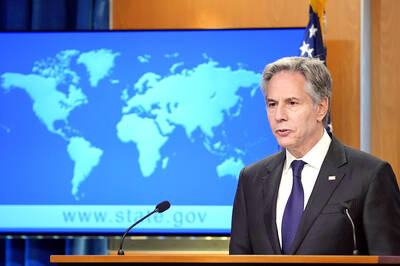
Beijing is continuing to commit genocide and crimes against humanity against Uyghurs and other Muslim minorities in its western Xinjiang province, U.S. Secretary of State Antony Blinken said in a report published on Monday, ahead of his planned visit to China this week. The State Department’s annual human rights report, which documents abuses recorded all over the world during the previous calendar year, repeated language from previous years on the treatment of Muslims in Xinjiang, but the publication raises the issue ahead of delicate talks, including on the war in Ukraine and global trade, between the top U.S. diplomat and Chinese


 RSS
RSS