

Ten weeks after the end of the war, Saddam Hussein and his two sons are probably alive and in Iraq, their presence fuelling resistance to 150,000 US troops, US intelligence officials now believe.
The latest thinking on Saddam's location expressed with increasing frankness by US officials has been strengthened by intercepts of communications between fugitive members of the regime and Iraqi intelligence officials, the New York Times reported Friday
Some officials in the Bush administration had expressed certainty during the conflict that Saddam had been killed by US bombing raids, either during an attack on April 7 on an upper class neighborhood of Baghdad or the strike on a supposed leadership compound in the war's opening hours.

PHOTO: AFP
Officials are now reportedly convinced that Saddam's anointed heir, Qusay, is also alive, although there remains some debate about the fate of his elder brother, Uday.
They also believe the former ruling troika has remained inside Iraq, preferring to entrust their fate to their fellow citizens rather than risk betrayal to US forces in a foreign country.
Despite the failure, so far, to locate either Saddam or the weapons of mass destruction which were the Bush administration's stated reason for its invasion of Iraq, US officials insisted that the war had accomplished its goal.
Victoria Clarke, a Pentagon spokesman, said, "Of course, the search for all senior Iraqi regime figures is important, and is getting all sorts of effort. But what is really important is the fact that Saddam is no longer running the country and he won't be."
The newspaper quoted intelligence officials as saying that the fresh intercepts had intensified the hunt for Iraq's former ruling family by the CIA, the army's Delta Force, and an elite navy counter-terrorism unit. The same unit, known as Taskforce 20, has also been charged with finding Saddam's chemical and biological weapons.
Continued resistance by Iraqis to the US, which officials believe may be driven by a degree of centralized command, was made apparent to US forces once again Friday after troops came under fire in Falluja, a center for Saddam loyalists, injuring two soldiers. It was the fifth attack on US forces in 48 hours.
The casualty rate among forces in Iraq has climbed steadily since President George Bush made his dramatic appearance on a US aircraft carrier last month to declare victory over Saddam's regime.
Since then more than 50 US soldiers have been killed in Iraq in guerrilla ambushes and accidents, according to the Pentagon.
The special forces hunting for Saddam have failed to elicit fresh information on his location after the arrest of his personal secretary and closest confidant outside his immediate family.
Abed Hamid Mahmoud was the fourth most important member of the regime, a status recognized by the US when it named him the ace of diamonds in the deck of cards distributed to US troops.
Newspaper reports since his capture was announced this week suggested his arrest had elicited more disappointment than triumph.
Intelligence officials were quoted as saying they had hoped to find him with Saddam or that he would cooperate with his interrogators once in custody.
Such hopes have been thwarted repeatedly by Iraqi officials -- and Saddam's relatives -- with those captured proving adept at supplying vague or circuitous answers, according to intelligence officials.
Ordinary Iraqis do not appear to be forthcoming either. Nor are they impressed with the search methods employed by the Americans.
A man in Tikrit, Saddam's hometown, told the Los Angeles Times, "They are asking silly things. `Have you seen Saddam Hussein? Where did you see him?' And the answer they get is, `No, I haven't seen him.' And that is reality."
He added, "If I knew where Saddam was I would never tell you because you are an American."
Taskforce 20 has also been unable to establish any significant leads from the bomb sites left by the US strikes against former Iraqi president, despite excavating the huge conical crater left by the April 7 attack.
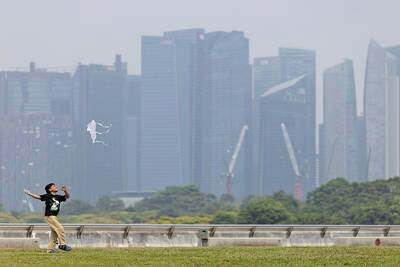
Singapore’s air quality hit an unhealthy level yesterday, as haze from forest fires raging in Indonesia continued to spread across swathes of Southeast Asia. The city-state is currently one of the 10 most-polluted major cities in the world, coming in at third in IQAir’s ranking. Kuching, in the Malaysian part of the island of Borneo, was No. 1. A government taskforce has “activated haze response plans” for schools, workplaces and community centers, Singaporean Minister for Sustainability and the Environment Grace Fu (傅海) said in a video message on Facebook. Most people could continue essential daily activities, but the elderly or vulnerable should

PAINSTAKING PROCESS: Ice makers freeze water for up to 72 hours, replace tainted water with a fresh batch once freezing begins, and are constantly stirring In the historic Japanese city of Kanazawa, craftsmen painstakingly shape and slice blocks of ice destined to chill negronis in some of the world’s trendiest bars. The men work for Kuramoto Ice, a century-old company in Ishikawa on the Sea of Japan coast and one of dozens of Japanese firms producing ultra-clear, premium ice. This luxury product, believed by those in the industry to melt more slowly than regular blocks, is a staple of Japan’s cocktail culture, but its popularity is also spilling over to bars abroad, from the US to Australia, who pay as much as ¥200 (US$1.28) per cube. Kuramoto Ice
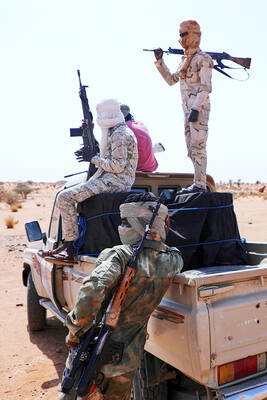
WAR CRIMES? An investigation found that a network of countries are supplying Sudan’s RSF with weapons, including drone blamed for large civilian casualties Foreign weapons, military technology, fighters and logistical networks are helping sustain Sudan’s conflict and expanding the warring parties’ ability to strike deep into civilian areas, a UN fact-finding mission said in a report published yesterday, warning that some attacks might amount to war crimes. Sudan’s war erupted in April 2023 following a power struggle between Sudan’s military and the Rapid Support Forces (RSF) ahead of a planned transition to civilian rule. The conflict has devastated the country, displaced more than 14 million people and created what the UN has described as one of the world’s worst humanitarian crises. The UN mission said
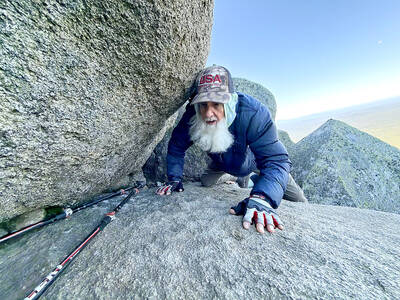
MISSION COMPLETED: Sanders, whose trail name is Grey Beard, has become something of a star among fellow hikers and thousands follow him on social media More than 14 million older adults fall every year in the US, perhaps none so often as 91-year-old Dale Sanders. By his count, Sanders fell 71 times while reclaiming his record as the oldest hiker to complete the Appalachian Trail. Six were what he calls hard falls, including one that led to a brief hospitalization and another just 183m from the finish, but none were enough to permanently divert him from the 3,530km trail that runs between Springer Mountain in Georgia and Mount Katahdin in Maine. The Appalachian Trail Conservancy defines a “thru-hike” as completing all of the trail’s sections


 RSS
RSS