


The Central Epidemic Command Center (CECC) yesterday said that it would reduce the number of people attending its news conferences and seat reporters farther apart to set an example for COVID-19 prevention at such gatherings.
The center said that it holds daily news conferences that are attended by about 120 to 150 people in a space of about 48 ping (159m²), therefore the conference venue is considered to have a high risk of contagion.
The nation’s disease prevention operations would be hindered if a suspected case were to be detected at the venue, it added.
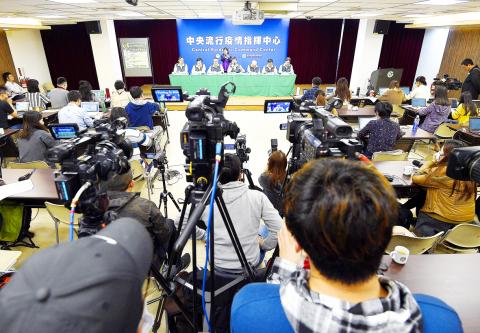
Photo: Chen Chih-chu, Taipei Times
Starting today, the number of attendees would be reduced to 60 reporters from the domestic media and four from the foreign press as well as seven government officials and 14 staff for a total of 85 people, or an average of 1.8 people per ping, it said.
The center also urged reporters not to approach government officials up close and push microphones toward them to ask questions after news conferences, adding that microphones, desks and equipment in the conference room would be disinfected regularly, and hand sanitizer would be provided to the attendees.
An infrared body temperature monitor has also been set up at the entrance of the Centers for Disease Control building, where the news conferences are held, it said, adding that people with a fever would be barred entry and urged to seek immediate medical attention.
The measures followed a CECC announcement on Friday that an Australian composer had tested positive for COVID-19 after returning home following two performances in Taiwan.
The center said that 147 people who had come into close contact with the composer have been placed under 14-day home isolation, including several reporters who interviewed him.
Minister of Health and Welfare Chen Shih-chung (陳時中), who heads the center, on Friday night said that the center would rearrange its news conference setting.
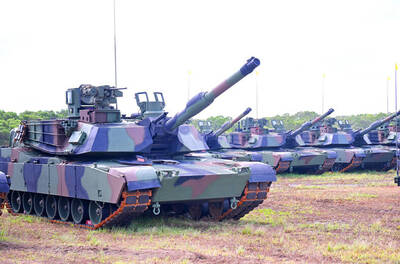
The manufacture of the remaining 28 M1A2T Abrams tanks Taiwan purchased from the US has recently been completed, and they are expected to be delivered within the next one to two months, a source said yesterday. The Ministry of National Defense is arranging cargo ships to transport the tanks to Taiwan as soon as possible, said the source, who is familiar with the matter. The estimated arrival time ranges from late this month to early next month, the source said. The 28 Abrams tanks make up the third and final batch of a total of 108 tanks, valued at about NT$40.5 billion
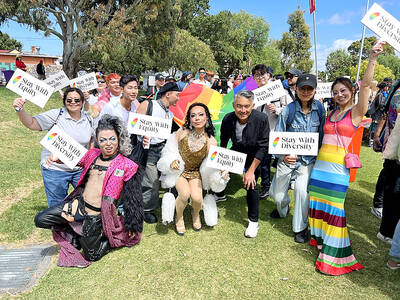
A group from the Taiwanese Designers in Australia association yesterday represented Taiwan at the Midsumma Pride March in Melbourne. The march, held in the St. Kilda suburb, is the city’s largest LGBTQIA+ parade and the flagship event of the annual Midsumma Festival. It attracted more than 45,000 spectators who supported the 400 groups and 10,000 marchers that participated this year, the association said. Taiwanese Designers said they organized a team to march for Taiwan this year, joining politicians, government agencies, professionals and community organizations in showing support for LGBTQIA+ people and diverse communities. As the first country in Asia to legalize same-sex
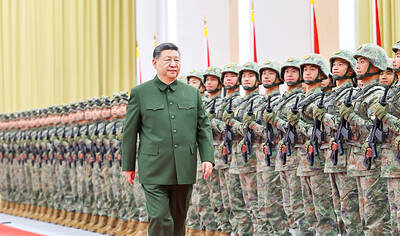
MOTIVES QUESTIONED The PLA considers Xi’s policies toward Taiwan to be driven by personal considerations rather than military assessment, the Epoch Times reports Chinese President Xi Jinping’s (習近平) latest purge of the Chinese People’s Liberation Army (PLA) leadership might have been prompted by the military’s opposition to plans of invading Taiwan, the Epoch Times said. The Chinese military opposes waging war against Taiwan by a large consensus, putting it at odds with Xi’s vision, the Falun Gong-affiliated daily said in a report on Thursday, citing anonymous sources with insight into the PLA’s inner workings. The opposition is not the opinion of a few generals, but a widely shared view among the PLA cadre, the Epoch Times cited them as saying. “Chinese forces know full well that
Travel agencies in Taiwan are working to secure alternative flights for travelers bound for New Zealand for the Lunar New Year holiday, as Air New Zealand workers are set to strike next week. The airline said that it has confirmed that the planned industrial action by its international wide-body cabin crew would go ahead on Thursday and Friday next week. While the Auckland-based carrier pledged to take reasonable measures to mitigate the impact of the workers’ strike, an Air New Zealand flight arriving at Taipei from Auckland on Thursday and another flight departing from Taipei for Auckland on Saturday would have to


 RSS
RSS