


A joint letter by the Environment and Animal Society of Taiwan and foreign groups is calling on the WHO and other global bodies to close wildlife markets to reduce human and animal health risks, citing the COVID-19 outbreak in China as an example.
The letter, signed by 208 organizations and individuals around the world, was sent on Tuesday to WHO Director-General Tedros Adhanom Ghebreyesus, World Organisation for Animal Health director-general Monique Eloit and UN Environment Programme Executive Director Inger Andersen.
The call was initiated by the UK-based Born Free Foundation, Environment and Animal Society of Taiwan office director Lin Tai-ching (林岱瑾) said yesterday, adding that the animal society also started a petition to gather domestic support for the initiative.

Photo: Reuters
“The current coronavirus epidemic sweeping across parts of China is believed to have originated in wildlife, and might have been transmitted to people via wildlife markets in the city of Wuhan, although the precise source of the human infection has yet to be definitively established,” the letter read.
Wildlife markets have also been associated with other epidemics, such as the global outbreaks of SARS in 2002 and 2003, and Ebola epidemics in Africa in recent years, it said.
While China has announced a temporary ban on wildlife trade and wildlife markets across the country, the measures should be made permanent, it added.
The EU has banned the import of captive live birds to reduce the transmission of the highly pathogenic avian influenza virus, the letter said, citing the example as a precedent.
Stopping wildlife trade also safeguards biodiversity, as 1 million animal and plant species are on the verge of extinction, the letter said.
Direct exploitation has been identified as the second-most important driver of biodiversity loss, following changes in land use and sea use, it said, citing a report published last year by the Intergovernmental Science-Policy Platform on Biodiversity and Ecosystem Services.
Wildlife sales in Taiwan have declined significantly since a 1994 amendment to the Wildlife Conservation Act (野生動物保育法) banned the trade of protected wildlife, but some eateries still sell wildlife, such as the Formosan Reeves’ muntjac and civets, Lin said.
Although Reeves’ muntjacs and civets have been removed from the government’s list of protected species, consuming wild animals is unnecessary, as people can eat poultry and other farm animals, she said.
While not every person can switch to veganism, society has been promoting farming and slaughter methods that reduce the pain caused to animals, such as cage-free eggs, she said.
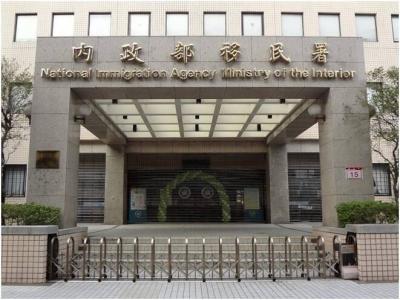
A small number of Taiwanese this year lost their citizenship rights after traveling in China and obtaining a one-time Chinese passport to cross the border into Russia, a source said today. The people signed up through Chinese travel agencies for tours of neighboring Russia with companies claiming they could obtain Russian visas and fast-track border clearance, the source said on condition of anonymity. The travelers were actually issued one-time-use Chinese passports, they said. Taiwanese are prohibited from holding a Chinese passport or household registration. If found to have a Chinese ID, they may lose their resident status under Article 9-1

Taiwanese were praised for their composure after a video filmed by Taiwanese tourists capturing the moment a magnitude 7.5 earthquake struck Japan’s Aomori Prefecture went viral on social media. The video shows a hotel room shaking violently amid Monday’s quake, with objects falling to the ground. Two Taiwanese began filming with their mobile phones, while two others held the sides of a TV to prevent it from falling. When the shaking stopped, the pair calmly took down the TV and laid it flat on a tatami mat, the video shows. The video also captured the group talking about the safety of their companions bathing

PROBLEMATIC APP: Citing more than 1,000 fraud cases, the government is taking the app down for a year, but opposition voices are calling it censorship Chinese Nationalist Party (KMT) Chairwoman Cheng Li-wun (鄭麗文) yesterday decried a government plan to suspend access to Chinese social media platform Xiaohongshu (小紅書) for one year as censorship, while the Presidential Office backed the plan. The Ministry of the Interior on Thursday cited security risks and accusations that the Instagram-like app, known as Rednote in English, had figured in more than 1,700 fraud cases since last year. The company, which has about 3 million users in Taiwan, has not yet responded to requests for comment. “Many people online are already asking ‘How to climb over the firewall to access Xiaohongshu,’” Cheng posted on

A classified Pentagon-produced, multiyear assessment — the Overmatch brief — highlighted unreported Chinese capabilities to destroy US military assets and identified US supply chain choke points, painting a disturbing picture of waning US military might, a New York Times editorial published on Monday said. US Secretary of Defense Pete Hegseth’s comments in November last year that “we lose every time” in Pentagon-conducted war games pitting the US against China further highlighted the uncertainty about the US’ capability to intervene in the event of a Chinese invasion of Taiwan. “It shows the Pentagon’s overreliance on expensive, vulnerable weapons as adversaries field cheap, technologically


 RSS
RSS