


The government has issued the first vehicle license plate to be used in autonomous vehicle trials since it began to enforce the Act for Uncrewed Vehicle Technology Innovations and Experiments (無人載具科技創新實驗條例) in October last year, Minister of Transportation and Communications Lin Chia-lung (林佳龍) said yesterday.
Earlier this month, Kinwaytek Technology Co, a subsidiary of Chunghwa Telecom Co, received the nation’s first license plate for autonomous vehicle trials.
Lin and several other government officials were yesterday invited to visit the company’s testing ground for autonomous vehicles at Taoyuan’s Hutoushan Innovation Hub (虎頭山創新園區).

Photo: Hsieh Wu-hsiung, Taipei Times
Autonomous vehicles are the driver in the nation’s development of smart transportation systems, Lin said in an interview on the sidelines of the event, adding that local governments have been eagerly facilitating driverless vehicle development.
Industry clusters for self-
driving vehicles are emerging and the nation is seeing the preliminary results of President Tsai Ing-wen’s (蔡英文) “5 plus 2” innovative industries policy, Lin said.
The plan focuses on the development of the five “pillar industries” — Internet of Things (IoT) technology, green energy, smart machinery, and the defense and biomedical industries — as well as high-value agriculture and a circular economy.
In addition to the innovation hub in Taoyuan, the nation has trial grounds for autonomous vehicles in Danhai New Town (淡海新市鎮) and near Tainan’s high-speed rail station, Lin said, adding that the ministry’s job is to ensure that the new technology can be developed in an ideal environment.
The Hutoushan Innovation Hub, which has settings to simulate a railroad crossing, an intersection and a roundabout, has also become a testing venue for other technologies, such as obstacle-avoiding robots, the Taoyuan Department of Economic Development said.
Using remote control, researchers can have a robot imitate a human walking, the department said, adding that results from the experiments help to improve driverless vehicles’ ability to avoid obstacles.
The office spaces included in the hub’s Phase 1 development plan are occupied, it said.
Taiwan Business Bank, the Small and Medium Enterprise Credit Guarantee Fund of Taiwan, and the Taiwan Small and Medium Enterprise Foundation have a joint office inside the hub to help start-ups secure bank loans, it added.
The Taoyuan City Government is working with Chunghwa Telecom on the hub’s phase 2 development plan, which is to include testing grounds for 5G systems, the department said.
A 5G system could be used in the construction of a smart traffic light, which could transmit signals to autonomous vehicles, telling them that the traffic light is turning red so that they can gradually come to a stop, it said.
Communications technology has made development of other innovative applications possible, the department added.
“The hub can attract start-ups that want to test IoT services at a relatively lower cost, thanks to the hub’s 5G facilities and supercomputers,” it said.
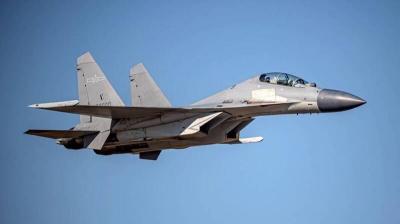
Eight Chinese naval vessels and 24 military aircraft were detected crossing the median line of the Taiwan Strait between 6am yesterday and 6am today, the Ministry of National Defense said this morning. The aircraft entered Taiwan’s northern, central, southwestern and eastern air defense identification zones, the ministry said. The armed forces responded with mission aircraft, naval vessels and shore-based missile systems to closely monitor the situation, it added. Eight naval vessels, one official ship and 36 aircraft sorties were spotted in total, the ministry said.
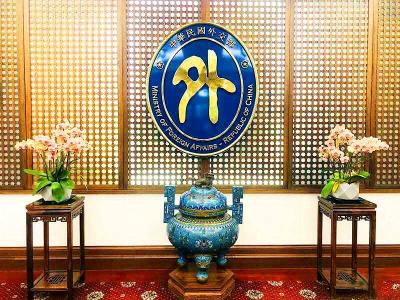
The Ministry of Foreign Affairs (MOFA) today said that if South Korea does not reply appropriately to its request to correct Taiwan’s name on its e-Arrival card system before March 31, it would take corresponding measures to alter how South Korea is labeled on the online Taiwan Arrival Card system. South Korea’s e-Arrival card system lists Taiwan as “China (Taiwan)” in the “point of departure” and “next destination” fields. The ministry said that it changed the nationality for South Koreans on Taiwan’s Alien Resident Certificates from “Korea” to “South Korea” on March 1, in a gesture of goodwill and based on the
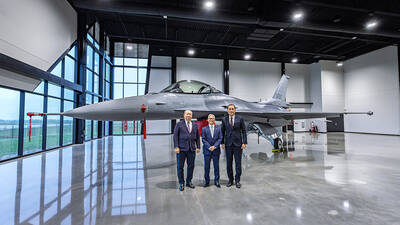
Taiwanese officials were shown the first of 66 F-16V fighter jets purchased by Taiwan from the United States, the Ministry of National Defense said yesterday, adding the aircraft has completed an initial flight test and is expected to be delivered later this year. A delegation led by Deputy Minister of National Defense Hsu Szu-chien (徐斯儉) visited Lockheed Martin’s F-16 C/D Block 70 (also known as F-16V) assembly line in South Carolina on March 16 to view the aircraft. The jet will undergo a final acceptance flight in the US before being delivered to Taiwan, the
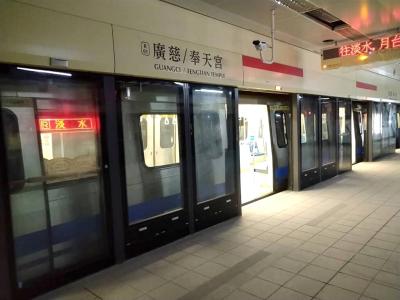
The New Taipei Metro's Sanyin Line and the eastern extension of the Taipei Metro's Tamsui-Xinyi Line (Red Line) are scheduled to begin operations in June, the National Development Council said today. The Red Line, which terminates at Xiangshan Station, would be connected by the 1.4km extension to a new eastern terminal, Guangci/Fengtian Temple Station, while the Sanyin Line would link New Taipei City's Tucheng and Yingge stations via Sanxia District (三峽). The council gave the updates at a council meeting reviewing progress on public construction projects for this year. Taiwan's annual public infrastructure budget would remain at NT$800 billion (US$25.08 billion), with NT$97.3


 RSS
RSS