


Taiwanese independence activist Lee Chia-yu (李嘉宇) was found guilty of contravening the Criminal Code by inciting others to burn the national flag, after the Taiwan High Court on Friday last week overturned a previous ruling in which he was acquitted.
Lee and others were holding an event near the Legislative Yuan in Taipei on Feb. 27, 2018, to commemorate the 228 Incident when Lee allegedly told the crowd to set a Republic of China (ROC) flag on fire, which an unidentified man proceeded to do.
The Taipei District Prosecutors’ Office accused Lee of inciting others to contravene Article 118 of the Criminal Code, which prohibits destroying, damaging or pulling down the national flag or emblem in public for the purpose of insulting the nation.
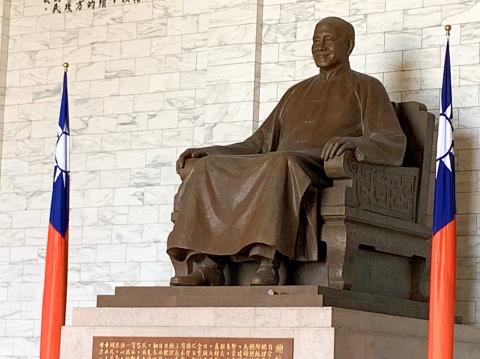
Photo: Wang Kuan-je, Taipei Times
The Taipei District Court in September last year acquitted him on the grounds that his act was a form of constitutionally protected speech.
On Friday, the High Court ruled that Lee’s method of expression was “unnecessary and irrational,” and sentenced him to 50 days in prison, commutable to a fine of NT$50,000.
The case can still be appealed.
During the retrial, Lee had told the judge that he and other activists, including members of the Alliance of Referendum for Taiwan and the 908 Taiwan Republic Campaign, had organized the 2018 event because they were dissatisfied with the progress of transitional justice, despite more than 70 years having passed since the Incident.
Lee disputed the guilty ruling, saying that it was impossible to prove whether the flag that was burned conformed to the proportions specified in the National Emblem and National Flag of the Republic of China Act (中華民國國徽國旗法).
Lee also said that he had no intention of insulting the ROC, and that he had wanted to use the event to inform people about the ROC’s transgressions.
The event was to advocate Taiwanese independence, and express that the ROC and Taiwan were separate entities, he said, adding that he was not calling for the extermination of the ROC.
Instead, there should be a clear distinction between the two, he said.
“Taiwanese cannot see themselves as ROC citizens, so we used extreme measures to advocate our views,” he said.
The judge in the first ruling had said Lee did not intend a “pure destruction of, elimination of or insult of the national flag,” and that his form of expression was constitutionally protected.
However, the High Court judge said that Lee and the others who burned the flag had ignored attempts by police to stop them, which constituted “non-peaceful and destructive behavior.”
The judge said Lee had intended to insult the ROC, and that his “objective action of burning the flag disregarded due respect for the national flag.”
In other news, the summary court of the Taipei District Court on Friday found Taiwan Nation Office director Chilly Chen (陳峻涵) guilty of breaching the Social Order Maintenance Act (社會秩序維護法) and fined him NT$1,000.
Chen on Dec. 10 last year threw a plastic bag filled with paint on the statue of Chiang Kai-shek (蔣介石) at the Chiang Kai Shek Memorial Hall in Taipei. The bag did not break and paint did not leak out, but Chen was arrested on site for attempted vandalism.
Chen had a record of past acts of “public disorder” at the memorial hall on special occasions such as 228 Peace Memorial Day, Retrocession Day and Human Rights Day, police said.
Chen said he had chosen Dec. 10, which is Human Rights Day, to throw paint at Chiang’s statue, because the statue made a mockery of the freedom, democracy and human rights that Taiwan is supposed to stand for.
The Taiwan Nation Office had called for the statue’s removal seven times since 2006, but had not yet received a reply from the government, despite transitional justice being important to President Tsai Ing-wen’s (蔡英文) administration, Chen said.
The statue’s removal should be a priority of transitional justice efforts, he added.
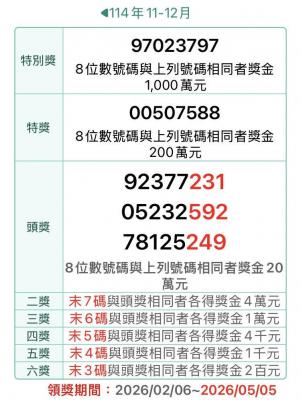
Seven of the 17 NT$10 million (US$311,604) winning receipts from the November-December uniform invoice lottery remain unclaimed as of today, the Ministry of Finance said, urging winners to redeem their prizes by May 5. The reminder comes ahead of the release of the winning numbers for the January-February lottery tomorrow. Among the unclaimed receipts was one for a NT$173 phone bill in Keelung, while others were for a NT$5,913 purchase at Costco in Taipei's Neihu District (內湖), a NT$49 purchase at a FamilyMart in New Taipei City's Tamsui District (淡水), and a NT$500 purchase at a tea shop in New Taipei City's

Taiwanese officials were shown the first of 66 F-16V fighter jets purchased by Taiwan from the United States, the Ministry of National Defense said yesterday, adding the aircraft has completed an initial flight test and is expected to be delivered later this year. A delegation led by Deputy Minister of National Defense Hsu Szu-chien (徐斯儉) visited Lockheed Martin’s F-16 C/D Block 70 (also known as F-16V) assembly line in South Carolina on March 16 to view the aircraft. The jet will undergo a final acceptance flight in the US before being delivered to Taiwan, the
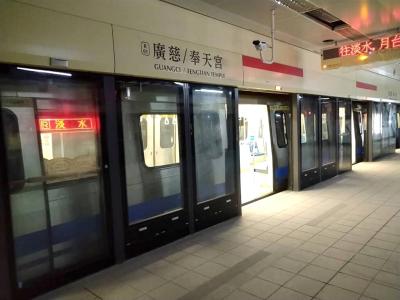
The New Taipei Metro's Sanyin Line and the eastern extension of the Taipei Metro's Tamsui-Xinyi Line (Red Line) are scheduled to begin operations in June, the National Development Council said today. The Red Line, which terminates at Xiangshan Station, would be connected by the 1.4km extension to a new eastern terminal, Guangci/Fengtian Temple Station, while the Sanyin Line would link New Taipei City's Tucheng and Yingge stations via Sanxia District (三峽). The council gave the updates at a council meeting reviewing progress on public construction projects for this year. Taiwan's annual public infrastructure budget would remain at NT$800 billion (US$25.08 billion), with NT$97.3

Deliveries of delayed F-16V jets are expected to begin in September, Minister of National Defense Wellington Koo (顧立雄) said today, after senior defense officials visited the US last week. The US in 2019 approved a US$8 billion sale of Lockheed Martin F-16 jets to Taiwan, a deal that would take the nation’s F-16 fleet to more than 200 jets, but the project has been hit by issues including software problems. Koo appeared today before a meeting of the legislature’s Foreign Affairs and National Defense Committee, which is discussing different versions of the special defense budget this week. The committee is questioning officials today,


 RSS
RSS