


Taipei Mayor Ko Wen-je (柯文哲), chairman of the Taiwan People’s Party (TPP), on Saturday said that the party’s rules for removing legislators-at-large only meet the lowest standards.
Ko made the remark in Helsinki in response to a Taiwanese reporter’s questions.
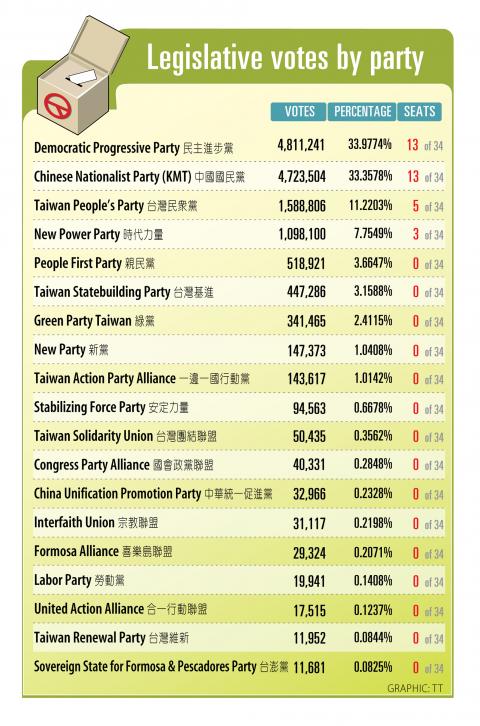
The TPP won five legislator-at-large seats in the Jan. 11 elections, and is eligible to form a legislative caucus, which requires at least three legislators from the same party.
The TPP on Saturday invited legislative watchdog Citizen’s Congress Watch (CCW) to educate the party’s five new legislators.
TPP Secretary-General Chang Jer-yang (張哲揚) said that the party’s legislators-at-large would be removed if they are listed on the CCW’s “watch” list for two consecutive legislative sessions, breach the TPP caucus’ decision on important personnel appointments once or breach the caucus’ decision on important bills three times.
“The rules are for regulating our legislators,” he said.
We hope the rules protect their original reasons for entering politics from being contaminated, and prevent them from holding values contrary to the party’s, Chang said.
When asked to comment on the rules, Ko said “there should be an accreditation system for our lawmakers ... and the three rules mentioned are of the lowest standards.”
The TPP should establish its own evaluation standards, but for now it would use the CCW’s, he said.
Legislators could easily get a good score if they are not absent from committee meetings and question-and-answer sessions, and if they propose bills, so the party might institute higher standards, Ko added.
The TPP, which was established by Ko in August last year, emerged as the country’s third-largest party after Saturday’s legislative elections.
Ko had toyed with running for president as an independent, but decided instead to form a political party that gave voters an alternative to the Democratic Progressive Party (DPP)-led pan-green camp and the Chinese Nationalist Party (KMT)-led pan-blue camp.
Although none of the candidates the TPP nominated in electoral districts won seats, it received nearly 1.6 million votes, or 11.2 percent of the political party vote used to allocate at-large seats.
The DPP retained an absolute majority in the Legislative Yuan with 61 seats, while the main opposition KMT won 38.
Ko has said that the results met the TPP’s expectations and stressed that his party would work with the pan-blue and pan-green camps on the national agenda.
“In the past, Taiwan has not made any progress under the rule of either blue or green powers, and the TPP will become a new choice beyond the two parties,” Ko said.
Ko said he expected the party to become a “role model” in the legislature by examining policies based on their merits rather than focusing on politics.
The other mission for TPP lawmakers, he said, would be to learn how the central government works, which would lay the foundations for it to become the ruling party.
Two other small parties have a presence in the legislature.
The New Power Party maintained its caucus with 1.1 million votes, or 7.8 percent of the political party vote, giving it three at-large seats.
It won five seats in 2016, but internal party strife resulted in some of its incumbent legislators running as independents in district races.
The pro-Taiwanese independence Taiwan Statebuilding Party won 3.2 percent of the political party vote, but fell short of the 5 percent threshold needed to win seats, although Chen Po-wei (陳柏惟), its candidate in Taichung’s second electoral district, won one seat.
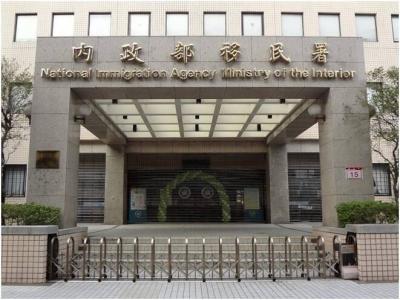
A small number of Taiwanese this year lost their citizenship rights after traveling in China and obtaining a one-time Chinese passport to cross the border into Russia, a source said today. The people signed up through Chinese travel agencies for tours of neighboring Russia with companies claiming they could obtain Russian visas and fast-track border clearance, the source said on condition of anonymity. The travelers were actually issued one-time-use Chinese passports, they said. Taiwanese are prohibited from holding a Chinese passport or household registration. If found to have a Chinese ID, they may lose their resident status under Article 9-1

Taiwanese were praised for their composure after a video filmed by Taiwanese tourists capturing the moment a magnitude 7.5 earthquake struck Japan’s Aomori Prefecture went viral on social media. The video shows a hotel room shaking violently amid Monday’s quake, with objects falling to the ground. Two Taiwanese began filming with their mobile phones, while two others held the sides of a TV to prevent it from falling. When the shaking stopped, the pair calmly took down the TV and laid it flat on a tatami mat, the video shows. The video also captured the group talking about the safety of their companions bathing

PROBLEMATIC APP: Citing more than 1,000 fraud cases, the government is taking the app down for a year, but opposition voices are calling it censorship Chinese Nationalist Party (KMT) Chairwoman Cheng Li-wun (鄭麗文) yesterday decried a government plan to suspend access to Chinese social media platform Xiaohongshu (小紅書) for one year as censorship, while the Presidential Office backed the plan. The Ministry of the Interior on Thursday cited security risks and accusations that the Instagram-like app, known as Rednote in English, had figured in more than 1,700 fraud cases since last year. The company, which has about 3 million users in Taiwan, has not yet responded to requests for comment. “Many people online are already asking ‘How to climb over the firewall to access Xiaohongshu,’” Cheng posted on

A classified Pentagon-produced, multiyear assessment — the Overmatch brief — highlighted unreported Chinese capabilities to destroy US military assets and identified US supply chain choke points, painting a disturbing picture of waning US military might, a New York Times editorial published on Monday said. US Secretary of Defense Pete Hegseth’s comments in November last year that “we lose every time” in Pentagon-conducted war games pitting the US against China further highlighted the uncertainty about the US’ capability to intervene in the event of a Chinese invasion of Taiwan. “It shows the Pentagon’s overreliance on expensive, vulnerable weapons as adversaries field cheap, technologically


 RSS
RSS