


The National Health Insurance (NHI) covers only an average of three years of medication fees for people with hepatitis B, highlighting the need for people to closely monitor their condition after the cessation of drugs to prevent a relapse, National Taiwan University Hospital (NTUH) doctors said yesterday.
Chronic hepatitis B is a major health problem in Taiwan, with an estimated 2 million hepatitis B carriers, among whom 20 percent need medication, NTUH Gastroenterology Division attending physician Su Tung-hung (蘇東弘) told a news conference in Taipei.
Although antiviral medications are covered by the NHI, there are requirements for eligibility, and people who no longer meet those requirements, but still need the medication, have to pay for the drugs themselves, he said.

Photo: CNA
The Asian Pacific Association for the Study of the Liver advises that if virus suppression is proved to be effective over the long term, discontinuing antiviral medications could enhance the possibility of a functional care, meaning the absence of the hepatitis B surface antigen and the presence of the surface antibody in the serum, Su said.
This type of patient tends to have a good prognosis, meaning a better chance of recovery and also a lower risk of liver cancer, he added.
The NTUH Hepatitis Research Center conducted a study tracking people with chronic hepatitis B who had taken medications for three years on average before ceasing medication, and found that one year into the cessation, about 60 percent of the cases were detected with a viral load exceeding 2000 IU/mL, while another 30 percent exhibited symptoms of a virological and clinical relapse.
Unlike hepatitis C, hepatitis B cannot be cured, and the virus affecting liver cells could replicate easily once a patient stops taking antiviral medications, resulting in a high relapse rate of the disease, he said.
The type of antiviral medication is associated with the speed and form of a relapse after drug discontinuance, NTUH Hepatitis Research Center director Liu Chun-jen (劉俊人) said.
While a virological or clinical relapse could occur as early as one month after drug cessation, most occur between three and nine months, and a much lower relapse rate is observed after one year, Liu said.
The research team also found that the surface antibody detected before and one month into the cessation, as well as different DNA sequences, could be indices to predict the virological and clinical relapse rates of hepatitis B, Liu said.
Patients should undertake liver function and supersonic examinations to monitor their condition every month in the first three months of drug cessation, and every three months thereafter, Su said.
Even though the relapse rate is low when no signs are shown for a year following the drug cessation, a regular checkup every six months is still needed, he said.

The military has spotted two Chinese warships operating in waters near Penghu County in the Taiwan Strait and sent its own naval and air forces to monitor the vessels, the Ministry of National Defense (MND) said. Beijing sends warships and warplanes into the waters and skies around Taiwan on an almost daily basis, drawing condemnation from Taipei. While the ministry offers daily updates on the locations of Chinese military aircraft, it only rarely gives details of where Chinese warships are operating, generally only when it detects aircraft carriers, as happened last week. A Chinese destroyer and a frigate entered waters to the southwest
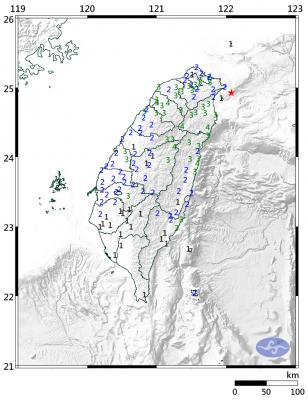
A magnitude 6.1 earthquake struck off the coast of Yilan County at 8:39pm tonight, the Central Weather Administration (CWA) said, with no immediate reports of damage or injuries. The epicenter was 38.7km east-northeast of Yilan County Hall at a focal depth of 98.3km, the CWA’s Seismological Center said. The quake’s maximum intensity, which gauges the actual physical effect of a seismic event, was a level 4 on Taiwan’s 7-tier intensity scale, the center said. That intensity level was recorded in Yilan County’s Nanao Township (南澳), Hsinchu County’s Guansi Township (關西), Nantou County’s Hehuanshan (合歡山) and Hualien County’s Yanliao (鹽寮). An intensity of 3 was

Japanese Prime Minister Sanae Takaichi’s comment last year on Tokyo’s potential reaction to a Taiwan-China conflict has forced Beijing to rewrite its invasion plans, a retired Japanese general said. Takaichi told the Diet on Nov. 7 last year that a Chinese naval blockade or military attack on Taiwan could constitute a “survival-threatening situation” for Japan, potentially allowing Tokyo to exercise its right to collective self-defense. Former Japan Ground Self-Defense Force general Kiyofumi Ogawa said in a recent speech that the remark has been interpreted as meaning Japan could intervene in the early stages of a Taiwan Strait conflict, undermining China’s previous assumptions

Taiwan Railways Corp (TRC) today announced that Shin Kong Mitsukoshi has been selected as the preferred bidder to operate the Taipei Railway Station shopping mall, replacing the current operator, Breeze Development Co Ltd. Among eight qualified firms that delivered presentations and were evaluated by a review committee, Shin Kong Mitsukoshi was ranked first, while Breeze was named the runner-up, the rail company said in a statement. Contract negotiations are to proceed in accordance with regulations, it said, adding that if negotiations with the top bidder fail, it could invite the second-ranked applicant to enter talks. Breeze in a statement today expressed doubts over


 RSS
RSS