


Aided by Taiwanese hospitals, Belize has produced its first epidemiological report on kidney diseases and Paraguay has shortened patients’ waiting time by 60 percent, the International Cooperation and Development Fund (ICDF) said yesterday.
The semi-official agency yesterday held a forum in Taipei on international public health aid development, inviting representatives from the Ministry of Foreign Affairs, the Ministry of Health and Welfare and major hospitals to share their experience.
The fund in 2013 started working with domestic hospitals to conduct foreign aid programs and they have this year made many remarkable achievements, ICDF Secretary-General Timothy Hsiang (項恬毅) said.
For example, a program with Far Eastern Memorial Hospital and the Belizean Ministry of Health from February 2016 to August helped the Central American country produce its first-ever epidemiological report on kidney diseases and improve its dialysis services, he said.
Another program with Cathay General Hospital and the Paraguayan Ministry of Public Health and Social Welfare has helped reduce wait times of patients in the South American country by 60 percent, he added.
Eswatini has also continued to voice support for Taiwan on the international stage, as Taiwan has helped it improve medical services for expectant mothers and children, Hsiang said.
Echoing the WHO’s goal of establishing universal healthcare coverage, the ICDF plans to increase support for initiatives such as medical image digitalization, metabolic disease relief and medical specialist certification in partner countries, he said.
Mackay Memorial Hospital superintendent Liu Chien-liang (劉建良), reflecting on the hospital’s experience improving diabetes treatment in Saint Vincent and the Grenadines, said that he had gifted a special necktie to Saint Vincentian Minister of Health, Wellness and the Environment Luke Browne, who wore it at the WHO’s World Health Assembly in May.
To show its appreciation for Taiwan’s help, Saint Vincent and the Grenadines in August inaugurated its embassy in Taipei, Liu said.
The fund has an online platform to match the needs of other nations with the specialties of domestic hospitals, ICDF Humanitarian Assistance Department Director Wang Hung-tzu (王宏慈) said.
Some Taiwanese might ask why the fund continues to provide aid to other nations, as many have severed diplomatic ties with Taiwan, but those who participate in the ICDF’s foreign aid programs often find that they have helped improve people’s lives and broadened their own horizons, she said.
“When we leave, the local government might repair roads, build schools and hospitals, but that is because we visited,” Wang said, echoing remarks by Argentine revolutionary Che Guevara.
The ICDF tries to maintain its role as a “copilot” so that aided countries would learn to develop their own techniques, she said, citing the principles of the Paris Declaration on Aid Effectiveness endorsed in 2005.
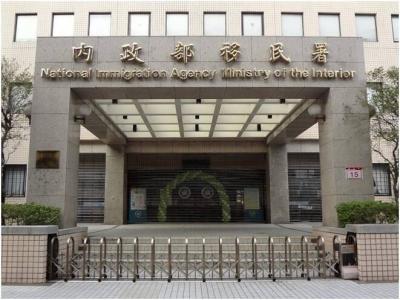
A small number of Taiwanese this year lost their citizenship rights after traveling in China and obtaining a one-time Chinese passport to cross the border into Russia, a source said today. The people signed up through Chinese travel agencies for tours of neighboring Russia with companies claiming they could obtain Russian visas and fast-track border clearance, the source said on condition of anonymity. The travelers were actually issued one-time-use Chinese passports, they said. Taiwanese are prohibited from holding a Chinese passport or household registration. If found to have a Chinese ID, they may lose their resident status under Article 9-1

Taiwanese were praised for their composure after a video filmed by Taiwanese tourists capturing the moment a magnitude 7.5 earthquake struck Japan’s Aomori Prefecture went viral on social media. The video shows a hotel room shaking violently amid Monday’s quake, with objects falling to the ground. Two Taiwanese began filming with their mobile phones, while two others held the sides of a TV to prevent it from falling. When the shaking stopped, the pair calmly took down the TV and laid it flat on a tatami mat, the video shows. The video also captured the group talking about the safety of their companions bathing

PROBLEMATIC APP: Citing more than 1,000 fraud cases, the government is taking the app down for a year, but opposition voices are calling it censorship Chinese Nationalist Party (KMT) Chairwoman Cheng Li-wun (鄭麗文) yesterday decried a government plan to suspend access to Chinese social media platform Xiaohongshu (小紅書) for one year as censorship, while the Presidential Office backed the plan. The Ministry of the Interior on Thursday cited security risks and accusations that the Instagram-like app, known as Rednote in English, had figured in more than 1,700 fraud cases since last year. The company, which has about 3 million users in Taiwan, has not yet responded to requests for comment. “Many people online are already asking ‘How to climb over the firewall to access Xiaohongshu,’” Cheng posted on

A classified Pentagon-produced, multiyear assessment — the Overmatch brief — highlighted unreported Chinese capabilities to destroy US military assets and identified US supply chain choke points, painting a disturbing picture of waning US military might, a New York Times editorial published on Monday said. US Secretary of Defense Pete Hegseth’s comments in November last year that “we lose every time” in Pentagon-conducted war games pitting the US against China further highlighted the uncertainty about the US’ capability to intervene in the event of a Chinese invasion of Taiwan. “It shows the Pentagon’s overreliance on expensive, vulnerable weapons as adversaries field cheap, technologically


 RSS
RSS