


Taipei has placed sixth in a global award that ranks 110 cities worldwide based on their level of inclusive prosperity, the Taipei City government said late on Thursday.
The first annual report by the Prosperity and Inclusive City Seal and Awards (PICSA), released at an awards ceremony in Bilbao, Spain, on Thursday, showcases not only the amount that a city’s economy has grown, but also the quality and distribution of that growth across the city’s various populations.
The measure of a city’s inclusive prosperity included GDP per capita, personal safety, housing affordability and environmental quality, as well as access to education, Internet and healthcare.
At sixth in the rankings, Taiwan performed the best in Asia, followed by Tokyo at 39th. Osaka, Japan, finished 44th, while Singapore finished 46th, Seoul 49th and Hong Kong 70th.
Globally, Zurich, Switzerland, topped the rankings, followed by Vienna, Copenhagen, Luxembourg and Helsinki.
After Taipei, the top 10 were filled out by Oslo; Ottawa; Kiel, Germany; and Geneva, Switzerland. Bilbao was ranked 20th.
Taipei stood out thanks to its efforts at sustainability development and the city’s zero-waste approach, which aims to conserve natural resources and reduce pollution from extraction, manufacturing and disposal, the report said.
Taipei has a rich, export-driven economy and a high-tech sector that leads the world in the communications and information technology industry, the report said.
The awards ceremony for the PICSA Top 20 was held at the Guggenheim Museum Bilbao, with Taipei City Government spokesperson Chou Tai-chu (周台竹) attending the event on behalf of Taipei Mayor Ko Wen-je (柯文哲).
The PICSA report was commissioned by the Basque Government and compiled by Australian-based consulting firm D&L Partners.
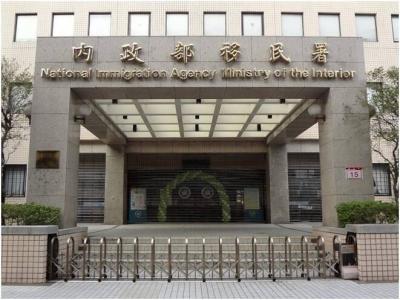
A small number of Taiwanese this year lost their citizenship rights after traveling in China and obtaining a one-time Chinese passport to cross the border into Russia, a source said today. The people signed up through Chinese travel agencies for tours of neighboring Russia with companies claiming they could obtain Russian visas and fast-track border clearance, the source said on condition of anonymity. The travelers were actually issued one-time-use Chinese passports, they said. Taiwanese are prohibited from holding a Chinese passport or household registration. If found to have a Chinese ID, they may lose their resident status under Article 9-1

Taiwanese were praised for their composure after a video filmed by Taiwanese tourists capturing the moment a magnitude 7.5 earthquake struck Japan’s Aomori Prefecture went viral on social media. The video shows a hotel room shaking violently amid Monday’s quake, with objects falling to the ground. Two Taiwanese began filming with their mobile phones, while two others held the sides of a TV to prevent it from falling. When the shaking stopped, the pair calmly took down the TV and laid it flat on a tatami mat, the video shows. The video also captured the group talking about the safety of their companions bathing

PROBLEMATIC APP: Citing more than 1,000 fraud cases, the government is taking the app down for a year, but opposition voices are calling it censorship Chinese Nationalist Party (KMT) Chairwoman Cheng Li-wun (鄭麗文) yesterday decried a government plan to suspend access to Chinese social media platform Xiaohongshu (小紅書) for one year as censorship, while the Presidential Office backed the plan. The Ministry of the Interior on Thursday cited security risks and accusations that the Instagram-like app, known as Rednote in English, had figured in more than 1,700 fraud cases since last year. The company, which has about 3 million users in Taiwan, has not yet responded to requests for comment. “Many people online are already asking ‘How to climb over the firewall to access Xiaohongshu,’” Cheng posted on

A classified Pentagon-produced, multiyear assessment — the Overmatch brief — highlighted unreported Chinese capabilities to destroy US military assets and identified US supply chain choke points, painting a disturbing picture of waning US military might, a New York Times editorial published on Monday said. US Secretary of Defense Pete Hegseth’s comments in November last year that “we lose every time” in Pentagon-conducted war games pitting the US against China further highlighted the uncertainty about the US’ capability to intervene in the event of a Chinese invasion of Taiwan. “It shows the Pentagon’s overreliance on expensive, vulnerable weapons as adversaries field cheap, technologically


 RSS
RSS