


The e-mails of more than 10 academics who specialize in cross-strait relations at National Sun Yat-sen University (NSYSU) have been spied on for as long as three years, an academic colleague said on condition of anonymity.
The source said that since the second half of 2016, an unknown person disguised as a senior official at the school has been reading the e-mails of more than 10 academics, with the fake accounts able to be created due to loopholes in the university’s Open Webmail system.
Targeted academics include all the professors at the Institute of Political Science, as well as certain professors at the Institute of China and Asia-Pacific Studies and the department of political cconomy who are active in the realm of cross-strait affairs and public policy in Taiwan, the source said.
The hacker was discovered logging in from Internet Protocol addresses in the US, China and Hong Kong, the source said, adding that these addresses were possibly created via a virtual private network (VPN).
Hong Kong was the site from which most of the activity came this year.
The hacker did not infect computers with any malicious software, or tamper with any e-mail content or personal information, but simply read the e-mails, the source said, adding that even though the loopholes have been addressed and the fake accounts deleted, the next wave of surveillance is undoubtedly on the way.
“The hacker might have fully grasped the academic networks of these professors,” the source said.
“As Open Webmail is the e-mail system used by almost every university in Taiwan, other schools might also have been spied on, especially those in the fields of diplomacy, cross-strait relations, national security and high technology in Taiwan,” the source added.
Open Webmail is open-source software that is free on the Internet and has been widely adopted by schools in Taiwan.
At a news briefing in Taipei, Mainland Affairs Council Deputy Minister Chiu Chui-cheng (邱垂正) said the council has contacted the Ministry of Education to gather more details about the case and asked schools to boost their information security on campuses.
The Chinese government has been suppressing dissidents and has started using surveillance systems at schools to monitor teachers and students, Chiu said.
Regarding China’s use of political leverage to interfere with the research of academic institutions across the world, the international community has expressed serious concerns and started to take measures, he said.
The National Center for High-performance Computing, affiliated with the Ministry of Science and Technology, has been working with the education ministry to maintain the Internet systems used by different schools, center Deputy Director-General Lin Hsi-ching (林錫慶) said yesterday.
Internet systems used in academia encounter thousands of cyberattacks every day, but he did not observe an abnormal increase in the attacks recently, he said, when asked if attacks have increased in the run-up to next year’s elections.
While the center regularly alerts schools to certain malware software being spread, each school has its own information security system, Lin said, adding that the Open Webmail system is not governed by the center.
Additional reporting by Lin Chia-nan

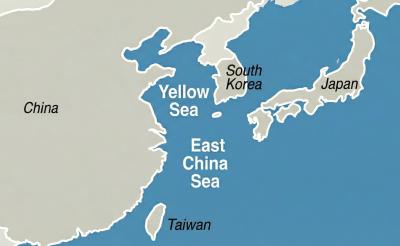
China has reserved offshore airspace in the Yellow Sea and East China Sea from March 27 to May 6, issuing alerts usually used to warn of military exercises, although no such exercises have been announced, the Wall Street Journal (WSJ) reported yesterday. Reserving such a large area for 40 days without explanation is an “unusual step,” as military exercises normally only last a few days, the paper said. These alerts, known as Notice to Air Missions (Notams), “are intended to inform pilots and aviation authorities of temporary airspace hazards or restrictions,” the article said. The airspace reserved in the alert is
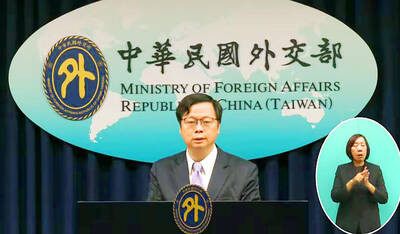
NAMING SPAT: The foreign ministry called on Denmark to propose an acceptable solution to the erroneous nationality used for Taiwanese on residence permits Taiwan has revoked some privileges for Danish diplomatic staff over a Danish permit that lists “Taiwan” as “China,” Eric Huang (黃鈞耀), head of the Ministry of Foreign Affairs’ Department of European Affairs, told a news conference in Taipei yesterday. Reporters asked Huang whether the Danish government had responded to the ministry’s request that it correct the nationality on Danish residence permits of Taiwanese, which has been listed as “China” since 2024. Taiwan’s representative office in Denmark continues to communicate with the Danish government, and the ministry has revoked some privileges previously granted to Danish representatives in Taiwan and would continue to review

More than 6,000 Taiwanese students have participated in exchange programs in China over the past two years, despite the Mainland Affairs Council’s (MAC) “orange light” travel advisory, government records showed. The MAC’s publicly available registry showed that Taiwanese college and university students who went on exchange programs across the Strait numbered 3,592 and 2,966 people respectively. The National Immigration Agency data revealed that 2,296 and 2,551 Chinese students visited Taiwan for study in the same two years. A review of the Web sites of publicly-run universities and colleges showed that Taiwanese higher education institutions continued to recruit students for Chinese educational programs without

A bipartisan group of US senators has introduced a bill to enhance cooperation with Taiwan on drone development and to reduce reliance on supply chains linked to China. The proposed Blue Skies for Taiwan Act of 2026 was introduced by Republican US senators Ted Cruz and John Curtis, and Democratic US senators Jeff Merkley and Andy Kim. The legislation seeks to ease constraints on Taiwan-US cooperation in uncrewed aerial systems (UAS), including dependence on China-sourced components, limited access to capital and regulatory barriers under US export controls, a news release issued by Cruz on Wednesday said. The bill would establish a "Blue UAS


 RSS
RSS