


After three children in Kaohsiung nearly died, doctors advised that foods such as peanuts, melon seeds and nuts should be cut into pieces before feeding to children to avoid choking.
Hsu Mei-hsin (徐美欣), a doctor at Kaohsiung Chang Gung Memorial Hospital’s pediatric intensive care unit (PICU), on Sunday said the hospital has recently treated three children who developed acute respiratory distress because of peanuts stuck in their airways.
All three patients had to undergo surgery to remove the foreign bodies, Hsu said.
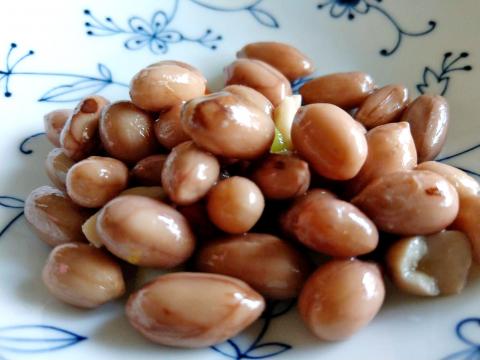
Photo: Fang Chih-hsien, Taipei Times
PICU director Kuo Hsuan-chang (郭玄章) said that in the first case, a peanut accidentally entered the trachea and obstructed the passageway of a three-year-old, who then had trouble breathing.
The child was rushed to the hospital, and an emergency tracheal intubation was performed, but the child had already gone into cardiac arrest, he said.
The peanut in the trachea then broke into two pieces and fell into the right main bronchial tube, causing the right lung to collapse. During surgery, other pieces entered the main bronchial tube again, causing the left lung to collapse as well, Kuo said.
All the peanut pieces were removed eventually, but the patient went into a vegetative state due to a lack of oxygen to the brain, he said.
Hsu said that in the other two cases, peanuts went down the trachea and also entered the bronchial tubes.
In the second case, a five-year-old ate peanuts while his parents were not watching, and then began to experience difficult and rapid breathing. Suspecting that it might be an asthma attack, the parents brought the child to the hospital for asthma treatment, but to no avail, she said.
It was only upon further examination that a peanut was found lodged in the bronchial tube. Because it passed the trachea and entered the bronchial tube, the patient was able to continue to breathe, although with difficulty, Hsu said.
In the third case, a peanut was lodged in the bronchial tube of a one-year-old, who soon showed symptoms resembling an asthma attack, she said.
Doctors responded quickly and removed all the peanut pieces after the parents mentioned that the child had been eating peanuts, she said.
However, some broken pieces at the bottom of the lungs had already caused an inflammation of the bronchial tube, requiring further observation at the ICU before the child could return home, she added.
Hsu said peanuts are the most common cause of children choking, while melon seeds, melon seed shells and nuts are also common culprits. She added that a child’s trachea is about the size of a peanut.
As peanuts break easily, some pieces might break off during surgery and find their way to the lungs, causing difficulty breathing and pneumonia, she said.
Pediatric intensive care department director Lin Ing-jui (林盈瑞) said that foreign objects enter young children’s tracheas more easily due to their limited chewing and swallowing abilities.
Parents should be aware that something might be blocking the child’s airway when they experience symptoms similar to asthma that do not improve after taking asthma medications, Lin said.
People should keep foods of this type out of children’s reach, he said, adding that cutting these foods into small pieces before consumption would be a safer approach.

Taiwanese can file complaints with the Tourism Administration to report travel agencies if their activities caused termination of a person’s citizenship, Mainland Affairs Council Minister Chiu Chui-cheng (邱垂正) said yesterday, after a podcaster highlighted a case in which a person’s citizenship was canceled for receiving a single-use Chinese passport to enter Russia. The council is aware of incidents in which people who signed up through Chinese travel agencies for tours of Russia were told they could obtain Russian visas and fast-track border clearance, Chiu told reporters on the sidelines of an event in Taipei. However, the travel agencies actually applied
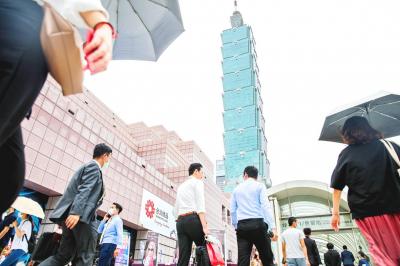
Japanese footwear brand Onitsuka Tiger today issued a public apology and said it has suspended an employee amid allegations that the staff member discriminated against a Vietnamese customer at its Taipei 101 store. Posting on the social media platform Threads yesterday, a user said that an employee at the store said that “those shoes are very expensive” when her friend, who is a migrant worker from Vietnam, asked for assistance. The employee then ignored her until she asked again, to which she replied: "We don't have a size 37." The post had amassed nearly 26,000 likes and 916 comments as of this

New measures aimed at making Taiwan more attractive to foreign professionals came into effect this month, the National Development Council said yesterday. Among the changes, international students at Taiwanese universities would be able to work in Taiwan without a work permit in the two years after they graduate, explainer materials provided by the council said. In addition, foreign nationals who graduated from one of the world’s top 200 universities within the past five years can also apply for a two-year open work permit. Previously, those graduates would have needed to apply for a work permit using point-based criteria or have a Taiwanese company
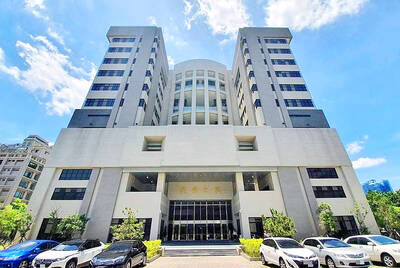
The Shilin District Prosecutors’ Office yesterday indicted two Taiwanese and issued a wanted notice for Pete Liu (劉作虎), founder of Shenzhen-based smartphone manufacturer OnePlus Technology Co (萬普拉斯科技), for allegedly contravening the Act Governing Relations Between the People of the Taiwan Area and the Mainland Area (臺灣地區與大陸地區人民關係條例) by poaching 70 engineers in Taiwan. Liu allegedly traveled to Taiwan at the end of 2014 and met with a Taiwanese man surnamed Lin (林) to discuss establishing a mobile software research and development (R&D) team in Taiwan, prosecutors said. Without approval from the government, Lin, following Liu’s instructions, recruited more than 70 software


 RSS
RSS