


Heated debate broke out on Thursday at a public hearing at the Legislative Yuan in Taipei, as opposing sides discussed the Ministry of Education’s amendment of enforcement rules for a gender equality law.
The Education and Culture Committee held the meeting regarding the ministry’s changes to Article 13 of the Enforcement Rules for Gender Equity Education Act (性別平等教育法施行細則), which includes language governing how sex education is to be taught in schools.
On April 2, the ministry issued an executive order removing language requiring the teaching of “gay and lesbian education,” which was mandated in referendum No. 11 held on Nov. 24 last year.

Photo: Tu Chien-jung, Taipei Times
However, it replaced that language with a more broadly worded clause mandating the teaching of respect and understanding for “different genders, gender characteristics, gender temperaments, gender identity, and sexual orientation, and prevention and handling of sexual assault, sexual harassment, and sexual bullying on campus to enhance students’ gender equity consciousness.”
At the hearing, Parents’ Association representative Chen Chen-chien (陳貞瑾) said the amended language was a clear violation of the referendum result.
However, Cho Keng-yu (卓耕宇), a teacher at Kaohsiung Municipal Chung-cheng Industrial High School, called the language an improvement, saying that before the change, gay and lesbian education was often “narrowed” into simply understanding homosexuality.
The government’s position focused on refuting the charge that the ministry’s amendment contradicted the referendum result, Cho said.
Executive Yuan Gender Equality Committee member Annie Lee (李安妮) said that after last year’s referendum, the ministry collected views on the topic from a broad portion of the public.
These included two public hearings on March 12 and 14, before the ministry announced its intended changes to Article 13, Lee said.
According to Lee, since the amendments were made by executive order, the ministry is only legally obliged to notify the legislature of the changes.
However, out of an excess of caution, however, the legislature decided to review the amendments in committee, a process which Lee said she was glad to participate in.
May Chin (高金素梅), a Non-Partisan Solidarity Union member and one of the committee’s two conveners, said that the debate was potentially divisive, but hoped that the committee’s hearing could open a dialogue and allow each side to listen to opposing views.
The amendment could be reviewed before the end of the current legislative session on Dec. 17.

Taiwanese can file complaints with the Tourism Administration to report travel agencies if their activities caused termination of a person’s citizenship, Mainland Affairs Council Minister Chiu Chui-cheng (邱垂正) said yesterday, after a podcaster highlighted a case in which a person’s citizenship was canceled for receiving a single-use Chinese passport to enter Russia. The council is aware of incidents in which people who signed up through Chinese travel agencies for tours of Russia were told they could obtain Russian visas and fast-track border clearance, Chiu told reporters on the sidelines of an event in Taipei. However, the travel agencies actually applied
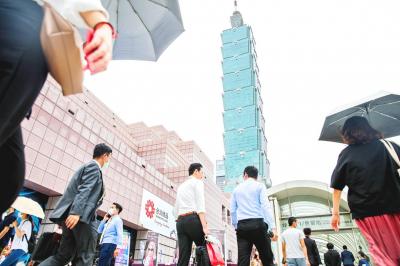
Japanese footwear brand Onitsuka Tiger today issued a public apology and said it has suspended an employee amid allegations that the staff member discriminated against a Vietnamese customer at its Taipei 101 store. Posting on the social media platform Threads yesterday, a user said that an employee at the store said that “those shoes are very expensive” when her friend, who is a migrant worker from Vietnam, asked for assistance. The employee then ignored her until she asked again, to which she replied: "We don't have a size 37." The post had amassed nearly 26,000 likes and 916 comments as of this

New measures aimed at making Taiwan more attractive to foreign professionals came into effect this month, the National Development Council said yesterday. Among the changes, international students at Taiwanese universities would be able to work in Taiwan without a work permit in the two years after they graduate, explainer materials provided by the council said. In addition, foreign nationals who graduated from one of the world’s top 200 universities within the past five years can also apply for a two-year open work permit. Previously, those graduates would have needed to apply for a work permit using point-based criteria or have a Taiwanese company
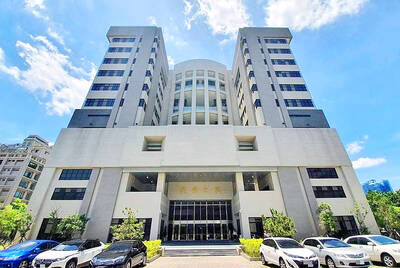
The Shilin District Prosecutors’ Office yesterday indicted two Taiwanese and issued a wanted notice for Pete Liu (劉作虎), founder of Shenzhen-based smartphone manufacturer OnePlus Technology Co (萬普拉斯科技), for allegedly contravening the Act Governing Relations Between the People of the Taiwan Area and the Mainland Area (臺灣地區與大陸地區人民關係條例) by poaching 70 engineers in Taiwan. Liu allegedly traveled to Taiwan at the end of 2014 and met with a Taiwanese man surnamed Lin (林) to discuss establishing a mobile software research and development (R&D) team in Taiwan, prosecutors said. Without approval from the government, Lin, following Liu’s instructions, recruited more than 70 software


 RSS
RSS