


About 23,000 computerized tomography (CT) and magnetic resonance imaging (MRI) scans administered from January to June were for primary-care patients with relatively mild diagnoses, some of which were possibly unnecessary, the National Health Insurance Administration (NHIA) said yesterday.
The findings were made with the help of artificial intelligence (AI) technology, the agency said.
Of the roughly 781,000 scans that were performed in the period, 3,494 were for headaches, it said.
Superficial injuries and dizziness accounted for 2,442 and 1,978 such tests ordered by doctors respectively, it said, adding that they also ordered scans for diagnoses of osteoarthritis, lower-back and abdominal pain, and coughing.
Of the 140,000 brain CT scans that were performed in the fourth quarter last year, about 40 percent had no direct relationship with a disease, Medical Review and Pharmaceutical Benefits Division inspector Lai Chiu-ling (賴秋伶) said.
These tests might have been ordered by doctors to rule out diseases, as a follow-up to treatment, or were unnecessary, Lai said.
Since the National Health Insurance program was launched, the agency has been collecting nationwide data on medical claims, including 360 million outpatient and 3.44 million inpatient claims per year, she said.
In 2014, the agency began encouraging medical institutions to submit test results and other unstructured, text-based reports, she said.
As of last month, it had received 2.47 billion results, Lai said.
In the past, claims data would be evaluated and inspected by medical professionals to ensure that reasonable payments were being made to medical institutions, but with the advancement of technology, the agency has adopted AI technology to create a natural-language processing system to assist with claims reviews, she said.
The system reduces the time needed to process each claim from four minutes to 0.25 seconds, she said, adding that it is 99 percent accurate.
While the agency respects the professional judgements of doctors, it is also concerned about the possibility of “overly defensive” medicine leading to unnecessary exams, NHIA Director-General Lee Po-chang (李伯璋) said.
To prevent people from being unnecessarily exposed to radiation, the agency is to share data analyzed by AI — including results showing above-average use of the tests — with hospitals to allow administrators to manage and ensure better use of resources, Lee said.

Kenting National Park service technician Yang Jien-fon (楊政峰) won a silver award in World Grand Prix Photography Awards Spring Season for his photograph of two male rat snakes intertwined in combat. Yang’s colleagues at Kenting National Park said he is a master of nature photography who has been held back by his job in civil service. The awards accept entries in all four seasons across six categories: architectural and urban photography, black-and-white and fine art photography, commercial and fashion photography, documentary and people photography, nature and experimental photography, and mobile photography. Awards are ranked according to scores and divided into platinum, gold and

More than half of the bamboo vipers captured in Tainan in the past few years were found in the city’s Sinhua District (新化), while other districts had smaller catches or none at all. Every year, Tainan captures about 6,000 snakes which have made their way into people’s homes. Of the six major venomous snakes in Taiwan, the cobra, the many-banded krait, the brown-spotted pit viper and the bamboo viper are the most frequently captured. The high concentration of bamboo vipers captured in Sinhua District is puzzling. Tainan Agriculture Bureau Forestry and Nature Conservation Division head Chu Chien-ming (朱健明) earlier this week said that the
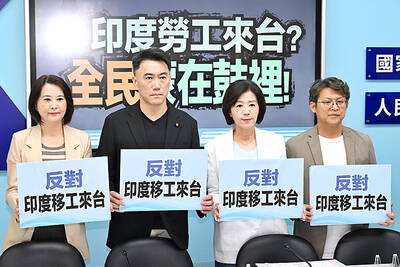
The Chinese Nationalist Party (KMT) caucus yesterday said it opposes the introduction of migrant workers from India until a mechanism is in place to prevent workers from absconding. Minister of Labor Hung Sun-han (洪申翰) on Thursday told the Legislative Yuan that the first group of migrant workers from India could be introduced as early as this year, as part of a government program. The caucus’ opposition to the policy is based on the assessment that “the risk is too high,” KMT caucus secretary-general Lin Pei-hsiang (林沛祥) said. Taiwan has a serious and long-standing problem of migrant workers absconding from their contracts, indicating that
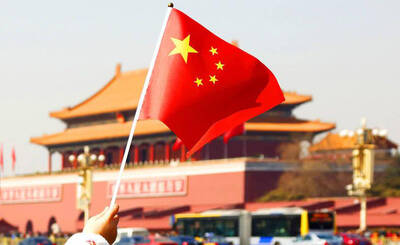
TRADE-OFF: Beijing seeks to trade a bowl of tempura for a Chinese delicacy, an official said, while another said its promises were attempts to interfere in the polls The government must carefully consider the national security implications of building a bridge connecting Kinmen County and Xiamen, China, the Public Construction Commission (PCC) said yesterday. PCC Commissioner Derek Chen (陳金德), who is also a minister without portfolio, made the remarks in a meeting of the legislature’s Transportation Committee, after Democratic Progressive Party Legislator Hsu Fu-kuei (徐富癸) asked about China’s proposal of new infrastructure projects to further connect Kinmen and Lienchiang (Matsu) counties with Xiamen. China unveiled the bridge plan, along with nine other policies for Taiwan, on Sunday, the last day of Chinese Nationalist Party (KMT) Chairwoman Cheng Li-wun’s (鄭麗文) visit


 RSS
RSS