

Taipei Mayor Ko Wen-je (柯文哲) yesterday said that the government should not make him change the name of the political party he plans to form if it is not illegal.
He made the remark on the sidelines of a visit to Miaoli County when asked about the Ministry of the Interior having received complaints about the Chinese name of Ko’s new party.
Local media reported on Wednesday night that documents submitted by Ko to the ministry showed that he was planning to form a new political party on Tuesday next week. The party’s Chinese-language name (台灣民眾黨) roughly translates to “Taiwan people’s party.”
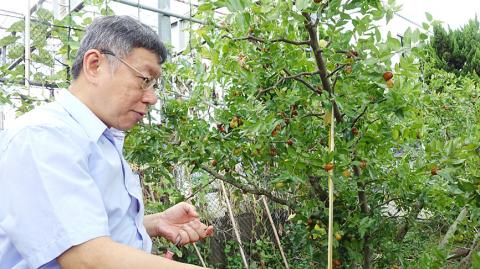
Photo: Peng Chien-li, Taipei Times
Ko confirmed the plan at a news conference on Thursday morning.
Ko’s new party shares the same Chinese name as a party founded in 1927 by physician and social activist Chiang Wei-shui (蔣渭水), who Ko has on several occasions said is someone he looks up to.
Ko has said he wants to complete Chiang’s unfilled wishes by changing Taiwan’s political culture.
However, Chiang Li-jung (蔣理容), the deputy executive director of the Chiang Wei-shui Cultural Foundation and Chiang Wei-shui’s grandniece, wrote on Facebook that although everyone has the freedom to form a party in a democracy, she thinks Ko, who was a physician like her granduncle, might be using his name as a disguise for other purposes.
She urged people to examine Ko’s values and whether he really embodies the spirit of her granduncle, saying that he did not pander to or succumb to the authorities during the Japanese colonial era.
“Taiwan is the Taiwanese people’s Taiwan,” she wrote, adding that it was a remark her granduncle had often made, in addition to his famous quote: “Citizens must be united, as unity brings strength.”
She hopes anyone who claims to be his successor bears that in mind, Chiang Li-jung said.
The foundation also issued a statement asking Ko to reconsider the name of his party.
Ko yesterday said that the Democratic Progressive Party faced obstruction from the Chinese Nationalist Party (KMT) when it was formed more than 30 years ago, and after the three decades it took to achieve democracy, his new party should not be boycotted.
“As long as it is not illegal, they should not use any other reasons to block it,” he said.
Separately yesterday, Minister of the Interior Hsu Kuo-yung (徐國勇) said that people have the freedom to form political parties, and his ministry would follow the law when reviewing Ko’s application.
Additional reporting by Huang Hsin-po
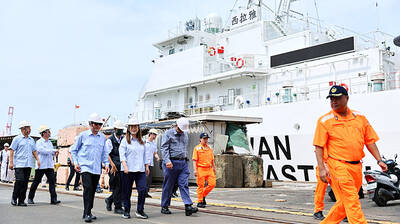
Ocean Affairs Council (OAC) Minister Kuan Bi-ling (管碧玲) on Wednesday said decommissioned coast guard vessels were given to the Philippines to enhance regional rescue capacity and would not affect Taiwanese fishers’ rights and benefits. Kuan made the remarks after confirmation on Tuesday that a 500-tonne Coast Guard Administration (CGA) patrol and rescue vessel would be given to the Philippine Coast Guard. The donation ceremony was reportedly done in Manila, but whether the vessel — previously numbered “CG123” and named Kinmen (金門) — has been handed over has yet to be confirmed. China’s Taiwan Affairs Office (TAO) on Wednesday criticized the donation for “taking
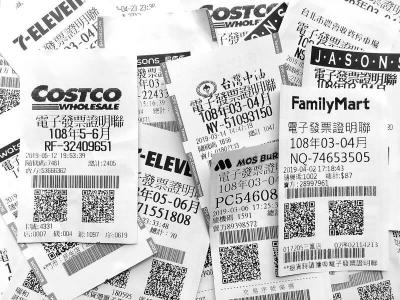
The Ministry of Finance today announced the winning numbers for the July-August uniform invoice lottery. The winning number for the NT$10 million (US$314,663) special prize is 89996565, while the winning number for the NT$2 million grand prize is 91098182. Three numbers were drawn for the NT$200,000 first prize: 54348835, 44991397 and 06595111. Those with receipts matching the last seven digits of any of the first-prize numbers can claim the NT$40,000 second prize, while those matching the last six digits qualify for the NT$10,000 third prize. Those whose receipts match the last five digits of the first-prize numbers are eligible for the NT$4,000 fourth prize,
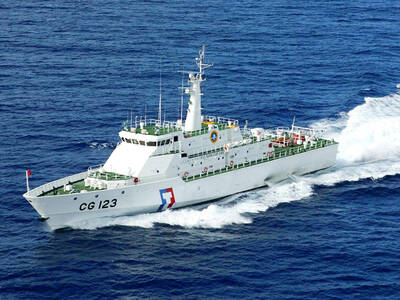
A decommissioned 500-tonne Kinmen-class patrol vessel recently donated by Taiwan’s Coast Guard Administration (CGA) has been delivered to the Philippine Coast Guard (PCG), a source said yesterday. The source said the vessel transferred to the PCG at a ceremony organized by the Philippine Non-government WPS Foundation on Monday was donated by the CGA. The CGA confirmed the donation on Wednesday last week following a United Daily News (UDN) report of a Philippine law enforcement vessel registered as "BLINGNO.1" setting sail for sea trials from Kaohsiung Port that day, citing tracking data from
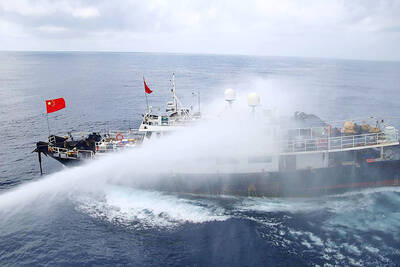
Taiwan has upgraded its maritime patrol capacity around the Pratas Islands (Dongsha Islands, 東沙群島) in the disputed South China Sea, including regularly sending larger ships there, the government said on Wednesday, responding to an increase in Chinese activities. Lying roughly between southern Taiwan and Hong Kong, the Taiwan-controlled Pratas Islands are seen by security experts as vulnerable to a Chinese attack due to their distance — more than 400km — from Taiwan. In a statement late on Wednesday, the Coast Guard Administration (CGA) said its overall patrol and enforcement capacity in Pratas waters has been “comprehensively upgraded.” With the completion of a wharf


 RSS
RSS